On this page
- AI in Graphic Design and Creative Careers in Jalandhar (2026-2027)
- What Is Graphic Design?
- How Does Graphic Design Work From Start to End?
- 1. Understanding the Requirement
- 2. Research and Inspiration
- 3. Creating Ideas and Concepts
- 4. Designing the First Version
- 5. Feedback and Improvements
- 6. Final Design and Export
- Colour Theory
- Typography
- Layout and Composition
- Visual Hierarchy
- Image Editing
- Branding
- Stage 1: Beginner
- Stage 2: Junior Graphic Designer
- Stage 3: Experienced Graphic Designer
- Stage 4: Senior Designer or Creative Professional
- can help designers understand not only how to make a design attractive but also why the design is being created and what business result it should support.
- Graphic Design and UI/UX Design
- Conclusion:
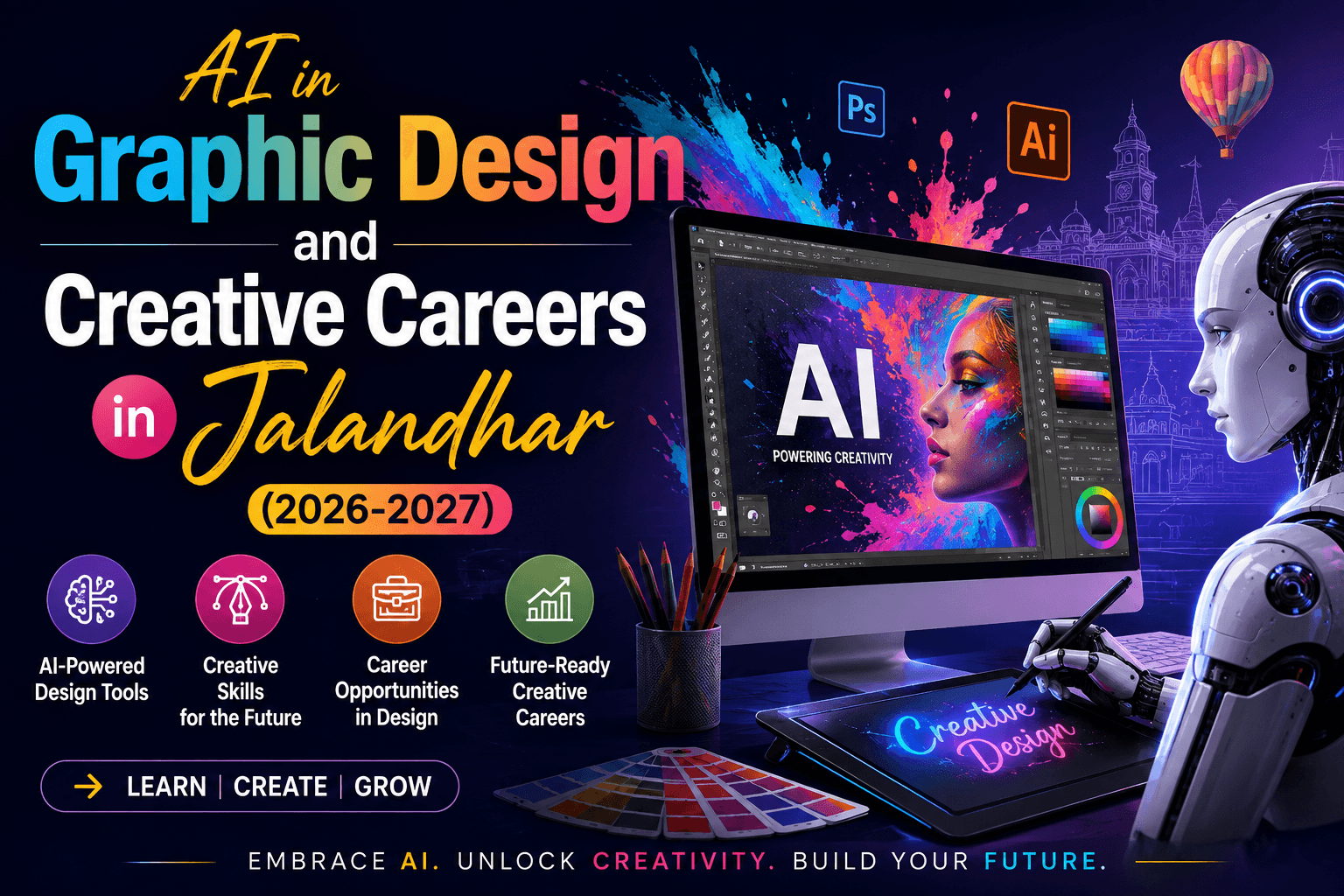
AI in Graphic Design and Creative Careers in Jalandhar (2026-2027)
Artificial Intelligence is rapidly changing the creative industry, and graphic design is one of the fields where AI is creating new opportunities for students, beginners, professionals, freelancers, and creative businesses.AI in Graphic Design and Creative Careers in Jalandhar (2026-2027) In Jalandhar, the demand for digital content is increasing as businesses, educational institutes, e-commerce brands, startups, restaurants, local shops, and digital marketing agencies focus more on their online presence.
For students who are interested in creativity, technology, branding, advertising, social media, websites, and visual communication, graphic design can be a practical career option in 2026–2027. However, becoming a professional graphic designer is not simply about learning Photoshop or Canva. A successful designer needs to understand design principles, creativity, typography, colour combinations, layouts, branding, communication, client requirements, and modern AI-powered tools.
This guide explains the complete graphic design career journey, starting from the basics and moving toward professional-level opportunities, salary expectations, freelancing, and future career growth.
What Is Graphic Design?
Graphic design is the process of creating visual communication using images, text, colour, illustrations, shapes, layouts, and other visual elements. The purpose of graphic design is not only to make something attractive but also to communicate a specific message clearly to an audience.
For example, when a company launches a new product, a graphic designer may create its logo, social media advertisements, posters, product packaging, website banners, brochures, and promotional graphics.
Graphic design is used almost everywhere in modern business, including:
Logo and brand identity design
Social media posts
Instagram and Facebook advertisements
YouTube thumbnails
Website banners
Business cards
Brochures and flyers
Posters and advertisements
Product packaging
E-commerce graphics
Presentation designs
Infographics
Digital advertisements
Marketing campaign creatives
Event posters
Restaurant menus
Educational content
Corporate branding
Therefore, graphic design connects creativity with business communication.
How Does Graphic Design Work From Start to End?
A beginner often thinks graphic design means simply opening software and creating an image. Professional graphic design involves a complete process.
1. Understanding the Requirement
The first step is understanding what the client or company actually needs.
For example, a business may ask for a social media advertisement for a new product. The designer needs to understand the product, target audience, message, platform, size, branding, and purpose of the advertisement.
2. Research and Inspiration
Before designing, a professional designer researches the industry, competitors, target audience, trends, colours, typography, and visual styles.
This helps the designer create something relevant instead of randomly selecting colours and images.
3. Creating Ideas and Concepts
After research, the designer develops different creative concepts. This can involve sketches, mood boards, reference designs, AI-generated ideas, layouts, and visual experimentation.
AI tools can be useful at this stage for generating initial concepts and exploring different creative directions.
4. Designing the First Version
The designer then creates the first design using appropriate software. Images, typography, colours, icons, illustrations, and other elements are arranged according to the design requirements.
5. Feedback and Improvements
Professional design usually involves revisions. The client or marketing team may request changes in colours, fonts, images, text, layout, or overall style.
The designer makes the required improvements while maintaining visual quality.
6. Final Design and Export
After approval, the designer prepares the final files in the required formats.
For example, social media graphics may require JPG or PNG files, while professional printing may require high-resolution PDF files.
This complete process—from understanding the requirement to delivering the final design—is what makes professional graphic design different from simply creating an image.
What Should a Beginner Learn in Graphic Design?
Students who want to start graphic design should first focus on fundamentals rather than trying to learn every software at once.
Important areas include:
Colour Theory
Colour plays an important role in design. Designers need to understand colour combinations, contrast, colour psychology, and brand colours.
For example, different colours can create different visual impressions. A designer working on a children's brand may use bright and energetic colours, while a corporate company may prefer a more professional colour palette.
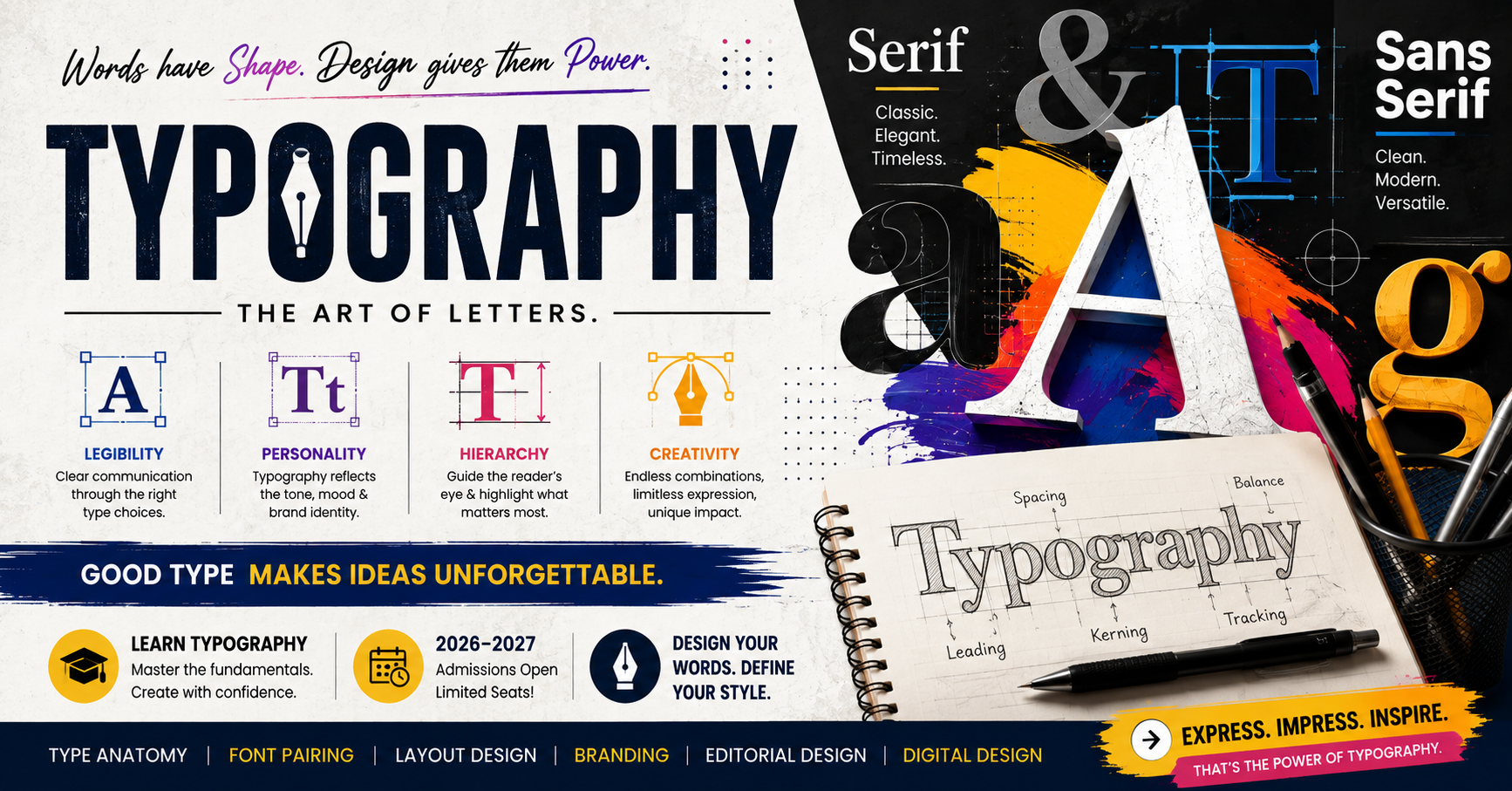
Typography
Typography is the art of selecting and arranging fonts. A designer should understand font styles, font hierarchy, spacing, readability, and combinations.
Good typography can make a design look professional, while poor typography can make even a good concept difficult to understand.
Layout and Composition
Designers need to understand how different elements should be positioned within a design.
A good layout helps viewers understand the most important information first.
Visual Hierarchy
Visual hierarchy determines which element attracts attention first, second, and third.
For example, in an advertisement, the product name or main offer may need to be noticed before supporting information.
Image Editing
Image editing is another important skill. Designers may need to crop images, remove backgrounds, adjust brightness, correct colours, retouch photographs, or combine multiple images.
Branding
Branding helps businesses maintain a consistent visual identity. A graphic designer may work with logos, colours, fonts, social media templates, packaging, advertisements, and other brand assets.
Graphic Design Software and Tools
Once the fundamentals are understood, students can begin learning professional design software.
Some commonly used tools include:
Adobe Photoshop
Adobe Illustrator
Adobe InDesign
Figma
Canva
CorelDRAW
Adobe Express
Other AI-powered creative tools
The choice of software depends on the type of work.
For example, Photoshop is widely used for image editing and digital graphics, Illustrator is useful for vector graphics and logos, InDesign is commonly used for page layouts and publications, and Figma is widely used for interface and collaborative design work.
Canva can be useful for beginners and quick marketing designs, but professional designers should also understand the underlying principles of design rather than depending entirely on templates.
Role of AI in Graphic Design
AI is becoming an important part of modern graphic design. It can help designers complete certain tasks faster and explore more creative possibilities.
AI can assist with:
Generating initial design ideas
Creating visual concepts
Background removal
Image enhancement
Generating image variations
Object removal
Content resizing
Creative brainstorming
Text and headline ideas
Repetitive design tasks
Generating rough visual references
However, AI should be treated as a creative assistant rather than a complete replacement for a professional designer.
A designer still needs to understand whether a generated visual is appropriate for the brand, whether the composition works, whether the typography is readable, and whether the final design communicates the intended message.
The future belongs to designers who can combine human creativity + design fundamentals + technology + AI skills.
Graphic Design Career Path: From Beginner to Professional
A graphic design career can develop gradually.
Stage 1: Beginner
At the beginner stage, students learn design fundamentals and basic software.
Typical work may include:
Simple social media posts
Basic banners
Thumbnails
Flyers
Simple promotional graphics
The main objective at this stage is learning and practice.
Stage 2: Junior Graphic Designer
After developing basic skills, a designer can apply for junior positions.
A junior designer may work with marketing teams, senior designers, agencies, or businesses.
Responsibilities can include creating social media creatives, advertisements, banners, presentations, and marketing materials.
Stage 3: Experienced Graphic Designer
With experience, designers take responsibility for complete projects.
They may work on branding, campaigns, marketing materials, packaging, digital advertisements, and larger client projects.
Stage 4: Senior Designer or Creative Professional
Experienced designers may move into roles such as:
Senior Graphic Designer
Creative Designer
Brand Designer
Visual Designer
UI Designer
UI/UX Designer
Art Director
Creative Lead
At this stage, creativity, communication, leadership, strategy, and project management become increasingly important.
Graphic Design Career Opportunities in Jalandhar
Jalandhar has businesses across different industries, and many of them require visual content for marketing and communication.
Graphic designers can find opportunities with:
Digital marketing agencies
IT companies
Advertising agencies
Printing companies
E-commerce businesses
Educational institutes
Local businesses
Startups
Media companies
Fashion brands
Restaurants and cafes
Real estate businesses
Photography studios
Event companies
A designer can work as an employee or provide services independently.
The growth of social media marketing has also increased the need for regular creative content. Businesses may require multiple designs every week for promotions, product launches, festivals, advertisements, and social media campaigns.
Graphic Designer Salary in India and Jalandhar
Graphic designer salaries can vary significantly depending on experience, skills, portfolio, specialization, company, and type of work.
A beginner may start around ₹15,000–₹25,000 per month. After gaining experience and improving skills, a designer may reach approximately ₹25,000–₹45,000+ per month.
Experienced professionals with strong portfolios and specialized skills may earn ₹50,000–₹80,000+ per month, while senior professionals, creative leads, specialized designers, and successful freelancers can potentially earn more.
These are indicative ranges rather than guaranteed salaries. Actual compensation can vary between companies and individuals.
A designer's portfolio can be particularly important when applying for jobs because employers often want to see what the candidate can actually create.
Can Graphic Designers Earn Through Freelancing?
Yes. Freelancing can be another career path for graphic designers.
Instead of working for only one company, freelancers can work with multiple clients.
Common freelance services include:
Logo design
Social media design
YouTube thumbnails
Business cards
Posters
Brochures
Brand identity
Website graphics
Advertisement creatives
E-commerce product graphics
Presentation design
Packaging design
Freelance income can vary widely. Beginners may start with smaller projects, while experienced freelancers with strong portfolios, communication skills, repeat clients, and international projects may charge significantly higher rates.
Graphic Design and Digital Marketing
Graphic design and digital marketing are increasingly connected.
A digital marketing campaign often requires visual content such as social media posts, advertisements, banners, thumbnails, infographics, and promotional creatives.
Because of this, a graphic designer who understands basic digital marketing can have an additional advantage.
Learning concepts such as:
Social media marketing
Content marketing
Branding
Advertising
SEO basics
Audience targeting
Conversion-focused design
can help designers understand not only how to make a design attractive but also why the design is being created and what business result it should support.
Graphic Design and UI/UX Design
Graphic designers can also move toward UI/UX design.
UI design focuses on the visual appearance of digital products such as websites and applications, while UX focuses more broadly on the user's experience and interaction with the product.
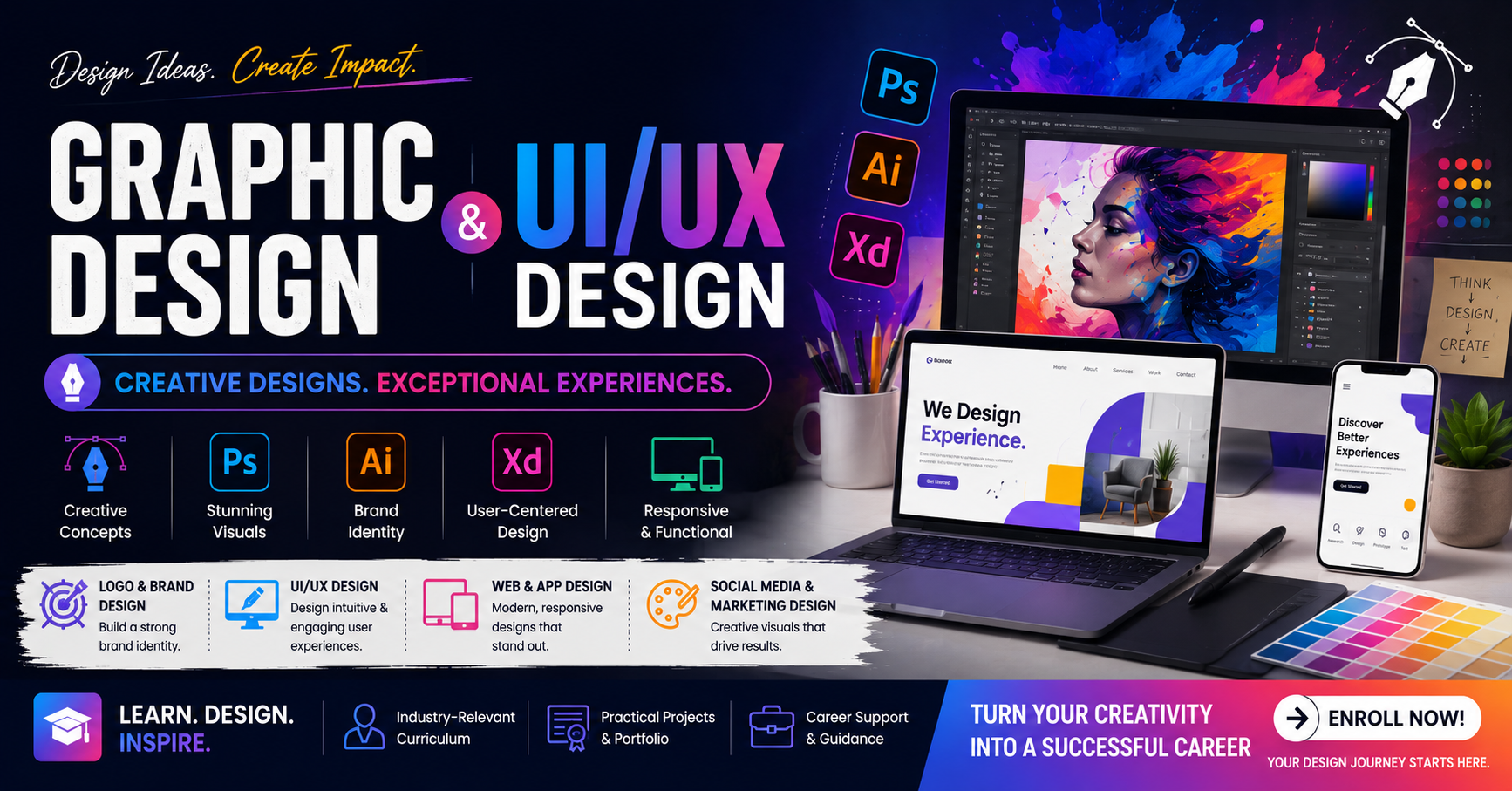
A graphic designer who already understands typography, colour, composition, spacing, and visual hierarchy may find these skills useful when learning UI design.
Tools such as Figma can help designers move from traditional graphic design toward digital interface design.
Why Portfolio Is Important for a Graphic Designer
A certificate can show that someone completed a course, but a portfolio demonstrates practical ability.
A beginner should gradually create a portfolio containing different types of projects.
For example:
Logo design
Brand identity
Social media campaign
Poster design
Advertisement creative
YouTube thumbnail
Website banner
Product advertisement
Packaging concept
AI-assisted creative project
The portfolio should show the designer's thinking, creativity, consistency, and ability to solve visual communication problems.
Skills Required for a Successful Graphic Design Career
Technical software knowledge alone is not enough.
Important skills include:
Creativity
Visual communication
Colour knowledge
Typography
Layout
Branding
Image editing
Attention to detail
Communication skills
Time management
Problem-solving
Client handling
Portfolio development
AI tool knowledge
Digital marketing awareness
A designer who continuously develops these skills can remain competitive as technology changes.
Is Graphic Design a Good Career in 2026–2027?
Graphic design continues to evolve rather than simply disappear because of AI.
The nature of the work is changing. Designers are increasingly expected to work with digital platforms, social media, branding systems, video content, UI design, AI tools, and fast-moving marketing requirements.
Instead of competing directly against AI, designers can learn to use AI to increase productivity while maintaining human creativity and professional judgment.
For students in Jalandhar, starting early can provide time to learn the fundamentals, practise regularly, build a portfolio, gain internship or project experience, and understand industry requirements.
Conclusion:
Graphic design is a creative and technology-driven career that can take a person from beginner-level design work to professional creative roles. The journey generally starts with design fundamentals, continues through software and practical projects, and can eventually lead to specialization in branding, digital marketing design, UI/UX, motion graphics, advertising, or freelancing.
In 2026–2027, AI is becoming an important part of this journey by helping designers generate ideas, automate repetitive tasks, edit images, and explore creative possibilities faster. However, strong fundamentals, originality, communication, and creative thinking remain essential.
For students and professionals in Jalandhar, learning graphic design + AI tools + digital marketing awareness + portfolio development can create a stronger career foundation. Whether the goal is a full-time job, freelance career, agency work, or eventually becoming a senior creative professional, consistent learning and practical experience are the key steps from starting point to long-term career growth.
Filed under
Comments
Loading…