On this page
- Digital Marketing Career Scope & Salary Guide: From Jalandhar in (2026-2027)
- Digital Marketing has rapidly evolved into one of the most dynamic and rewarding career fields today. Digital Marketing Career Scope & Salary Guide: From Jalandhar in (2026-2027) Beyond traditional marketing, businesses of all sizes are aggressively seeking skilled digital marketers to build their online presence.
- 4. Salary Guide: From Freshers to Experts
- In India, digital marketing salaries depend on your practical skills, experience, and the size of the company:
- The Evolving Landscape of Digital Marketing (2026 & Beyond)
- 5. Essential Digital Marketing Skills You Need to Become an Expert
- Search Engine Optimization (SEO)
- Google Ads and Performance Marketing
- Social Media Marketing
- Content Marketing and Copywriting
- 7. How Beginners Can Build a Strong Digital Marketing Portfolio
- Create Your Own Website or Blog
- Create Sample Advertising Campaigns
- 8. Digital Marketing Tools Every Professional Should Know
- SEO Tools
- Analytics Tools
- Content and Design Tools
- 9. Important Digital Marketing Metrics You Must Understand
- Traffic
- Conversion Rate
- Cost Per Lead (CPL)
- Customer Acquisition Cost (CAC)
- Return on Investment (ROI)
- 10. How Small Businesses Can Start Digital Marketing
- Step 1: Define Your Target Customer
- Step 2: Build a Professional Online Presence
- Step 4: Use Paid Advertising Strategically
- Step 5: Track and Improve
- 11. Digital Marketing Career Opportunities and Job Roles
- 12. How to Become a Digital Marketing Expert
- Stage 1: Learn the Fundamentals
- Stage 2: Practice on Real Projects
- Stage 3: Analyze Results
- Stage 4: Choose a Specialization
- Stage 5: Keep Learning
- 13. Freelancing and Entrepreneurship Opportunities
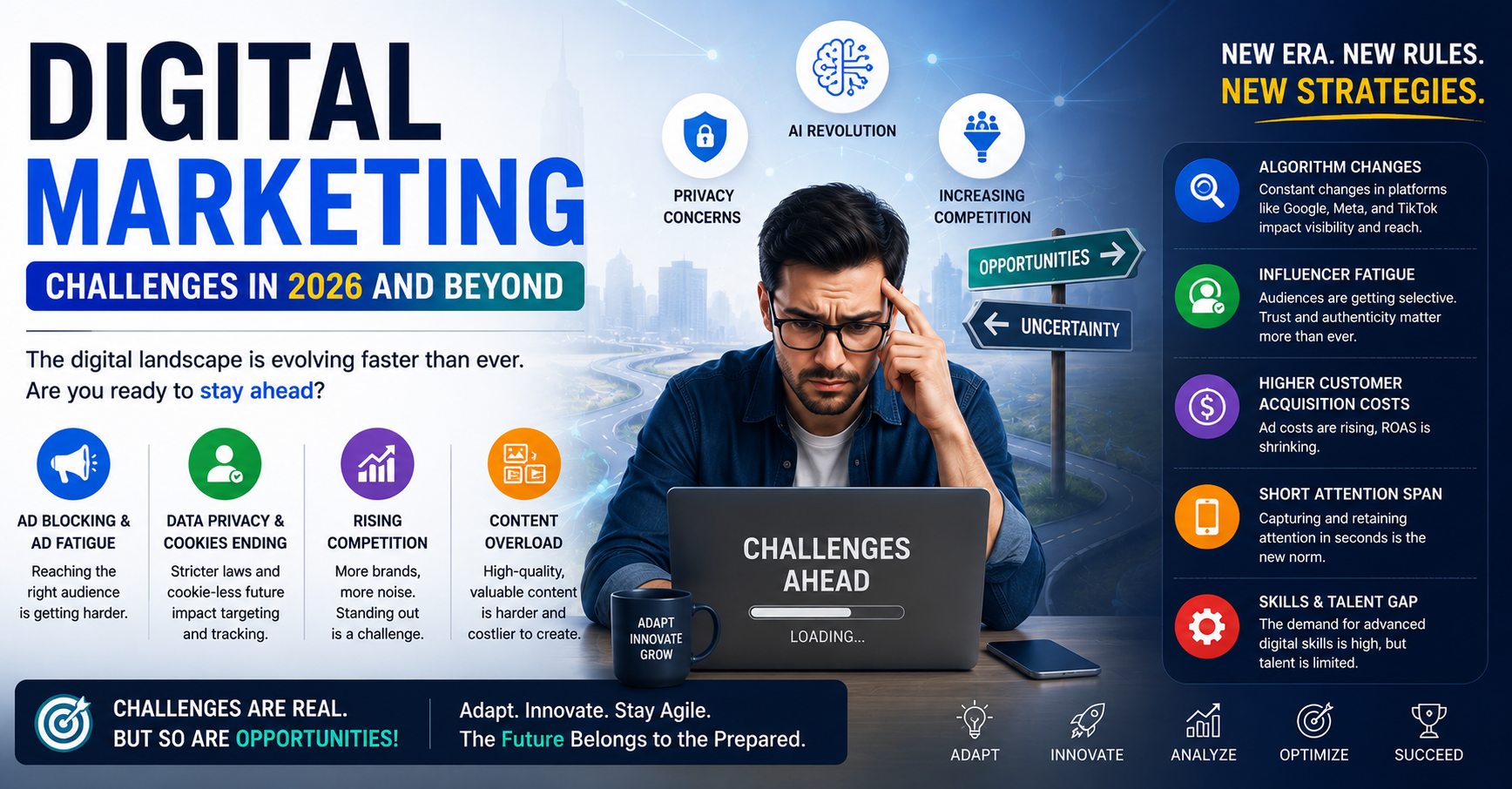
- 14. Digital Marketing Challenges in 2026 and Beyond
- Increased Competition
- Changing Algorithms
- AI-Generated Content
- Rising Advertising Costs
- Privacy and Data Changes
- 15. Why Digital Marketing Is a Strong Career Choice
- Conclusion: Your Roadmap from Beginner to Digital Marketing Expert
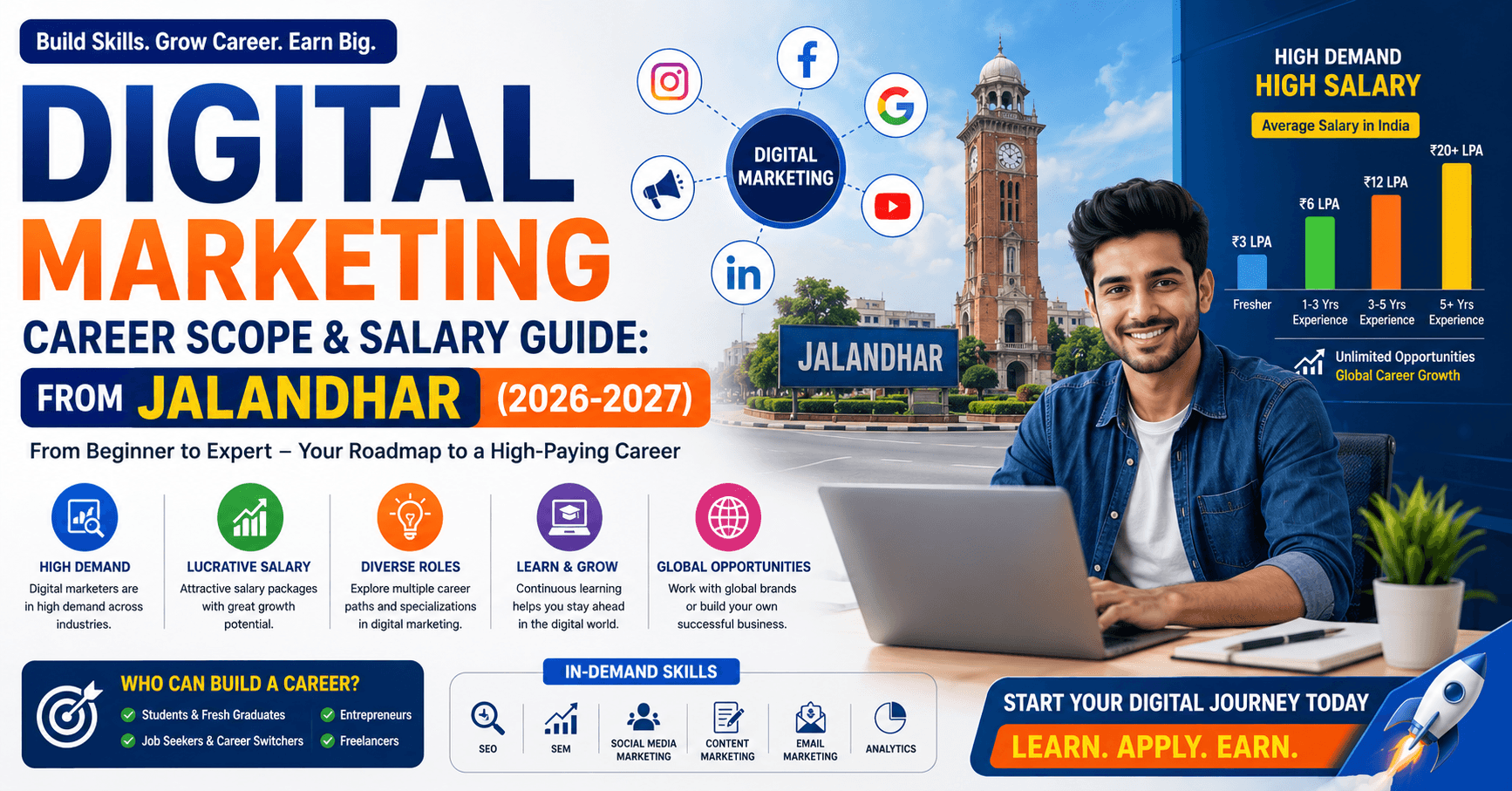
Digital Marketing Career Scope & Salary Guide: From Jalandhar in (2026-2027)
Digital Marketing has rapidly evolved into one of the most dynamic and rewarding career fields today. Digital Marketing Career Scope & Salary Guide: From Jalandhar in (2026-2027) Beyond traditional marketing, businesses of all sizes are aggressively seeking skilled digital marketers to build their online presence.
This comprehensive guide explores the journey from Beginner to Expert, effective strategies for business growth, and the expected salary packages at each career stage.
1. Starting Point: Beginner Level (0 to 1 Year)
Anyone—whether a fresh graduate, job seeker, or professional switching fields—can start a career in digital marketing. At the entry level, you need to focus on foundational skills:
Core Skills: Learn the fundamentals of Search Engine Optimization (SEO), Social Media Management, Pay-Per-Click (PPC / Google Ads), and Basic Content Writing.
Practical Portfolio: Instead of just reading theory, build a personal blog or manage a live social media page to gain real-world, hands-on experience.
2. Career Path: From Zero to Advanced Level (Growth Journey)
Digital marketing offers rapid career progression for individuals equipped with the right skill set:
Beginner / Executive (0 - 2 Years): You start as an SEO Executive, Social Media Executive, or PPC Executive, focusing on executing daily marketing campaigns.
Mid-Level Specialist (2 - 5 Years): You specialize in a specific niche (such as Performance Marketing or Advanced SEO) and manage larger marketing budgets independently.
Senior Level / Manager (5+ Years): You step into roles like Digital Marketing Manager, Head of Growth, or CMO, overseeing entire teams and overall marketing strategies.
3. How to Grow a Business Using Digital Marketing?
Whether you are running your own business or managing one for a brand, scaling through digital marketing requires a multi-channel approach:
Search Visibility (SEO & Local SEO): Rank your business website on the first page of Google so potential customers find you organically when searching for your products or services.
Performance Marketing (Paid Ads): Leverage Google Ads and Meta Ads (Facebook/Instagram) to instantly target high-intent buyers, generating quick leads and sales.
Branding & Social Media: Build brand trust and customer engagement through video marketing, reels, and authentic customer reviews.
Data Analytics & AI Tools: Use modern AI tools to analyze customer behavior, optimize ad spend, and maximize your Return on Investment (ROI).
4. Salary Guide: From Freshers to Experts
In India, digital marketing salaries depend on your practical skills, experience, and the size of the company:
Fresher / Entry-Level (0-1 Year):
Salary Package: ₹2.5 Lakh to ₹6 Lakh per annum (LPA) (approximately ₹20,000 to ₹45,000 per month).
Mid-Level Specialist (2-5 Years):
Salary Package: ₹6 Lakh to ₹15 Lakh per annum (LPA). (Performance marketers and senior SEO specialists are in particularly high demand).
Senior Level / Manager (5+ Years):
Salary Package: ₹15 Lakh to ₹30+ Lakh per annum (LPA) or higher, depending on campaign success and leadership impact.
The Evolving Landscape of Digital Marketing (2026 & Beyond)
Digital marketing is no longer just about running basic social media ads or writing simple blogs. Today, it represents the full spectrum of online business growth, driven heavily by advanced data analytics, mobile-first consumer habits, and AI integration.
Explosive Market Growth: India's digital ad market is heading toward ₹69,856 crore, growing at a rapid 19% year-on-year.
The Talent Gap: While job openings grew by 30% over the past two years, industry reports highlight that fewer than 1 in 5 applicants possess verifiable, campaign-level skills.
The AI Shift: Generative AI tools handle routine tasks like first-draft writing and basic creative variations, raising the bar. Professionals who combine strategic thinking with AI fluency are commanding top-tier salaries across the board.
5. Essential Digital Marketing Skills You Need to Become an Expert
To build a successful career in digital marketing, learning only one skill is not always enough. The digital marketing industry is highly competitive, and companies increasingly look for professionals who understand multiple marketing channels. A strong digital marketer should know how different platforms work together to generate traffic, leads, conversions, and long-term business growth.
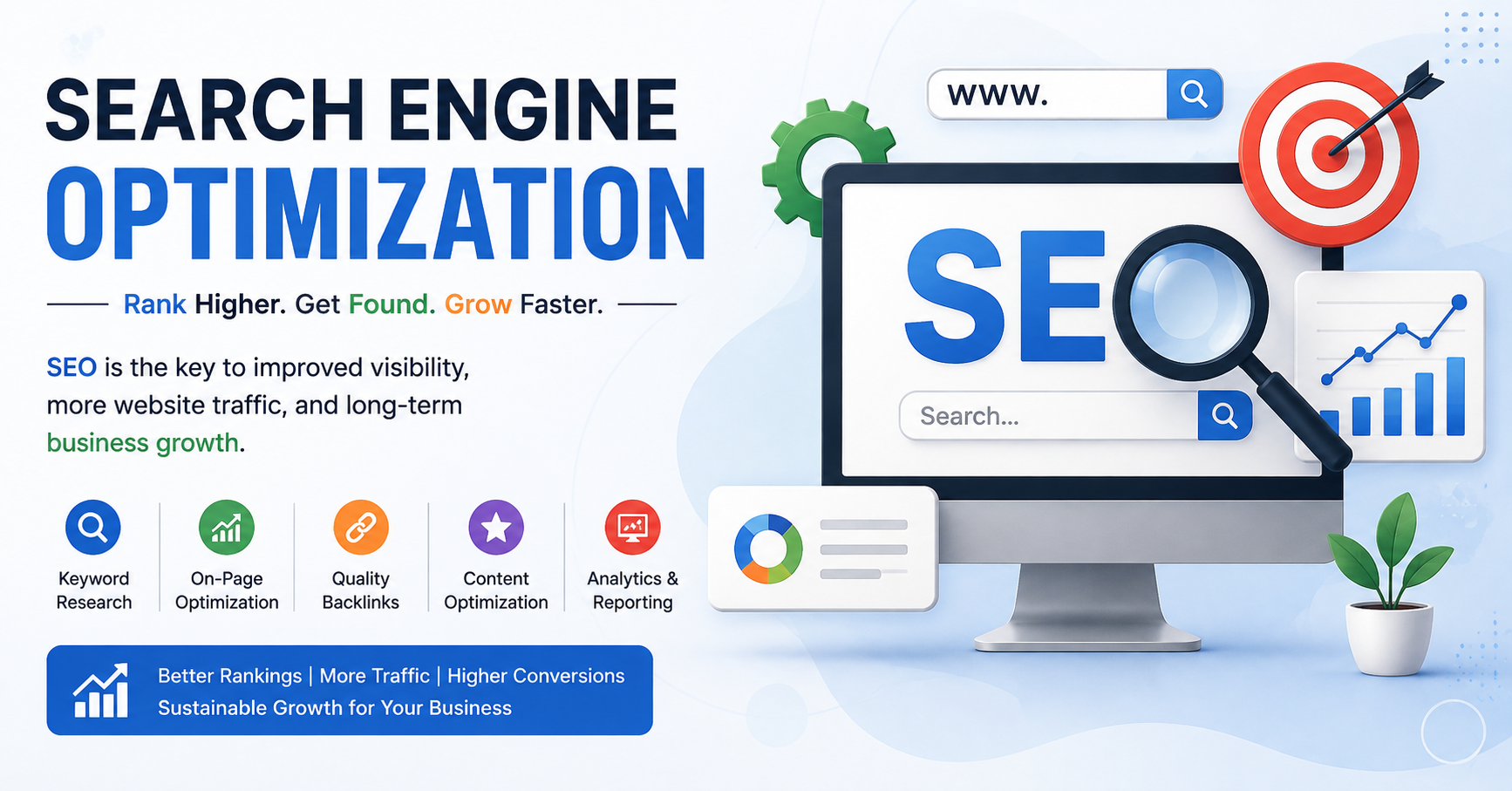
Search Engine Optimization (SEO)
SEO is one of the most important skills in digital marketing. It helps websites improve their visibility on search engines when users search for relevant products, services, or information.
A digital marketer should understand:
Keyword research and search intent
On-page SEO optimization
Technical SEO basics
Off-page SEO and link building
Local SEO and Google Business Profile optimization
Content optimization
SEO reporting and performance tracking
AI search and modern search optimization concepts
SEO is especially valuable for businesses because organic traffic can continue generating leads over the long term. Professionals who can combine technical SEO, quality content, user experience, and data analysis have strong career opportunities.
Google Ads and Performance Marketing
Paid advertising is another high-demand skill. Businesses invest in Google Ads to reach people who are actively searching for products or services.
Important areas include:
Search campaigns
Display campaigns
Video campaigns
Shopping campaigns
Keyword targeting
Conversion tracking
Landing page optimization
Budget management
Cost per lead optimization
Return on Ad Spend (ROAS) analysis
Performance marketing is highly result-oriented. Your success is often measured by leads, sales, conversions, revenue, and ROI. This makes practical campaign knowledge extremely valuable.
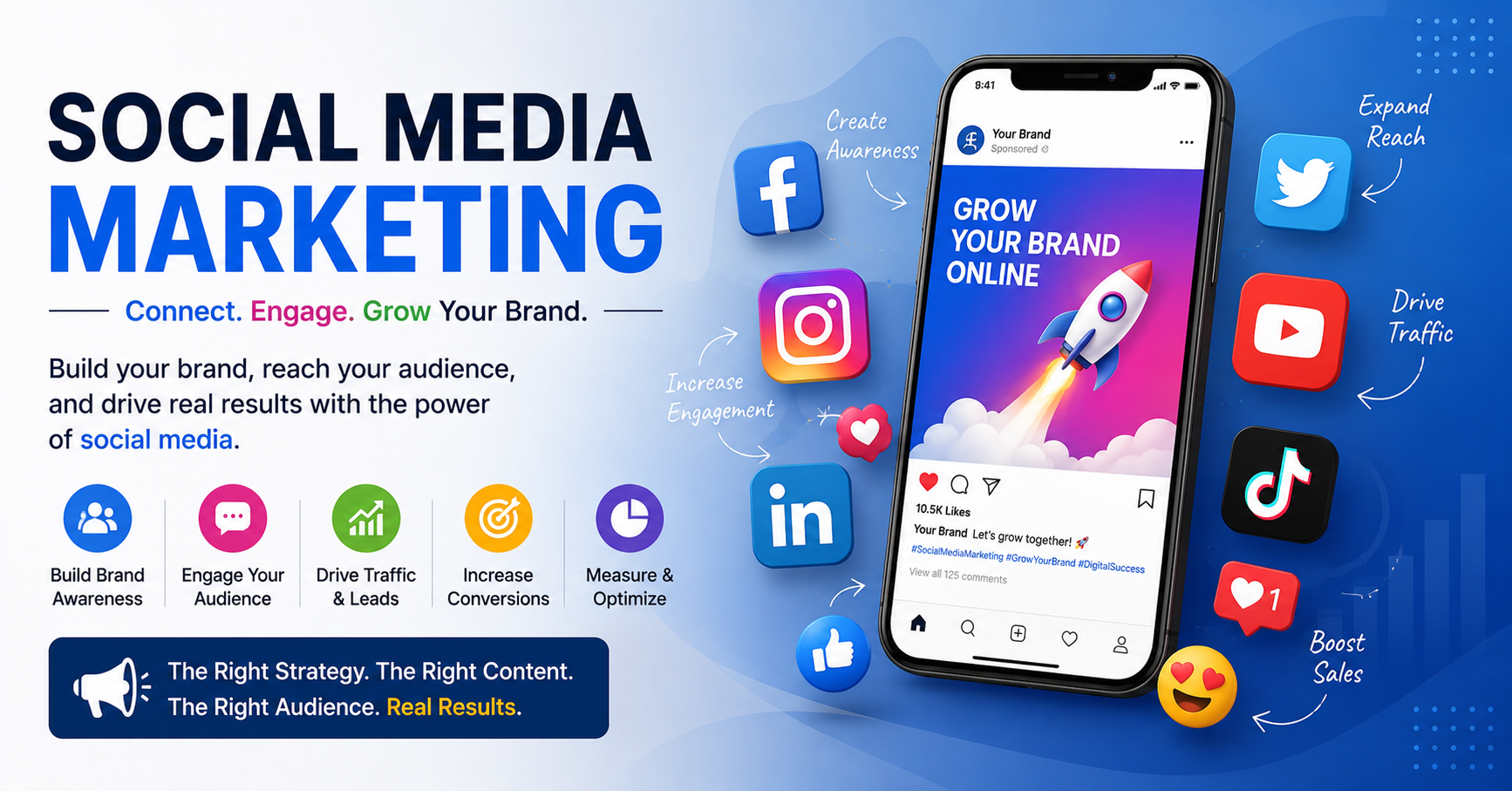
Social Media Marketing
Social media platforms have become powerful channels for brand awareness and customer engagement. A skilled social media marketer should know how to create content that attracts attention and encourages users to interact with a brand.
Key skills include:
Content planning
Social media strategy
Reels and short-form video marketing
Community management
Influencer collaboration
Meta Ads basics
Audience targeting
Social media analytics
Brand communication
Businesses today need more than regular posts. They need a clear strategy that connects content with business goals.
Content Marketing and Copywriting
Content plays a major role in digital marketing. Blogs, website pages, videos, emails, product descriptions, social media posts, and advertisements all require effective content. Digital Marketing Career Scope & Salary Guide: From Jalandhar in (2026-2027) .
A good digital marketer should understand how to create content for different stages of the customer journey.
For example:
Awareness Stage: Educational blogs, videos, guides, and social posts
Consideration Stage: Case studies, comparisons, reviews, and detailed service pages
Conversion Stage: Landing pages, offers, ad copy, and strong calls to action
Retention Stage: Email marketing, customer updates, and loyalty campaigns
For example, anyone can generate a basic advertisement using an AI tool. But an expert digital marketer understands the target audience, customer pain points, campaign objective, brand voice, budget, 768 432 conversion tracking, and performance metrics. This combination of marketing knowledge + AI skills + human strategy will become increasingly important.
In the future, companies will value professionals who can use AI to work faster while still making intelligent marketing decisions.
7. How Beginners Can Build a Strong Digital Marketing Portfolio
One of the biggest problems for freshers is that companies often ask for experience. The best way to solve this problem is to create practical projects.
You do not need to wait for your first job to start building a portfolio.
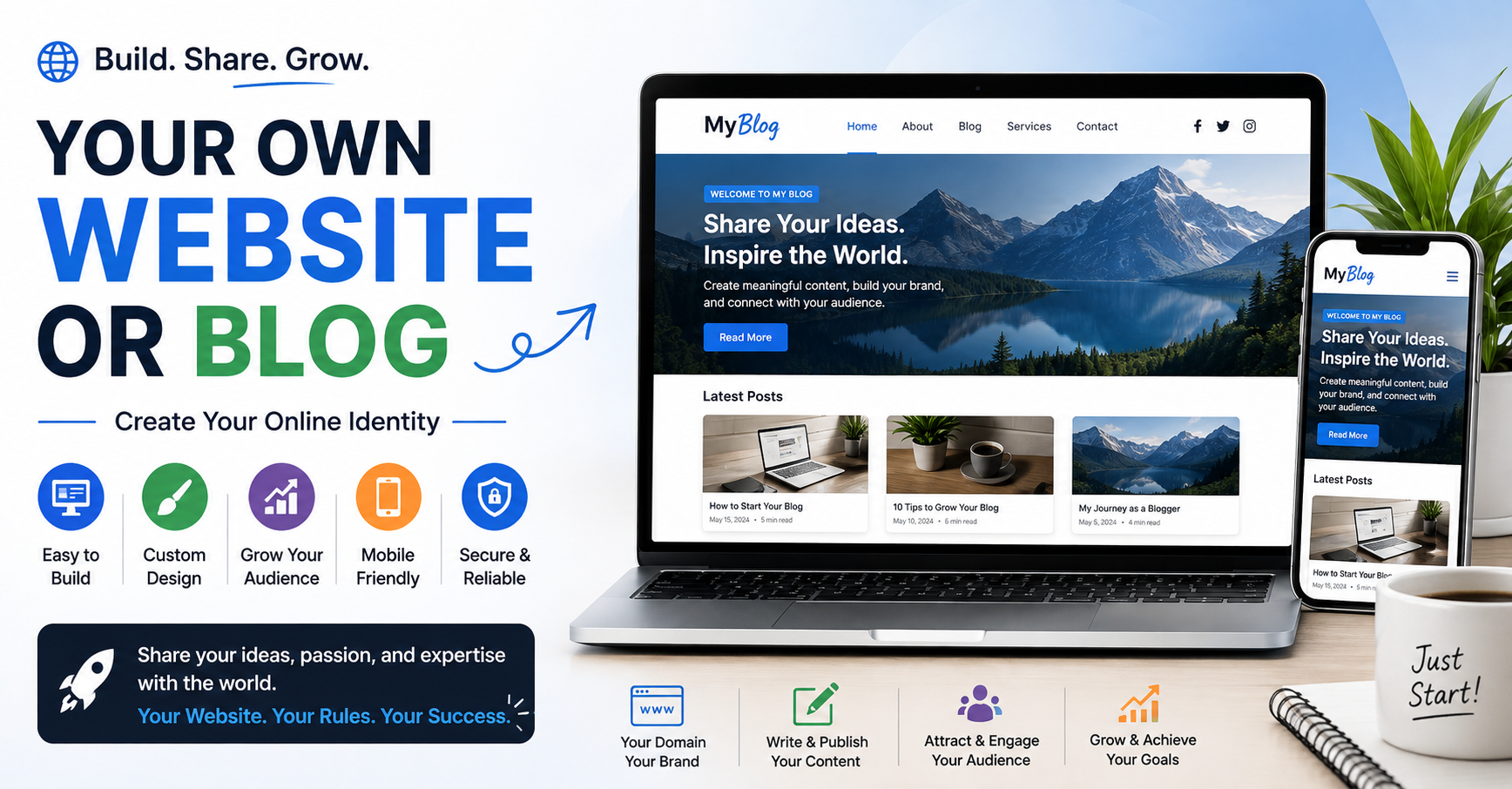
Create Your Own Website or Blog
Build a simple website around a topic that interests you. You can use it to practice:
Keyword research
SEO
Blog writing
On-page optimization
Website analytics
Conversion optimization
Over time, you can show the growth of your website as evidence of your practical skills.
Create Sample Advertising Campaigns
Study how businesses advertise and create sample campaigns with:
Campaign objectives
Target audiences
Keywords
Ad copy
Budget strategy
Landing page ideas
Expected conversion goals
If you get the opportunity to work with a small business, even a small campaign can become a valuable case study.
8. Digital Marketing Tools Every Professional Should Know
Digital marketing does not require learning every tool available online. Instead, focus on understanding the purpose of important tools.
SEO Tools
Digital marketers commonly use tools for:
Keyword research, Competitor analysis, Website audits, Rank tracking, Backlink analysis, Search performance reporting
Analytics Tools
Analytics helps marketers understand what happens after users visit a website. Important metrics may include A performance marketer should understand the major advertising ecosystems used to reach customers through search engines, social platforms, video platforms, and other digital channels.
Content and Design Tools
Basic knowledge of content creation and visual communication is also helpful. Digital marketers frequently work with:
Blog content, Social media creatives, Videos, Presentations, Landing pages, Email campaigns.
The goal is not to become an expert in every software tool. The real goal is to understand which tool solves which marketing problem.
9. Important Digital Marketing Metrics You Must Understand
Digital marketing is not based only on likes and followers. Businesses want measurable results.
A professional should understand important metrics such as:
Traffic
Traffic shows how many people visit a website or landing page. However, high traffic alone does not always mean business success. The quality and relevance of visitors also matter.
Conversion Rate
Conversion rate measures the percentage of users who complete a desired action, such as:
Filling out a form, Calling a business, Making a purchase, Downloading a resource, Booking a consultation Improving conversion rate can often generate more business without increasing advertising spend.
Cost Per Lead (CPL)
CPL helps businesses understand how much money is being spent to acquire one potential customer.
Customer Acquisition Cost (CAC)
This measures the cost required to acquire a new customer. Businesses use this metric to understand whether marketing campaigns are profitable.
Return on Investment (ROI)
ROI helps measure the value generated compared with the money invested.
A successful digital marketer should not focus only on campaign activity. They should understand how marketing efforts contribute to real business outcomes.
10. How Small Businesses Can Start Digital Marketing
Small businesses do not always need a massive budget to begin digital marketing. A smart strategy can start with the platforms where potential customers are already searching.
A simple approach includes:
Step 1: Define Your Target Customer
Understand:
Who is your ideal customer?
What problem do they want to solve?
What products or services do they need?
Where do they search online?
What information helps them make a purchase decision?
Step 2: Build a Professional Online Presence
Depending on the business, this may include:
A professional website, Optimized service pages, Social media profiles, Local business visibility, Customer reviews, Clear contact information
Step 4: Use Paid Advertising Strategically
Businesses can start with a focused budget and test campaigns. The goal should be to understand which audience, message, keyword, or creative generates the best results.
Step 5: Track and Improve
Digital marketing allows businesses to measure results. Regularly analyze campaign data and improve what is working.
The strongest growth strategy is usually based on continuous testing, learning, and optimization.
11. Digital Marketing Career Opportunities and Job Roles
Digital marketing offers multiple career paths. After learning the fundamentals, professionals can choose to specialize.
Popular roles include:
SEO Executive, SEO Specialist, Local SEO Specialist, Social Media Executive, Social Media Manager, PPC Executive, Google Ads Specialist, Performance Marketer, Content Writer, Content Marketing Specialist, Email Marketing Specialist, Digital Marketing Executive, Digital Marketing Manager, Growth Marketer, Marketing Analyst, E-commerce Marketing Specialist, AI Marketing Specialist, This flexibility is one of the major advantages of choosing digital marketing as a career. A beginner can start with a general role and later specialize based on their interests and strengths.
12. How to Become a Digital Marketing Expert
Becoming an expert does not happen by completing one course or receiving one certificate. Real expertise develops through continuous practice.
A strong learning path can look like this:
Stage 1: Learn the Fundamentals
Understand:
SEO, Social media marketing, Content marketing, Google Ads, Meta Ads, Analytics, Email marketing, Basic website concepts.
Stage 2: Practice on Real Projects
Apply your skills through:
Personal websites
Blogs
Internship projects
Freelance projects
Local businesses
Sample campaigns
Stage 3: Analyze Results
Learn how to answer questions such as:
Why did traffic increase or decrease?
Which keyword generated conversions?
Why is an advertisement expensive?
Which audience performs better?
Why are users leaving a landing page?
How can the campaign ROI improve?
Stage 4: Choose a Specialization
After gaining basic experience, develop deeper expertise in one or more high-value areas.
Stage 5: Keep Learning
Digital marketing changes continuously. Search algorithms, advertising platforms, AI technology, consumer behavior, and privacy rules can all affect marketing strategies.
The best professionals continue learning throughout their careers.
13. Freelancing and Entrepreneurship Opportunities
Digital marketing is not limited to traditional jobs. Professionals can also build careers through freelancing, consulting, or starting an agency.
Freelance services may include:
SEO services
Social media management
Google Ads management
Meta Ads
Content writing
Local SEO
Website optimization
Email marketing
Marketing strategy
To succeed as a freelancer, technical skills are important, but communication and business skills also matter.
A freelancer should learn how to:
Understand client requirements
Set clear expectations
Present strategies
Create professional reports
Track results
Build long-term client relationships
As experience grows, professionals may eventually build their own digital marketing agency or consulting business.
14. Digital Marketing Challenges in 2026 and Beyond
The industry offers significant opportunities, but it is also becoming more competitive.
Some major challenges include:
Increased Competition
More people are learning digital marketing, which means basic knowledge alone is no longer enough.
Changing Algorithms
Search engines and social platforms regularly update their systems. Strategies that worked in the past may need to change.
AI-Generated Content
AI makes content creation faster, but businesses still need original ideas, accurate information, strong strategy, and content that genuinely helps users.
Rising Advertising Costs
Competition can increase the cost of paid advertising. Marketers must improve targeting, creative quality, conversion rates, and campaign efficiency.
Privacy and Data Changes
Changes in data privacy and tracking can affect audience targeting and measurement. Digital marketers need to understand modern measurement strategies rather than depending on a single data source.
These challenges create an important opportunity: professionals with strong practical skills and strategic thinking can stand out.
15. Why Digital Marketing Is a Strong Career Choice
Digital marketing connects creativity, technology, communication, data, and business strategy. This makes it suitable for people with different interests and backgrounds.
You can enter the field if you enjoy:
Technology
Business growth
Content creation
Social media
Data analysis
Advertising
Creative strategy
Website optimization
AI tools
There is no single path to success. Some professionals become SEO experts, while others build careers in performance marketing, content, social media, analytics, or growth strategy.
Your salary and career growth will ultimately depend less on simply knowing marketing terms and more on your ability to solve real business problems.
Conclusion: Your Roadmap from Beginner to Digital Marketing Expert
Digital marketing offers excellent career and business opportunities for individuals who are ready to learn and practice continuously. A beginner can start by understanding SEO, social media marketing, paid advertising, content marketing, and analytics.
The next step is crucial: apply your knowledge to real projects.
Build a portfolio, analyze campaigns, understand customer behavior, and learn how marketing activities connect to leads, sales, revenue, and business growth. As you gain experience, you can specialize in high-value areas and move toward senior roles, freelancing, consulting, or entrepreneurship.
In 2026 and beyond, the most successful digital marketers will not simply be those who know how to use AI tools or run advertisements. They will be professionals who can combine human creativity, strategic thinking, practical campaign skills, data analysis, and AI fluency.
Whether you are a student, fresher, job seeker, business owner, or working professional, now is an excellent time to develop practical digital marketing skills. Start with the fundamentals, practice consistently, build real projects, measure your results, and continue improving.
The journey from beginner to expert starts with learning—but real success comes from implementation, experimentation, and measurable results.
Filed under
Comments
Loading…