Learning by doing, not just listening
Classroom learning explains a concept; practical training makes you use it — set up the tools, write the code, hit the error and fix it under a mentor's eye.
Build practical technology skills alongside your degree — a 45-day training in a semester break or a six-month final-semester internship, across ten domains, ending in a project you can demonstrate and document.
Verify programme details with techcadd and your training requirements with your own institution before you enrol.
Training durations
A short, focused training in one technology — fundamentals, guided lab practice and a project with a report. Suits a summer or winter break, and the semester-break training many B.Tech, BCA and diploma courses ask for. Confirm the duration with your college.
Explore 45 days trainingThe full-semester pathway: ten technology domains, a month-by-month roadmap and a capstone project — built for final-semester industrial training.
Explore 6 months internshipOverview
An internship is supervised work inside an organisation. Industrial training is instruction plus guided projects at a training centre. A course teaches a syllabus. Colleges use these words differently, so the question is less what a programme is called and more what you will practise, build and be able to show at the end of it.
Programme boundaries matter. A training programme can include internship-style project work without being employment, and it cannot promise academic credit or a job. Ask for the timetable, sample assignments and project rubrics.
Classroom learning explains a concept; practical training makes you use it — set up the tools, write the code, hit the error and fix it under a mentor's eye.
Universities use the term for the practical component of a degree — six weeks after a semester, or a full final semester. Your college's handbook defines what qualifies.
Exercises and project work are reviewed and returned with feedback, and you keep a record — diary, repository, report — that shows what you did and when.
Expect stronger fundamentals, a project you can explain and the habits of professional work. Do not expect a programme alone to make you an expert or secure a job.
Who can apply
The right programme depends on your degree, semester, starting skills and what your college asks for. These are the students who most often join.
Summer training after the fourth or sixth semester, or a final-semester internship — check which your university asks for and in which format.
Programming, web, database and data tracks build on your coursework and end in a project you can submit and demonstrate.
Deeper design choices, teamwork and a stronger capstone than an undergraduate track — useful when the semester project carries real weight.
A focused training in one technology can meet a diploma's practical-training requirement. Confirm the duration your board specifies.
Final-year students often need formal documentation; second-year students can use a short training to explore a field before committing to it.
No coding yet, or a non-computing degree? Introductory tracks exist, but advanced AI, cloud or security work expects some foundations first — a counsellor can assess where you are.
If your college requires an NOC or permission letter, arrange it before you register. Students with backlogs should check their own eligibility with the college.
Many commute from Phagwara, Hoshiarpur, Kapurthala, Nakodar and Kartarpur. Plan travel time alongside your batch timing.
Why practical training?
Skills that lectures describe but only practice builds — and the evidence to show teachers and interviewers that you have them.
Regular, consistent lab work turns concepts you have read about into things you can do without looking them up.
Reading error messages, isolating problems and testing before calling something done are learned only by doing them repeatedly.
Committing work in Git, writing clear updates and working alongside others are the everyday habits of any technical team.
One well-documented project with a repository and a README says more than a list of tools on a CV.
A problem you actually solved gives you a concrete answer when an interviewer asks what you have built and why you made the choices you did.
Weeks of hands-on work in one domain tell you whether you enjoy it before you commit a job search or postgraduate degree to it.
Internship domains
Each domain has a dedicated internship guide with its tools, roadmap and project work. Choose by what you enjoy and the roles you want, not by what is trending.
Python fundamentals, data preparation, model evaluation, responsible use of AI, and a small reproducible project. Complete beginners should not expect advanced research outcomes.
Collecting, cleaning, exploring, visualising and interpreting data with Python, statistical reasoning and reproducible notebooks — ending in an analysis of an open dataset with transparent charts.
Excel, Google Sheets, SQL, Python with NumPy, pandas, Matplotlib and Seaborn, and Power BI or Tableau — cleaning data, defining KPIs and building dashboards, ending in a business report with clear, defensible recommendations.
HTML, CSS, JavaScript, Python and Django, REST APIs, MySQL databases, authentication basics, testing and deployment. Projects are built incrementally and documented as they go.
MongoDB, Express, React and Node.js, from components and state to REST APIs, JWT authentication and deployment, ending in a full application built and shipped end to end.
Networking fundamentals, Linux, security hygiene, logging and authorised lab exercises. Every exercise runs in a permitted environment.
Linux, Git, networking, cloud service models, IAM principles, deployment, containers, CI/CD concepts and cost awareness.
Search intent, on-page SEO, content planning, analytics, paid campaign concepts and conversion measurement, ending in a campaign proposal built on realistic assumptions.
Mobile interface patterns, application state, API integration, testing and release fundamentals, ending in a small app with clear usability goals.
Sensors, controllers, embedded logic, data transmission, prototyping and safety-conscious testing, ending in a documented demonstrator.
Syllabus & learning roadmap
A 45-day training moves through these phases quickly; a six-month internship gives each one weeks. Pace also depends on where you start — ask for the detailed syllabus of your domain.
Onboarding, a baseline of your current skills, the development environment and Git from day one.
The domain's essential concepts, taught through supervised lab tasks of increasing difficulty.
A first project built with a mentor, reviewed and returned for revision rather than simply marked.
The tools a working team uses, practised in pairs or groups with shared repositories.
A problem you scope yourself — requirements, milestones, a test plan — then build in stages.
Test it, write it up, and present the problem, your approach, the difficulties and the result.
Course vs internship vs industrial training
Compare the actual learning environment, supervision, deliverables and academic recognition — not just the programme label.
| Course | Industrial training | Internship | |
|---|---|---|---|
| What it is | A defined syllabus taught and assessed | Instruction plus guided projects at a training centre | Supervised work inside an organisation |
| Who supervises | A trainer or teacher | A trainer and project mentor | A supervisor at the workplace |
| What it records | Assessed knowledge of the syllabus | Attendance, a project, its report and source code | Work deliverables and a record of supervised experience |
| What to check | Syllabus depth and how you are assessed | Whether your college accepts it for the training semester | The actual work, supervision and terms of the placement |
Real-world projects
Examples across domains. The project you build depends on your domain, duration and level, and is scoped with your mentor.
Records, search and reports on a relational database.
Catalogue, cart, authentication and an order flow.
Cleaned data turned into KPIs and interactive charts.
Time-series data, a baseline and an honest error measure.
Clustering customers and explaining what each group means.
A small image-classification model with documented limits.
Deployed with a domain, HTTPS and a simple CI pipeline.
Traffic, logs and alerts in a controlled lab network.
A checklist-led assessment, in an authorised lab only.
Consuming a public API with error handling and caching.
Unit and end-to-end tests that run on every commit.
A written report with recommendations backed by data.
A shared repository, divided roles and a joint demonstration.
Present your work honestly: separate your contribution from team work and starter templates, and never describe a classroom exercise as client work.
Admission & training process
Call, walk in or send the form with your degree, semester and interests.
A conversation about your goals, starting skills and the domains that suit them.
Bring your college's training guidelines so duration and documents can be matched.
Choose a specialisation and confirm you meet its prerequisites.
Agree the joining date and batch timing around your college calendar.
Register and keep the written receipt and programme details.
Meet your mentor, set up tools and take a short skill assessment.
Regular mentor feedback on exercises and project milestones.
Present and explain your project to reviewers.
Receive the documents you are eligible for under the programme's conditions.
University & college requirements
Documents a college may ask for. Formats differ by university, so bring your department’s guidelines and confirm what the centre issues for your batch.
No training centre can guarantee acceptance by every university. Get written guidance from your training and placement cell or department before paying fees.
Duration & batches
Six weeks suits a semester break; six months suits a final-semester training. Your university decides which it needs.
Final-semester training usually follows one of these windows. Match the joining date to when your college releases you.
If examinations fall inside the training, ask how missed sessions and project milestones are made up before you join.
Ask for the current timetable and whether a weekend option exists for your domain and batch.
Onsite lab sessions and any online component are different formats — confirm which your college accepts.
Get the attendance commitment, batch size and project milestone calendar in writing before the start date.
Fees & eligibility
Fees vary with duration, domain and what is included, so ask for the current written fee for your programme rather than relying on a figure quoted elsewhere.
Web development, digital marketing and foundational data tracks are accessible starting points. Advanced AI, cybersecurity and cloud tracks may expect prior coding, mathematics or systems knowledge — a counsellor can assess where you are before you choose.
Career opportunities
Possible entry-level pathways, depending on demonstrated skills and employer requirements:
No programme alone guarantees a job. Hiring depends on skills, projects, interview performance, location, market conditions and employer criteria.
Lead with two or three explained projects — repository, screenshots, README — rather than a long list of tools.
Entry-level roles go to candidates who can demonstrate and explain their work. Training improves your evidence; it does not replace the interview.
Finish with a plan: the skill gap your project revealed, what you will learn next, and the roles you will apply for.
Certifications & deliverables
A certificate documents participation or completion. It does not by itself prove employment experience or guarantee academic credit.
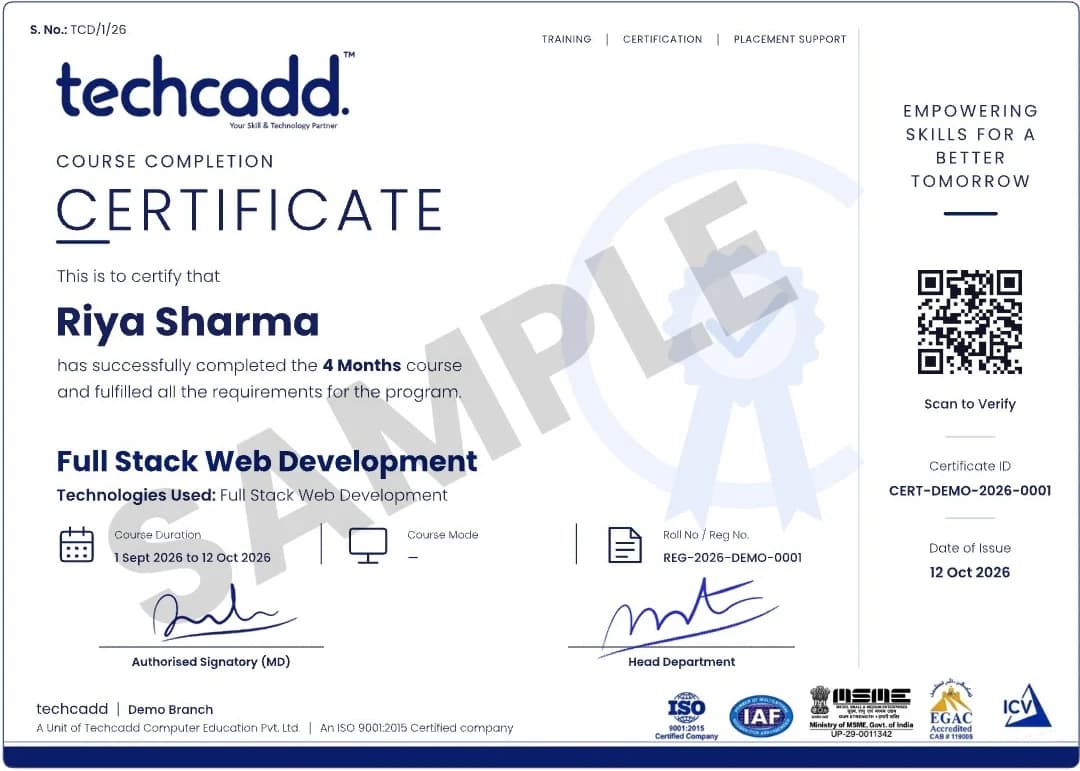
Issued on finishing the programme, with a QR code and certificate ID anyone can verify.
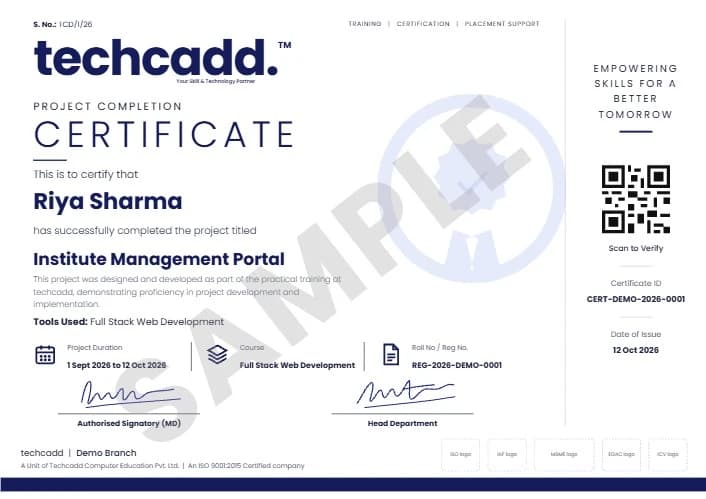
A separate certificate naming the live project you designed and built during training.
Why choose techcadd?
Judge us on what you can see: the centre, the trainers, the course outlines and the work students produce in these rooms.
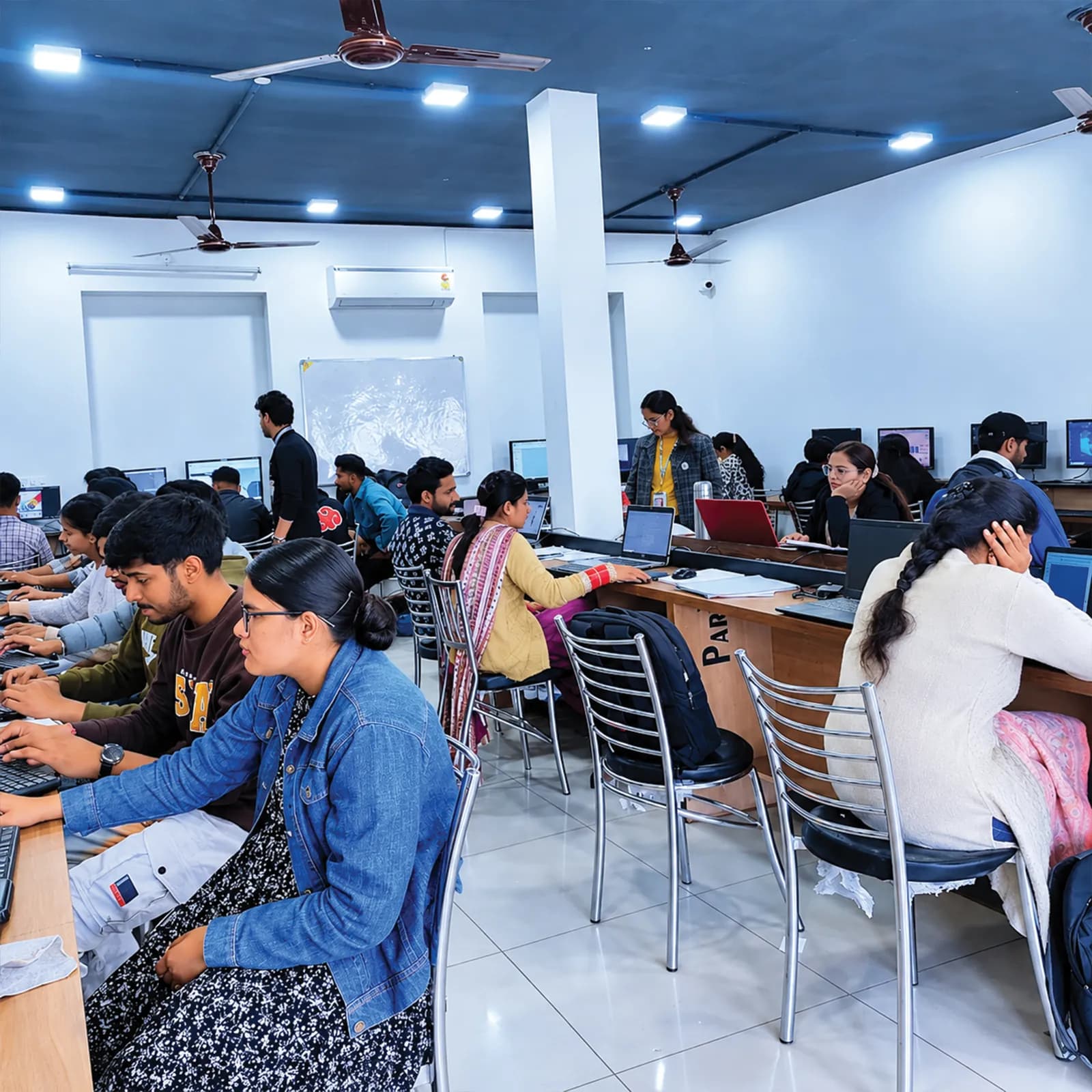
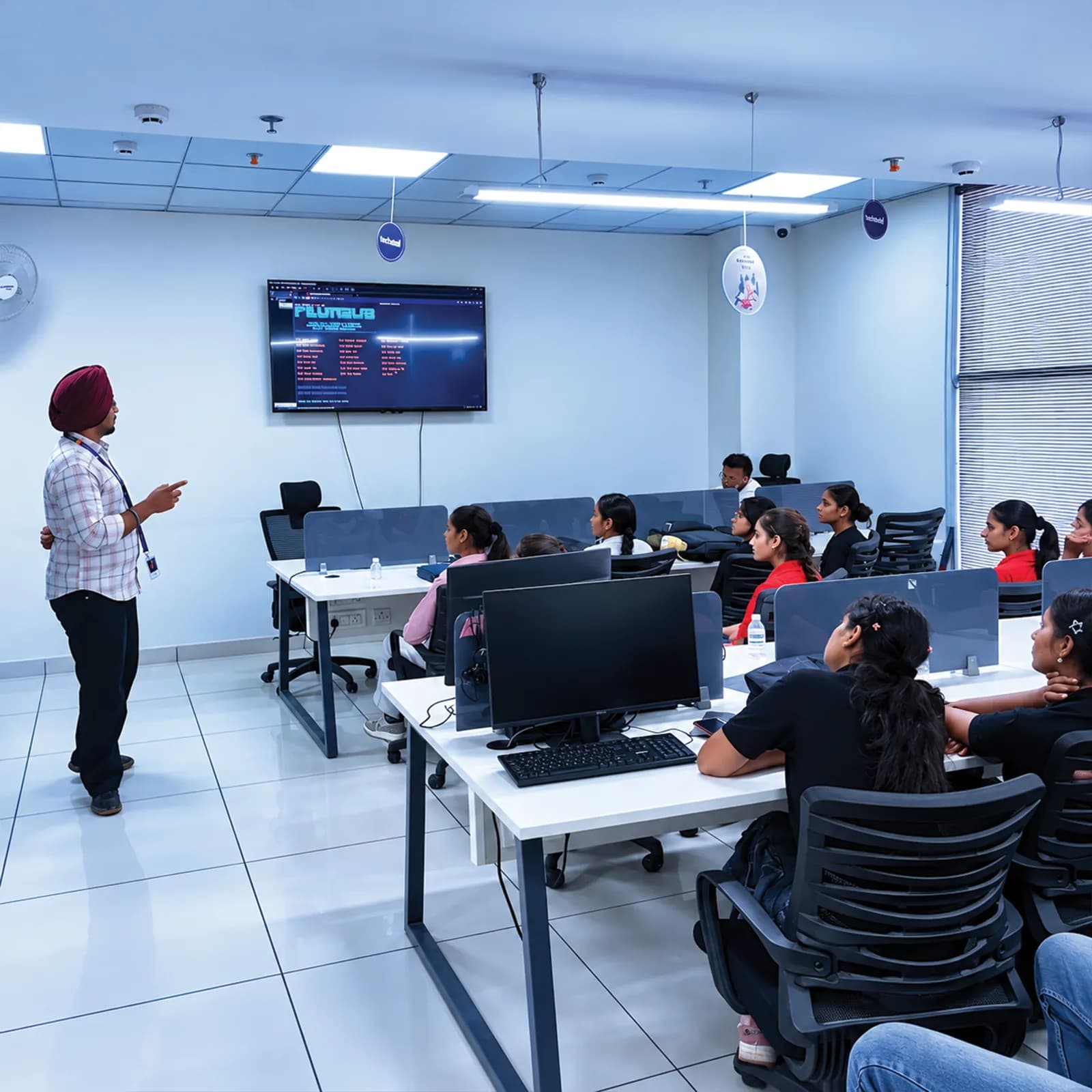
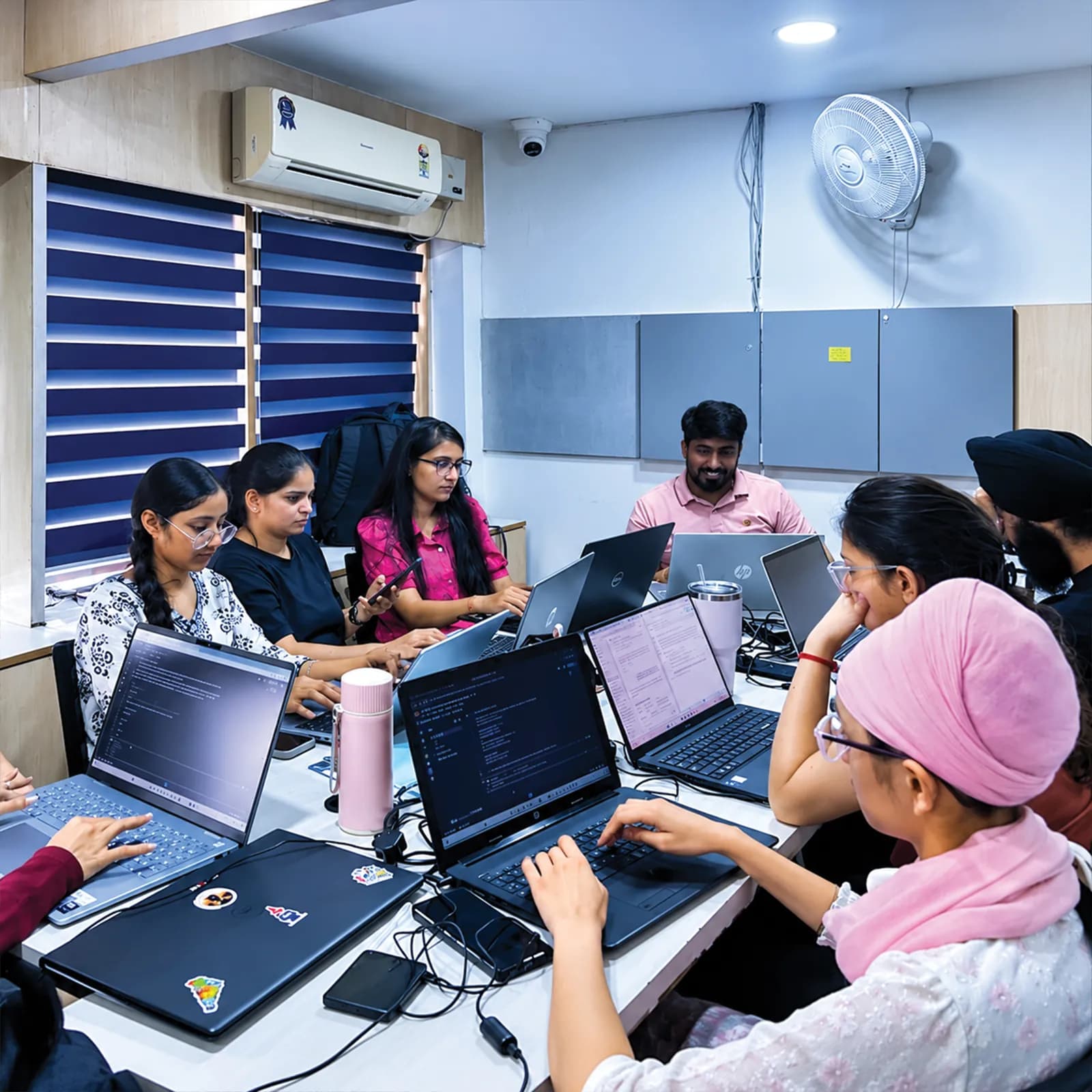
Your degree, semester and interests decide the domain — a conversation comes before any registration.
Concepts, lab exercises and a project in every domain, with mentors and lab access at one centre.
Regular reviews of your exercises and project, so you know where you stand before the final demonstration.
Guidance on structuring your report, diary and presentation to the format your college sets.
Students come in from across Jalandhar and commute from Phagwara, Hoshiarpur, Kapurthala, Nakodar, Kartarpur and Ludhiana. Training here is onsite at the centre — if your college distinguishes online from onsite training, confirm which it accepts. Visit before you confirm a batch.
techcadd Jalandhar — 2nd Floor, Crystal Plaza, SCS 78, Opposite PIMS Hospital, Jalandhar, Punjab 144001Frequently asked questions
The correct answer can differ by degree, semester, domain and batch — confirm any academic requirement directly with your institution.
techcadd Jalandhar runs six-month internship and industrial training across ten technology domains. Compare the syllabus, project work and documentation with your college's requirements before choosing any provider.
It depends on your university, branch and scheme. Some require a final-semester training, others a six-week summer training. Check your department handbook.
Yes. Programming, web, data and other tracks suit BCA students, subject to each track's prerequisites.
Basic Python helps considerably. Beginners can start with foundations, but should not expect advanced AI outcomes without that groundwork.
Fees depend on the duration, domain and what is included. Ask the centre for the current fee in writing, with inclusions, payment schedule and refund terms.
Only your college or university can decide that. Confirm the documents and format it requires before you enrol.
Project work is documented, and guidance is available on structuring a report. Your college sets the format and decides whether to accept it.
Ask what “live” means for your batch. Training projects are realistic practice work; they are not presented as client work unless they genuinely are.
No. Training helps you build skills and a portfolio, but hiring depends on your skills, interview performance, market conditions and employer criteria.
There is no single answer. Choose by what you enjoy — building interfaces, working with data, or systems and security — and by the roles you want. Counselling helps.
Batches are planned around college calendars, including the January–June and July–December semester windows. Ask for the current joining dates.
Yes, for introductory tracks. Advanced tracks may expect prior coding, mathematics or systems knowledge.
Typically your college's NOC or permission letter if it requires one, and its training guidelines. Ask the centre which completion documents it issues.
Forty-five days (six weeks) is a short, focused training in one technology, usually during a semester break. Six months is a full-semester pathway ending in a capstone project.
Call +91 98881 22254, send an enquiry from this page or visit the centre. Share your degree, semester and preferred domain, then confirm the syllabus and batch before registering.
techcadd Jalandhar is at 2nd Floor, Crystal Plaza, SCS 78, Opposite PIMS Hospital, Jalandhar, Punjab 144001.
Apply
Share your degree, semester and preferred technology. A counsellor will help you choose a duration and domain, and check them against your college’s requirements before you register.