6-Month Data Science Mastery Program in Jalandhar
A six-month, project-driven path from data fundamentals to production-ready AI systems — Python, data engineering, machine learning, deep learning, LLMs, RAG, AI agents and full cloud deployment, across 24 modules and one industry capstone.
- Live client projects
- Practitioner trainers
- Placement support
- Certificate + internship
- Duration
- 6 Months
- Syllabus
- 24 Modules, 2026 Edition
- Mode
- Classroom, Weekend & 1-on-1
- Includes
- Internship Letter
- Students trained
- 25,000+Students trainedsince 2016
- Google rating
- 4.9★Google rating556+ reviews
- Practical training
- 100%Practical traininglive client work
Course overview
techcadd's Data Science Mastery Program in Jalandhar is a six-month, project-driven path from data fundamentals to production-ready AI systems, run as the 2026 edition of the syllabus — which means the classical data science pipeline and the LLM stack are taught as one job rather than two courses: Excel and Power BI, Python, SQL and data engineering, machine learning and deep learning, then LLMs, vector search, RAG, AI agents and cloud deployment.
Month one covers data and programming foundations — advanced Excel, Power Query, Power BI and DAX; modern Python with uv, virtual environments, OOP, logging, type hinting, pytest, Ruff and Black; Git, GitHub and AI coding tools; then SQL on PostgreSQL with window functions, query optimisation, APIs, JSON and FastAPI basics with JWT authentication. Month two moves into data engineering and machine learning: Pandas 2.x, NumPy, Polars, DuckDB and PyArrow, then cleaning, feature engineering, EDA, interactive visualisation with Plotly and Streamlit, statistics and probability, scikit-learn pipelines and cross validation, and gradient boosting with XGBoost, LightGBM and CatBoost.
Month three turns to deep learning and computer vision with PyTorch, tensors, neural networks, CNNs and transfer learning, OpenCV, YOLO, OCR, image segmentation, Vision Transformers and Hugging Face. Month four opens the LLM stack: tokenization, embeddings, context windows and attention; prompt engineering and structured prompting; the OpenAI, Gemini, Claude and Grok APIs alongside Ollama and LiteLLM; and embeddings with FAISS, ChromaDB, Pinecone, Qdrant and Milvus for semantic search.
Month five is where those pieces become applications — RAG architecture with hybrid search, re-ranking, evaluation and guardrails; LangChain, LangGraph, CrewAI and the Model Context Protocol with tool calling and structured outputs; multi-agent systems and enterprise agent design; and FastAPI advanced, async, background tasks, WebSockets, Streamlit, Gradio and Chainlit. Month six is deployment and the capstone: Docker and Docker Compose, Linux, Nginx, AWS, Azure AI and Google Vertex AI, AI security including prompt injection and jailbreak defence, secret management, responsible AI and CI/CD with GitHub Actions — closing with a complete industry-level AI SaaS application built with FastAPI, PostgreSQL, RAG pipelines, AI agents, containerisation and full cloud deployment, delivered with documentation and a professional GitHub repository.
One programme,every data and AI career
Data science is the work of turning raw data into decisions: collecting it, cleaning it, finding patterns and, increasingly, building AI systems that act on it. A single business question, such as which customers are about to stop buying, can need a dashboard, a prediction model and an AI assistant to answer fully.
Think of a doctor's clinic in Jalandhar. The receptionist keeps records (data engineering), the doctor reads the reports and spots a trend (analytics), predicts how a patient is likely to respond (machine learning) and now uses AI tools that read reports in seconds (generative AI). This programme teaches all of those steps as one job, which is why it opens several careers rather than one. Each field below shows how much of it the six months actually cover.
- Job-ready focus3 fields
- The course trains you for entry-level work in this field.
- Strong foundation3 fields
- You learn the base skills here; one specialised course makes you job-ready.
- Introduced
- You will use it in the course, but it is not a specialisation.
- Not covered
- Not part of this course; available as a separate techcadd course.
What this course makes you job-ready for
Job-ready focusData Analytics & Business Intelligence
Answering business questions with existing data: which product sells most, which branch is falling behind, where money is being lost. The output is reports and dashboards managers act on.
A KPI dashboard for a Jalandhar hand-tools exporter showing monthly orders, late shipments and top buyers by country.
- Data Science tools used
- ExcelPower BIPower QueryDAXSQL (PostgreSQL)Plotly
- Job roles
- Data AnalystMIS ExecutiveBI Analyst
Month 1 (Module 01 Excel, Power BI & Data Literacy; Module 04 SQL) and Month 2 (Module 06 EDA, Visualization & Statistics). Project: Business KPI Dashboard.
Machine Learning & Predictive Modelling
Training models that learn from past data to predict something new: a price, a risk, a likely customer action.
Predicting which hospital patients are likely to miss a follow-up appointment, so staff can call them first.
- Data Science tools used
- PythonPandasscikit-learnXGBoostLightGBMCatBoost
- Job roles
- Data ScientistMachine Learning EngineerData Science Associate
Month 2: Module 07 Machine Learning Foundations (scikit-learn pipelines, cross validation) and Module 08 Gradient Boosting & Model Tuning. Project: End-to-End ML Pipeline.
LLM & Generative AI Applications
Building applications on top of large language models: assistants that answer from a company's own documents, tools that return structured data, and AI agents that complete multi-step tasks.
An assistant for a Punjab school that answers parents' questions from the school's own circulars and fee notices.
- Data Science tools used
- OpenAI APIClaude APIGoogle GeminiLangChainLangGraphCrewAIMCPFAISSChromaDBPinecone
- Job roles
- LLM / AI EngineerAI Agent DeveloperAI Application Developer
Months 4–5: Modules 13–20 (LLM fundamentals, prompt engineering, LLM APIs, vector databases, RAG, LangChain and MCP, AI agents, AI application development). Projects: RAG Assistant over Real Documents, Industry AI SaaS Capstone.
What this course lays the foundation for
Strong foundationData Engineering
Building the pipes that move data from where it is created to where it is analysed, and keeping it clean, fast and reliable on the way.
A daily job that pulls sales from a shop's billing software, cleans it and loads it into a database the dashboard reads from.
- Data Science tools used
- SQL (PostgreSQL)PandasPolarsDuckDBPyArrowApache SparkAirflow
- Job roles
- Junior Data EngineerData Analyst (technical)Backend / API Developer
Module 04 (PostgreSQL, database design, query optimisation) and Module 05 Data Engineering Fundamentals (Pandas 2.x, Polars, DuckDB, PyArrow). Big-data tools such as Spark and Airflow, and cloud data warehouses, are not part of the syllabus.
Deep Learning & Computer Vision
Neural networks for data that is not a neat table: images, video and text. Computer vision teaches machines to see; transformers power modern language models.
Reading printed invoice numbers from scanned bills with OCR, or counting cartons on a warehouse camera feed.
- Data Science tools used
- PyTorchOpenCVYOLOHugging Face
- Job roles
- Deep Learning Engineer (junior)Computer Vision Engineer (junior)
Month 3: Modules 09–12 (PyTorch, CNNs and transfer learning, object detection and OCR with YOLO, transformers and Hugging Face). Project: Computer Vision Build. One month gives a solid base; techcadd's Deep Learning course goes deeper.
AI Deployment, Cloud & MLOps
Putting models and AI apps on the internet so real users can use them, keeping them secure, and updating them automatically when the code changes.
Shipping a RAG assistant in a Docker container to AWS, with a GitHub Actions pipeline that redeploys it every time the code is updated.
- Data Science tools used
- FastAPIDockerNginxAWSAzure AIGoogle Vertex AIGitHub Actions
- Job roles
- AI EngineerBackend / API DeveloperMLOps Engineer (with further training)
Module 04 and Module 20 (FastAPI basics to advanced), Month 6 (Module 21 Containerization & Cloud Deployment, Module 22 AI Security & CI/CD). Project: Industry AI SaaS Capstone. Kubernetes and dedicated MLOps platforms are not covered.
Clearing up common confusions
Data Analytics or Data Science?
Analytics explains what happened and why, using dashboards and reports. Data science goes further and predicts what will happen next, using statistics and models. This programme teaches both: analytics in months one and two, then modelling and AI on top of it.
Is this a data science course or a generative AI course?
Both, by design. Months 1 to 3 are the classical data science pipeline; months 4 to 6 are the LLM and agent stack. Employers increasingly expect a data scientist to build an AI assistant as well as a model, so the 2026 edition teaches them as one job.
Data science is also used in…
Banking and fraud detection, agriculture and crop forecasting, healthcare research, e-commerce recommendations and sports analytics. Tableau, big-data platforms (Spark, Hadoop), front-end web development and academic research methods are not part of this programme, but the Python, SQL and modelling skills it teaches carry straight into all of them.
At a glance: what this course covers
| Field | Coverage in this course | Where you learn it | Next step at techcadd |
|---|---|---|---|
| Data Analytics & BI | Job-ready focus | Modules 01, 04, 06; KPI Dashboard | Ready to apply |
| Machine Learning | Job-ready focus | Modules 05–08; ML Pipeline | Ready to apply |
| LLM & GenAI apps (RAG, agents) | Job-ready focus | Modules 13–20; RAG Assistant, Capstone | Ready to apply |
| Data Engineering | Strong foundation | Modules 04–05 | Cloud or big-data training on the job |
| Deep Learning & Computer Vision | Strong foundation | Modules 09–12; Computer Vision Build | Deep Learning course |
| Deployment, Cloud & MLOps | Strong foundation | Modules 20–22; Capstone | AWS Cloud, Docker & Kubernetes |
| Tableau | Not covered | — | Tableau course |
Which Data Science pathsuits you?
You do not need to choose a role before you join. Everyone works through the same six months, and most students find their direction somewhere between the month-one dashboard and the month-five RAG build. If you already have a leaning, this guide helps:
| If you… | You will probably enjoy | Typical first job |
|---|---|---|
| Are comfortable with Excel and like explaining numbers to people | Data Analytics & BI | Data Analyst, MIS Executive |
| Enjoy statistics, patterns and making predictions | Machine Learning | Data Scientist, ML Engineer |
| Are excited by ChatGPT-style tools and want to build your own | LLM apps, RAG and agents | LLM / AI Engineer, AI Agent Developer |
| Like images, cameras and visual problems | Deep Learning & Computer Vision | Computer Vision Engineer (junior) |
| Like building systems that run reliably for others | Data engineering and deployment | Backend / API Developer, Junior Data Engineer |
| Want to freelance or work remotely | RAG assistants and AI agents | Freelance AI consultant |
| Are not sure yet | Start with this programme | Decide with your trainer once you have built the first two or three projects |
Industry-Ready Training in Data Science
- 100% practical, project-based learning
- AI tools integrated into every module
- Live client projects under trainer supervision
- Internship letter and placement support
- Small batches with daily doubt clearing
What you will
actually build
The syllabus is a six-month calendar of 24 topics, four per month, and every topic produces something a trainer reads rather than a set of notes. Months 1–2 build the data and machine learning foundation, month 3 covers deep learning and computer vision, months 4–5 open the LLM, RAG and agent stack and turn it into applications, and month 6 is deployment, AI security and the industry capstone. Topics run in the order a real project runs: get the data, model it, make it intelligent, then ship it and defend it.
Data & Programming Foundations
- Module 01 · Excel, Power BI & Data Literacy — Excel Advanced, Power Query, DAX, business dashboards, KPI reporting, AI productivity
Power Query cleans and reshapes raw data, DAX writes the measures, and Power BI turns both into a KPI dashboard a manager actually reads — the deliverable candidates show before any Python code exists.
- Module 02 · Python Fundamentals & Engineering Practices — VS Code, uv, virtual environments, OOP, exception handling, logging, type hinting, pytest, Ruff, Black
Python written the way a 2026 team runs it: uv for dependencies, OOP and exception handling for structure, type hints and logging for clarity, and pytest, Ruff and Black keeping code tested and clean from week one.
- Module 03 · Git, GitHub & AI Coding Tools — Git Flow, GitHub Copilot, Cursor AI, Windsurf IDE
Git Flow branching discipline paired with GitHub Copilot, Cursor AI and Windsurf — the AI coding assistants a working developer now writes alongside, not a novelty demoed once and never used again.
- Module 04 · SQL, Database Design & APIs — PostgreSQL, database design, window functions, query optimisation, APIs, JSON, FastAPI basics, JWT, Postman
A normalised PostgreSQL schema with window functions and query optimisation, exposed through a JWT-authenticated FastAPI endpoint returning JSON and tested in Postman — the same data-service pattern month one's project ships.
Useful for: Every field, and Data Analytics directly (Power BI dashboards, SQL).
AI-Integrated Data Science Is Powering the Next Generation of Industry Leaders
- One programme covering the whole job — Excel and SQL through machine learning, deep learning, LLMs, RAG, agents and cloud deployment.
- Data Scientist and AI Engineer roles in Punjab start around ₹20,000 – ₹38,000 a month for a fresher with a deployed portfolio.
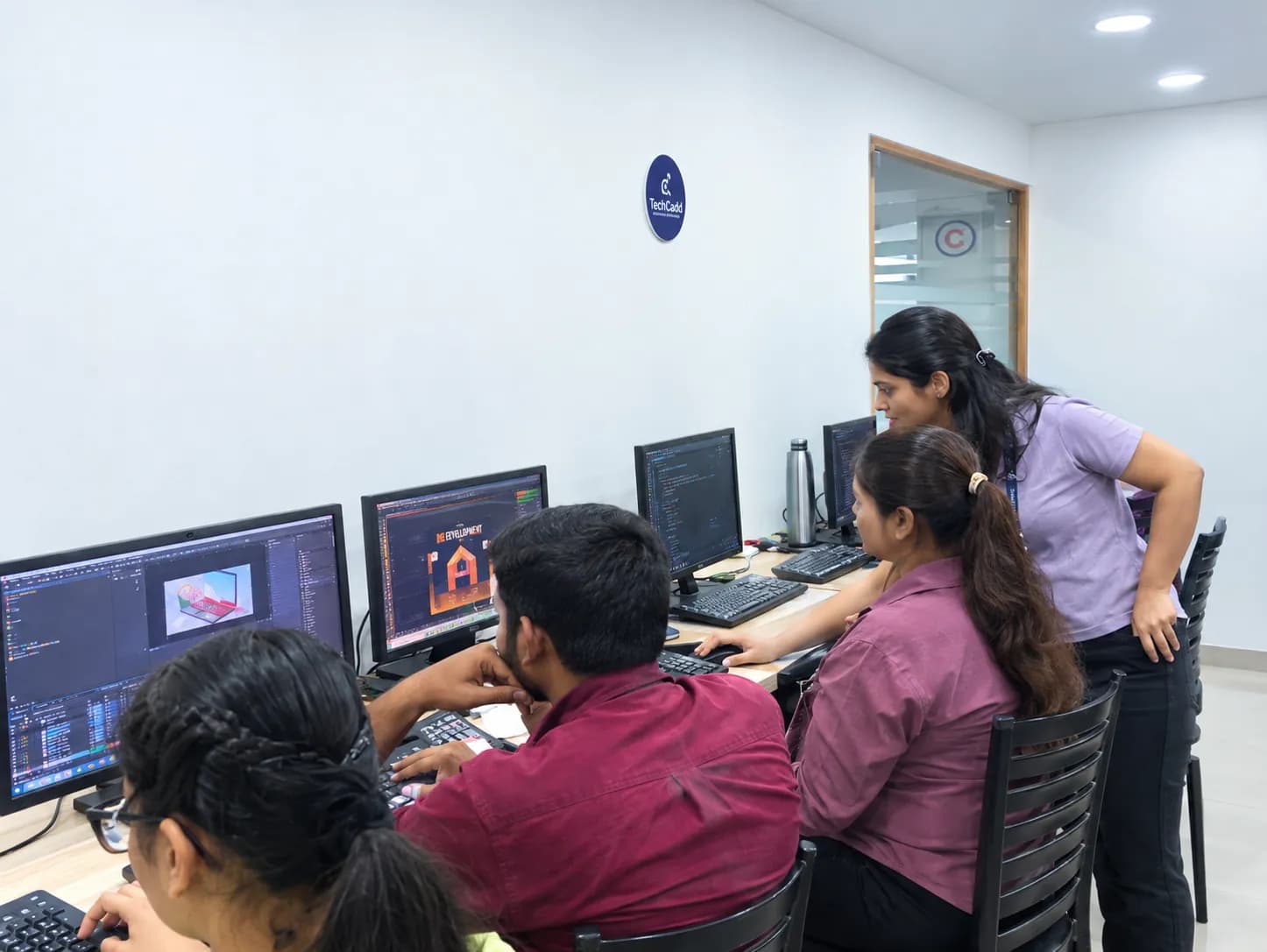 Reviewed by mentors. Built for interviews.
Who can dothis course
The programme is built for people at six different starting points, and the batch is deliberately mixed. Month one starts at Excel and Python fundamentals with nothing assumed — but this is six months of steady building, and what decides your outcome is finishing what each module asks for.
Students after 12th
Join from any stream. Month one teaches Excel, Power BI and Python from the ground up, and most students run the programme alongside a degree at a Jalandhar college using the weekday or weekend batch.
Graduates and final-year students
If you are finishing a BCA, B.Sc, B.Com, BBA or B.Tech, this is the shortest route from degree to a data role. You enter placement season with a capstone AI SaaS app on GitHub rather than a blank CV.
Working professionals
The weekend batch exists for people already earning. Analysts and MIS executives who already live in Excel usually find month one familiar and move quickly into the Python, ML and LLM work from month two onward.
Business owners and freelancers
Owners take this to stop outsourcing analysis they cannot judge. Freelancers take it for the month four to six stack — RAG assistants, AI agents and deployed FastAPI apps are the highest-paid brief an independent developer can take right now.
Career restarters
A gap on the CV counts for less than work someone can open. You leave with a documented internship letter, a professional GitHub portfolio and a deployed AI application to walk an interviewer through.
Self-taught learners
If scattered tutorials left you with notebooks but nothing shipped, what changes here is a six-month calendar, a trainer who reviews your code each week, and a capstone with a deadline attached to it.
One course.A mesh of real tools.
Everything below is installed on the lab machines and used on live client work, not shown once in a slide and forgotten.
 Git & GitHub
- Python
- The main language of data science and AI
- SQL (PostgreSQL)
- Stores data and pulls exactly what you need from it
- Pandas
- Loads, cleans and reshapes tables of data
- NumPy
- Fast maths on arrays of numbers
- Polars
- A faster alternative to Pandas for larger datasets
- DuckDB
- Runs SQL directly on data files, no server needed
- Power BI
- Microsoft's tool for business dashboards
- Excel
- Quick analysis and reporting most businesses already use
- scikit-learn
- The standard library for classical machine learning
- XGBoost
- A gradient boosting library that wins many prediction tasks
- LightGBM
- A fast gradient boosting library for large tables
- CatBoost
- Gradient boosting that handles text categories well
- PyTorch
- Builds and trains neural networks for deep learning
- OpenCV
- Reads and processes images and video
- YOLO
- Detects objects in images and video in real time
- Hugging Face
- A hub of pretrained AI models you can use and adapt
- OpenAI API
- Connects your app to OpenAI's language models
- Google Gemini
- Google's family of language models, used through an API
- Claude API
- Connects your app to Anthropic's Claude models
- Ollama
- Runs open language models on your own machine
- LangChain
- Connects LLMs to documents, tools and memory
- LangGraph
- Builds step-by-step AI agent workflows with state
- CrewAI
- Coordinates several AI agents on one task
- MCP
- A standard way to give AI models access to tools and data
- FAISS
- A fast library for searching embeddings
- ChromaDB
- A simple vector database for RAG projects
- Pinecone
- A hosted vector database for production RAG
- Qdrant
- An open-source vector database built for scale
- FastAPI
- Builds the APIs that serve your models and AI apps
- Streamlit
- Turns Python scripts into simple data and AI web apps
- Gradio
- Quick web interfaces for demoing models
- Docker
- Packages an app so it runs the same everywhere
- Nginx
- The web server that sits in front of your deployed app
- AWS
- Amazon's cloud, where many AI apps are hosted
- Azure AI
- Microsoft's cloud AI services
- Google Vertex AI
- Google Cloud's platform for training and serving models
- GitHub Actions
- Automatically tests and deploys your code on every change
- Git & GitHub
- Saves every version of your code and hosts your portfolio
- GitHub Copilot
- An AI assistant that helps you write code faster
- pytest
- Automatically tests that your code still works
- Postman
- Tests APIs by sending requests and checking responses
- VS Code
- The code editor used throughout the programme
Get Certified in
Data Science
Complete the course with a portfolio of live projects and receive an industry-recognised certificate, plus a documented internship letter accepted by Punjab universities.
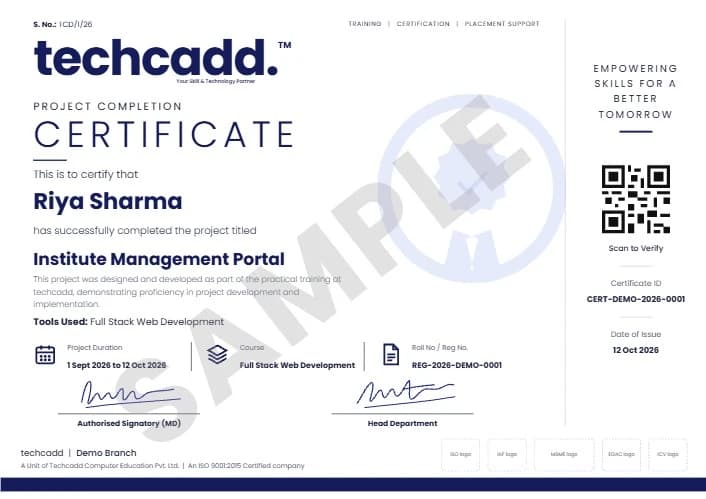
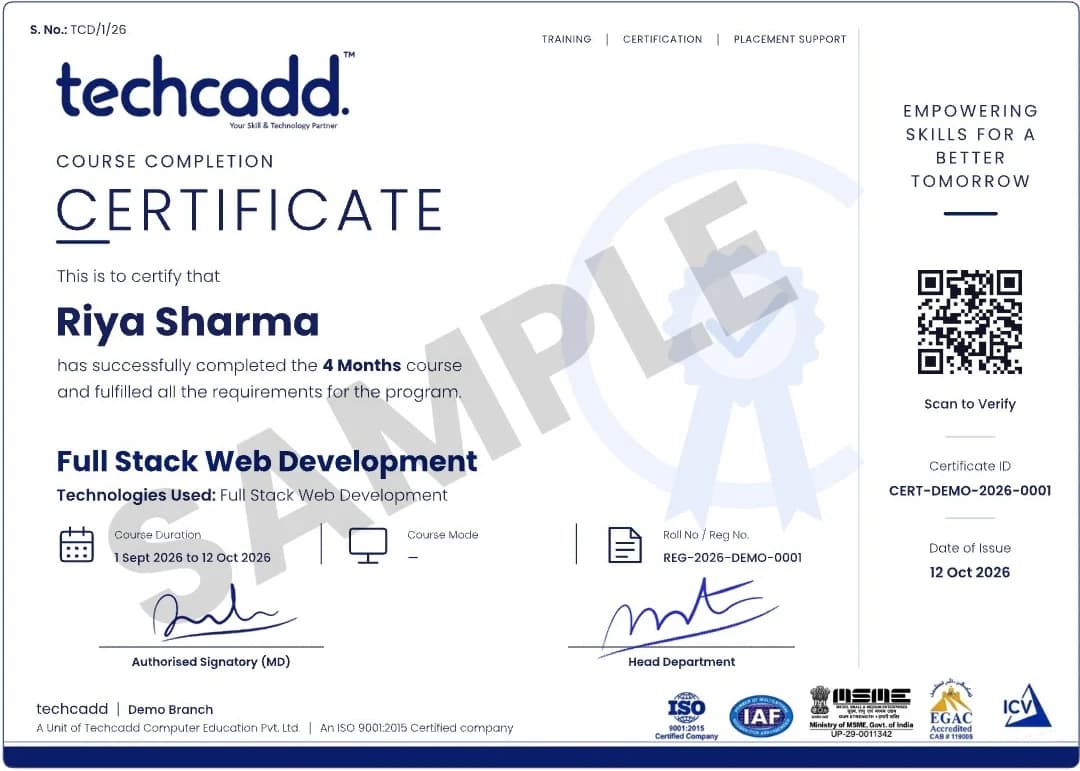
Two certificates on completion — the course certificate and a separate capstone project certificate.
Where this coursetakes you
The roles this opens, what they pay in Punjab and beyond, and who is hiring for them — the same figures our free Salary Estimator publishes, not a brochure number.
What job roles open up after Data Science?
Because the programme runs from dashboards to deployed AI apps, the range of roles is wider than for a single-tool course. They fall into two groups:
- Data Analyst / BI Analyst
- Data Scientist (junior)
- Machine Learning Engineer (junior)
- LLM / AI Engineer, AI Agent Developer
- AI Application Developer, Backend / API Developer
- Freelance AI consultant
- Computer Vision / Deep Learning Engineer (with Deep Learning course)
- Tableau Developer (with Tableau course)
- MLOps / Cloud AI Engineer (with AWS Cloud and Docker & Kubernetes courses)
- Multi-agent systems specialist (with Agentic AI course)
What will I actually be able to do at the end?
Build complete data pipelines from Excel and SQL through Python-based data engineering; train, tune and evaluate machine learning and deep learning models for real tasks; design and query vector databases for semantic search and RAG; build production LLM applications with LangChain, LangGraph, CrewAI and MCP; deploy AI applications with FastAPI, Docker, CI/CD and the major cloud AI platforms; apply AI security and responsible AI practice in production; and ship a full industry-level AI SaaS capstone with a professional GitHub portfolio.
What job roles open up after this programme?
Data Analyst, Data Scientist, Machine Learning Engineer, Deep Learning Engineer, LLM / AI Engineer, AI Agent Developer, AI Application Developer, Backend / API Developer and freelance AI consultant. The first three are the volume roles in Punjab today; the LLM and agent titles are where the shortage — and the premium — currently sits.
What can I earn, and how fast does it grow?
A fresher with a deployed portfolio starts around ₹20,000 – ₹38,000 a month in the Jalandhar market. With two years of delivery experience that typically doubles, and candidates who can demonstrably ship a RAG system or an agent workflow move well beyond it, because far fewer applicants can show one.
Do I need a maths or statistics degree?
No. Statistics and probability are taught in month two at the level the work actually needs — distributions, sampling, evaluation metrics and what a result does and does not prove. Month one starts at Excel and Python fundamentals, so an arts or commerce background is no obstacle; consistency through the six months is.
Can I freelance or work remotely with this skill?
Yes, and this syllabus is unusually well suited to it. A Jalandhar address costs nothing on a remote brief, and a deployed RAG assistant or agent workflow is the single most requested independent build right now. You finish able to scope it, secure it, deploy it and document it.
Which industries hire for this in Punjab?
Beyond IT and analytics firms, the export houses, sports goods and hand tool manufacturers, hospitals, immigration consultancies, schools and real estate groups across Jalandhar and Ludhiana now hire directly for reporting, forecasting and — increasingly — for internal AI assistants built on their own documents.
Your Data Science careerroadmap
This six-month programme is enough on its own for most data and AI entry roles. For a few specialist paths you add one focused course. Here is how each path looks:
| Goal | Step 1 | Step 2 | Where you arrive |
|---|---|---|---|
| Data Analyst | Data Science Mastery Program | Ready to apply (add Tableau if a job asks for it) | Data Analyst / BI Analyst |
| Data Scientist | Data Science Mastery Program | Ready to apply | Data Scientist |
| LLM / AI Engineer | Data Science Mastery Program | Ready to apply (Agentic AI for deeper agent work) | LLM / AI Engineer |
| Computer Vision Engineer | Data Science Mastery Program | Computer Vision / Deep Learning Engineer | |
| MLOps / Cloud AI Engineer | Data Science Mastery Program | AWS Cloud → Docker & Kubernetes | MLOps Engineer |
Hands-on projectsyou will ship
Business KPI Dashboard
Month one's build: a real business dashboard in Power BI with Power Query transformations and DAX measures, reporting the KPIs a manager actually asks for.
Field: Data Analytics & BI
SQL Data Service with FastAPI
A normalised PostgreSQL schema with window functions and optimised queries, exposed through a JWT-authenticated FastAPI endpoint and tested in Postman.
Field: Data Engineering, Backend APIs
End-to-End ML Pipeline
A messy real dataset cleaned and engineered in Pandas and Polars, explored with Plotly, then modelled through a scikit-learn pipeline and beaten with XGBoost, LightGBM and CatBoost — with the evaluation to prove it.
Field: Machine Learning, Data Science
Computer Vision Build
A PyTorch CNN with transfer learning, extended into object detection and OCR with YOLO and OpenCV — the project that makes deep learning concrete rather than theoretical.
Field: Deep Learning, Computer Vision
RAG Assistant over Real Documents
Embeddings in a vector database with hybrid search, re-ranking and guardrails, answered by an LLM API and evaluated for hallucination — then wrapped in a Streamlit or Chainlit interface.
Field: Generative AI, RAG
Industry AI SaaS Capstone
The whole of month six on one application: FastAPI and PostgreSQL, RAG pipelines and AI agents, containerised with Docker, secured against prompt injection, deployed to the cloud with GitHub Actions and documented for review. This is the one interviewers ask about.
Field: AI Engineering, Deployment & Cloud
Learn it. Build it. Make it yours.
Every project moves through the same loop: understand the brief, build with guidance, then explain the decisions behind your work.
Understand
Break a real requirement into a clear plan and the right tools.
Business KPI DashboardBuild
Work hands-on with trainer feedback while the decisions are still easy to change.
SQL Data Service with FastAPIPresent
Turn the finished work into a portfolio story you can defend in an interview.
End-to-End ML PipelineWhy students choosetechcadd
There are many places to learn this in Jalandhar and the brochure syllabus looks similar at all of them. What differs is who teaches, whether the tooling is current, whether the LLM modules are more than a demo video, and whether anyone picks up the phone after you have paid. techcadd has trained students across Punjab since 2016 on the same model: small batches, working practitioners as trainers, live client work as coursework.
Trainers who still do the work
Your trainer is not a full-time lecturer. They deliver data and AI work for techcadd's services arm, so the examples in class are current rather than a case study from five years ago.
Classical and LLM in one programme
Gradient boosting and vector databases, scikit-learn pipelines and LangGraph agents, taught in the same six months by the same trainer — because that is how the job is now advertised.
Current tooling, not legacy habits
uv, Ruff, Black and pytest from month one; Polars, DuckDB and PyArrow alongside Pandas; PyTorch and Hugging Face for deep learning. You learn the stack a 2026 team actually runs.
AI on your own API keys
OpenAI, Gemini, Claude and Grok through real API calls, plus Ollama and LiteLLM for local and routed models — with cost, context limits and failure handling met head on rather than skipped.
A capstone worth a month
Month six is one industry-level AI SaaS build: FastAPI, PostgreSQL, RAG pipelines, agents, Docker and cloud deployment, delivered with documentation, code review and a managed GitHub repository.
A placement cell that persists
Resume and portfolio guidance built into the programme, mock interviews and CV reviews, and drives with hiring partners across Jalandhar and Ludhiana — repeated after a rejection, not abandoned.
How techcaddcompares
The module headings look similar everywhere. These are the rows where a data science programme in Jalandhar is actually decided.
| Feature | techcadd | Other institutes |
|---|---|---|
| LLMs and RAG | Three of the six months: tokenization, embeddings and attention, prompt engineering, the OpenAI, Gemini, Claude and Grok APIs, five vector databases, RAG with hybrid search, re-ranking, evaluation and guardrails. | A closing 'Introduction to Generative AI' session, usually one demo of ChatGPT. |
| AI agents | LangChain, LangGraph, CrewAI and MCP with tool calling, structured outputs, multi-agent systems and enterprise agent design. | Not covered — most syllabuses stop at a single-prompt chatbot. |
| Data engineering | Pandas 2.x with Polars, DuckDB and PyArrow, plus SQL window functions and query optimisation on PostgreSQL. | Pandas alone, on clean CSV files that never resemble production data. |
| Deep learning | PyTorch from tensors up: CNNs, transfer learning, OpenCV, YOLO, OCR, segmentation, Vision Transformers and Hugging Face. | A theory week on neural networks, with no model anyone actually trained. |
| Engineering practice | uv, virtual environments, type hinting, logging, pytest, Ruff and Black from month one, with Git Flow and code review standards. | Notebooks only — no tests, no version control, nothing another developer could run. |
| Deployment | FastAPI with Docker and Docker Compose behind Nginx, deployed to AWS, Azure AI or Google Vertex AI, with GitHub Actions CI/CD. | A model saved to disk, and a promise that deployment is 'a devops job'. |
| AI security | Prompt injection and jailbreak defence, secret management and responsible AI, taught as its own module before the capstone ships. | Absent entirely, which is why so many student LLM apps leak their API keys. |
| Capstone | A full month on one industry AI SaaS application, delivered with documentation, code review, a managed GitHub repository and a live cloud deployment. | A final-week notebook assembled from the trainer's own template. |
Rows describe what is commonly on offer in the market, not any one named institute. Ask any institute — including this one — to show you a student's deployed capstone and GitHub repository before you pay.
What our studentsin Jalandhar say
- Google
I was switching careers and worried I would be behind. Half the Data Science batch were doing the same thing, and nobody made me feel slow.
Harpreet KaurSoftware Trainee · Jalandhar GoogleThe Power BI dashboard from month one got me a part-time reporting job before I had even reached the machine learning modules.
Rohit SharmaJunior Analyst · Phagwara GoogleMonth five changed what I could charge. A client wanted a chatbot over their own PDFs and I had already built exactly that with a vector database and re-ranking.
Simranjeet SinghFreelancer · Kapurthala GoogleI was switching careers and worried I would be behind. Half the Data Science batch were doing the same thing, and nobody made me feel slow.
Harpreet KaurSoftware Trainee · Jalandhar GoogleThe Power BI dashboard from month one got me a part-time reporting job before I had even reached the machine learning modules.
Rohit SharmaJunior Analyst · Phagwara GoogleMonth five changed what I could charge. A client wanted a chatbot over their own PDFs and I had already built exactly that with a vector database and re-ranking.
Simranjeet SinghFreelancer · Kapurthala
- Google
The Data Science programme got me interview-ready faster than I expected. My interviewer asked to see my project and that was the whole conversation.
Anjali VermaCareer Switcher · Jalandhar Cantt GoogleNobody else in my placement batch could explain what an embedding actually is, let alone show a deployed FastAPI app that used one.
Karan MehtaB.Tech Student · Jalandhar Googletechcadd's placement cell kept calling me for drives until I was placed. That persistence mattered more than anything else for Data Science.
Sandeep KaurPlaced Fresher · Phillaur GoogleThe Data Science programme got me interview-ready faster than I expected. My interviewer asked to see my project and that was the whole conversation.
Anjali VermaCareer Switcher · Jalandhar Cantt GoogleNobody else in my placement batch could explain what an embedding actually is, let alone show a deployed FastAPI app that used one.
Karan MehtaB.Tech Student · Jalandhar Googletechcadd's placement cell kept calling me for drives until I was placed. That persistence mattered more than anything else for Data Science.
Sandeep KaurPlaced Fresher · Phillaur
Choose howyou want to learn
Every mode covers the same syllabus, projects and placement support. Pick the schedule that fits your life.
Weekday Classroom
Two hours a day at the Jalandhar centre, on lab machines with your trainer reading your notebooks and code in the room.
Learn moreWeekend Batch
For people already working. Same six months, same 24 modules, same capstone — delivered across Saturday and Sunday sessions.
Learn moreLive Online
Live classes, not recordings, with the same weekly review of your repository and deployed endpoints. For students outside Jalandhar.
Learn more1-on-1 Training
Your own pace through the same syllabus — useful if you already work in analytics and want to start at the machine learning or LLM months.
Learn moreFrequently Asked Questions
The Data Science Mastery Program runs for 6 months across 24 modules — data and programming foundations, data engineering and machine learning, deep learning and computer vision, LLM fundamentals and vector search, RAG and AI agents, then deployment and the industry capstone. Weekday, evening and weekend batches cover the same syllabus, and 1-on-1 training is available if you would rather set your own pace. Every class runs for 2 hours.
Both, and that is the point of the 2026 edition. Months 1 to 3 are the classical pipeline — Excel and Power BI, Python, SQL, data engineering, machine learning, gradient boosting, deep learning and computer vision. Months 4 to 6 are the LLM stack: tokenization and embeddings, prompt engineering, the OpenAI, Gemini, Claude and Grok APIs, vector databases, RAG architecture, LangChain, LangGraph, CrewAI, MCP, AI agents, FastAPI applications and cloud deployment.
Fees depend on the course length and subject. techcadd counsellors share the current fee sheet and EMI options on request, and a demo class is free.
Students after 12th, graduates and final-year students, working professionals switching into data roles, and business owners all join this programme. Month one starts at Excel and Python fundamentals, so a technical background helps but is not required.
No. Python is taught from the ground up in month one, including the engineering practices most self-taught learners miss — virtual environments with uv, type hinting, logging, pytest, Ruff and Black. Statistics and probability are covered in month two at the depth the modelling work needs.
GitHub Copilot, Cursor AI and Windsurf as coding assistants from month one. Then the OpenAI, Gemini, Claude and Grok APIs, with Ollama for local models and LiteLLM for routing, in month four. LangChain, LangGraph, CrewAI and the Model Context Protocol in month five. Real keys, real costs, real rate limits — not a recorded demonstration.
FAISS, ChromaDB, Pinecone, Qdrant and Milvus, alongside the embedding and semantic search theory in module 16 — then applied in month five through RAG architecture with hybrid search, re-ranking, evaluation and guardrails.
Every module produces something a trainer reviews, and six of them are substantial portfolio pieces: a Power BI KPI dashboard, a JWT-secured FastAPI data service over PostgreSQL, an end-to-end ML pipeline with tuned gradient boosting, a PyTorch computer vision build with YOLO and OCR, a RAG assistant over real documents, and the month-six industry AI SaaS capstone.
A complete industry-level AI SaaS application built over the final month — FastAPI and PostgreSQL, RAG pipelines, AI agents, Docker containerisation and full cloud deployment on AWS, Azure AI or Google Vertex AI. Module 24 covers the delivery standard: project documentation, code review practice, GitHub repository management and industry best practice.
It is module 22, and it is there because student LLM apps are exactly where prompt injection, leaked API keys and jailbreaks show up. You cover prompt injection and jailbreak defence, secret management, responsible AI practice and CI/CD with GitHub Actions before the capstone is deployed.
No training provider can honestly guarantee a job, and you should be cautious of anyone in Jalandhar who claims one. techcadd guarantees placement support: resume and portfolio guidance built into the programme, CV reviews, mock interviews and repeated drives with hiring partners across Jalandhar and Ludhiana.
Yes. Every student receives a programme completion certificate plus a documented internship letter based on live work. The internship satisfies the industrial training requirement at most Punjab universities, and your GitHub portfolio and deployed capstone are what you show alongside it.
Yes. techcadd Jalandhar runs weekday, evening and weekend batches in parallel so working professionals and college students can both attend, and 1-on-1 training is available for a fully personal schedule. Every class (batch or 1-on-1) runs for 2 hours; book a free demo class to see the lab and meet the trainer before enrolling.
It prepares you for all three entry roles, because it teaches the whole chain: Excel, Power BI and SQL for analyst work, statistics and machine learning for data science, and LLMs, RAG and agents for AI engineering. Which one you land first depends on the projects you put forward and the roles you apply for; your trainer helps you choose.
A Data Scientist uses data and models to answer business questions. An ML Engineer turns those models into reliable software. An AI Engineer builds products on top of AI models, today mostly large language models with RAG and agents. In small Punjab companies one person often does all three, which is why this programme covers all three.
Both teach Python and machine learning. This programme is a fixed six months that also covers Power BI dashboards, data engineering tools such as Polars and DuckDB, gradient boosting, the full LLM and agent stack and cloud deployment with Docker. The Machine Learning programme lets you choose a 3, 6 or 9-month depth instead. A counsellor can compare the two against your goal.
You get a solid base for junior data engineering roles: PostgreSQL, database design, query optimisation, Pandas, Polars, DuckDB and deployment with Docker. Big-data tools such as Spark and Airflow and cloud data warehouses are not part of the syllabus, so larger data engineering roles usually need those learned on the job or in further training.
Every module,stage by stage
The Data Science syllabus runs as 3 stages inside one enrolment. A tick shows the stage each capability first appears in — the ladder is cumulative, so a later stage builds on the earlier ones instead of replacing them.
Months 1 – 2
8 capabilities
Opens with Module 01 · Excel, Power BI & Data Literacy through Module 08 · Gradient Boosting & Model Tuning. 8 capabilities, taught, practised in the lab and assessed on work you keep.
Months 3 – 4
+8 capabilities
Adds Module 09 · Deep Learning Fundamentals through Module 16 · Embeddings & Vector Databases, on top of everything stage 1 already covers.
Months 5 – 6
+8 capabilities
Adds Module 17 · RAG Architecture through Module 24 · Capstone Delivery & Standards, on top of everything stage 2 already covers.
| Module | Stage 1 | Stage 2 | Stage 3 |
|---|---|---|---|
| 01Module 01 · Excel, Power BI & Data LiteracyExcel Advanced, Power Query, DAX, business dashboards, KPI reporting, AI productivity. | Included | Included | Included |
| 02Module 02 · Python Fundamentals & Engineering PracticesVS Code, uv, virtual environments, OOP, exception handling, logging, type hinting, pytest, Ruff, Black. | Included | Included | Included |
| 03Module 03 · Git, GitHub & AI Coding ToolsGit Flow, GitHub Copilot, Cursor AI, Windsurf IDE. | Included | Included | Included |
| 04Module 04 · SQL, Database Design & APIsPostgreSQL, database design, window functions, query optimisation, APIs, JSON, FastAPI basics, JWT, Postman. | Included | Included | Included |
| 05Module 05 · Data Engineering FundamentalsPandas 2.x, NumPy, Polars, DuckDB, PyArrow. | Included | Included | Included |
| 06Module 06 · EDA, Visualization & Statisticsdata cleaning, feature engineering, Plotly and Streamlit, statistics, probability, feature selection, preprocessing. | Included | Included | Included |
| 07Module 07 · Machine Learning Foundationsscikit-learn, pipelines, cross validation. | Included | Included | Included |
| 08Module 08 · Gradient Boosting & Model TuningXGBoost, LightGBM, CatBoost, model evaluation, hyperparameter optimisation. | Included | Included | Included |
| 09Module 09 · Deep Learning FundamentalsPyTorch, tensor operations, neural networks. | Not included | Included | Included |
| 10Module 10 · CNNs & Transfer LearningCNNs, transfer learning, computer vision, OpenCV. | Not included | Included | Included |
| 11Module 11 · Object Detection & OCRYOLO, OCR, object detection, image segmentation, Vision Transformers. | Not included | Included | Included |
| 12Module 12 · Transformers & Hugging Facetransformers, tokenizers, the Model Hub. | Not included | Included | Included |
| 13Module 13 · LLM Fundamentalstokenization, embeddings, context windows, attention mechanism. | Not included | Included | Included |
| 14Module 14 · Prompt Engineeringprompt optimisation, system prompts, structured prompting. | Not included | Included | Included |
| 15Module 15 · LLM APIs & Model AccessOpenAI, Gemini, Claude and Grok APIs, Ollama, LiteLLM. | Not included | Included | Included |
| 16Module 16 · Embeddings & Vector DatabasesFAISS, ChromaDB, Pinecone, Qdrant, Milvus, semantic search. | Not included | Included | Included |
| 17Module 17 · RAG Architecturehybrid search, re-ranking, evaluation, guardrails. | Not included | Not included | Included |
| 18Module 18 · LangChain, MCP & Tool CallingLangGraph, prompt templates, chains, memory, CrewAI, Model Context Protocol, function calling, structured outputs. | Not included | Not included | Included |
| 19Module 19 · AI Agents & Multi-Agent Systemsautonomous workflows, enterprise agent design. | Not included | Not included | Included |
| 20Module 20 · AI Application DevelopmentFastAPI advanced, async, background tasks, WebSockets, Streamlit, Gradio, Chainlit. | Not included | Not included | Included |
| 21Module 21 · Containerization & Cloud DeploymentDocker, Docker Compose, Linux, Nginx, reverse proxy, AWS, Azure AI, Google Vertex AI, serverless AI. | Not included | Not included | Included |
| 22Module 22 · AI Security & CI/CDprompt injection, jailbreak defence, secret management, responsible AI, GitHub Actions, automated deployment. | Not included | Not included | Included |
| 23Module 23 · Industry Capstone Buildan end-to-end AI SaaS with FastAPI, PostgreSQL, RAG, agents, Docker and cloud deployment. | Not included | Not included | Included |
| 24Module 24 · Capstone Delivery & Standardsproject documentation, code review, GitHub repository management, industry standards and best practices. | Not included | Not included | Included |
Every stage sits inside the one programme: nothing is dropped as you move up, and nothing is charged for twice. If you are not sure which stage matters most for the role you are aiming at, a counsellor will map it against the jobs actually hiring in Punjab right now.
Not sure which data science path is right for you?
One call with a counsellor is usually enough. Tell us what you enjoy and where you want to work, and we will show you whether analytics, machine learning or AI engineering suits you, and how these six months get you there. Book a free demo class and see the lab before you decide.
Ask aboutData Science
Send your question and a counsellor will call you back about batch timings, fees, EMI options, placement record, or whether this course fits your degree.
- Free counselling and demo class
- Weekday, evening, weekend or 1-on-1, all 2-hour classes
- Internship letter and placement support