Forward Deployed Engineer Course in Jalandhar
Step into the future of AI-powered software development. This industry-oriented programme is for students, graduates, developers and IT professionals who want to solve real business problems using Artificial Intelligence, Generative AI, Agentic AI, software engineering and cloud technologies.
- Live client projects
- Practitioner trainers
- Placement support
- Certificate + internship
- Duration
- Approx. 4–6 Months
- Eligibility
- BCA, MCA, B.Tech, BE & IT
- Prerequisite
- Basic Programming Helpful
- Includes
- Industry Projects & Capstone
- Students trained
- 25,000+Students trainedsince 2016
- Google rating
- 4.9★Google rating556+ reviews
- Practical training
- 100%Practical traininglive client work
Course overview
The Forward Deployed Engineer (FDE) training programme at techcadd combines technical development with practical problem-solving, helping learners understand the complete journey from business requirements to application deployment. Students explore Python, JavaScript, FastAPI, SQL, Large Language Models (LLMs), Retrieval-Augmented Generation (RAG), AI Agents, APIs, Docker and cloud deployment.
Technology is evolving rapidly, and businesses are looking for professionals who can do more than just write code. They need engineers who understand business challenges, develop technical solutions, integrate Artificial Intelligence, and take applications from initial planning to final deployment. A Forward Deployed Engineer works closely with customers or business teams to understand their requirements and convert them into working technical solutions, working across software development, AI integration, databases and deployment instead of focusing on just one technology.
Traditional software development training generally focuses on learning individual technologies and completing programming exercises. Forward Deployed Engineering takes a broader approach. Imagine a company wants an AI-powered customer support system: a Forward Deployed Engineer must understand the company's requirements, identify the technical challenges, select suitable AI tools, connect databases, develop the application and deploy the solution. This programme walks learners through that complete process.
The objective is not to make every learner an expert in every technology. Instead, students develop the confidence to understand problems, select appropriate technologies, build applications, integrate systems and deliver complete solutions. The learning approach focuses on practical implementation, industry-based scenarios and project development rather than theory alone — whether you are pursuing BCA, MCA or B.Tech, or upgrading your existing IT skills.
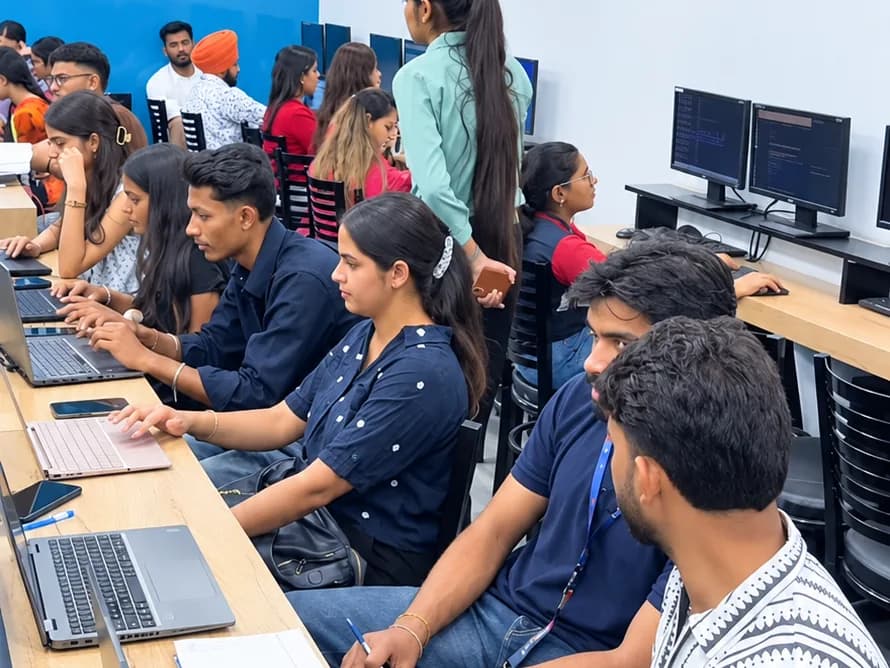
Industry-Ready Training in Forward Deployed Engineer
- 100% practical, project-based learning
- AI tools integrated into every module
- Live client projects under trainer supervision
- Internship letter and placement support
- Small batches with daily doubt clearing
What you will
actually build
The FDE learning framework combines technical knowledge with practical implementation. Students begin with software engineering fundamentals and gradually move towards Generative AI, agent-based systems and cloud deployment, alongside the communication and business skills the role needs.
Software Engineering Foundations
- Python, JavaScript and TypeScript fundamentals
- Object-Oriented Programming
- Git, GitHub and Linux
- REST APIs and application architecture
- Debugging and testing
Move beyond writing code to delivering complete solutions
- Learn the full journey — understand the problem, design the solution, build, integrate, deploy and improve.
- Combine software engineering, AI, cloud deployment and client communication in one practical learning path.
Reviewed by mentors. Built for interviews.Who can dothis course
The Forward Deployed Engineer learning path suits students and graduates from computing backgrounds as well as developers interested in AI-powered application development. Basic programming knowledge makes the journey easier, and experienced developers may progress through the foundational topics more quickly.
BCA, MCA and computer science students
Add AI engineering, backend development and deployment to your degree, and build project work you can explain in placement interviews.
B.Tech and BE students
A career direction for engineering students who enjoy programming, AI technologies, system integration and problem-solving.
Freshers and graduates
Freshers with an interest in programming, software development and AI can join, building their understanding of Python, databases, APIs, AI and deployment step by step.
Python and full-stack developers
Move from writing features to delivering complete solutions: LLM integration, RAG, AI agents and production deployment on top of the skills you already have.
IT professionals
Upgrade existing IT skills with Generative AI, Agentic AI, cloud deployment and the client-facing side of engineering work.
One course.A mesh of real tools.
Everything below is installed on the lab machines and used on live client work, not shown once in a slide and forgotten.
 GitHub
Get Certified in
Forward Deployed Engineer
Complete the course with a portfolio of live projects and receive an industry-recognised certificate, plus a documented internship letter accepted by Punjab universities.
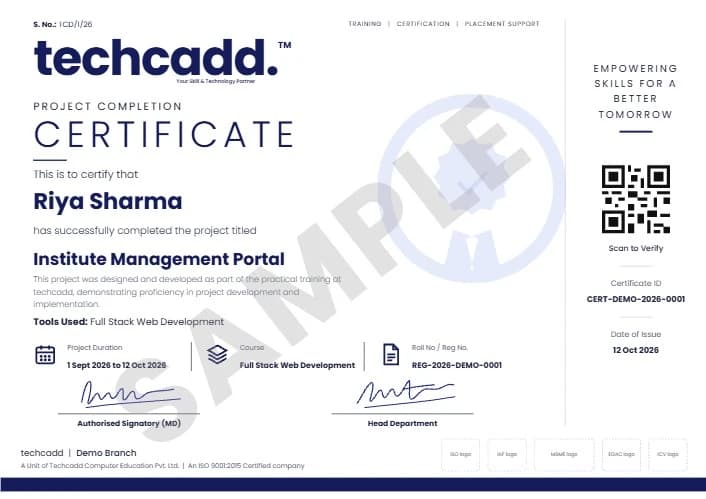
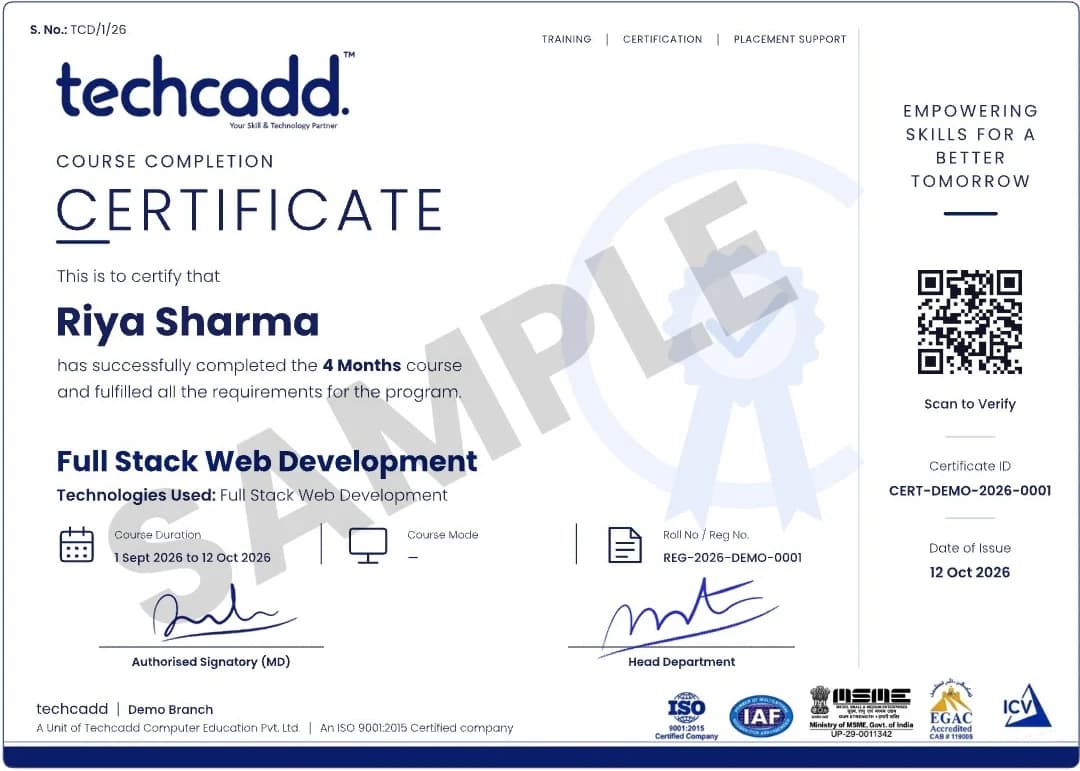
Two certificates on completion — the course certificate and a separate capstone project certificate.
Where this coursetakes you
The roles this opens, what they pay in Punjab and beyond, and who is hiring for them — the same figures our free Salary Estimator publishes, not a brochure number.
Growing demand for engineers who solve business problems
The industry is moving beyond traditional software development towards solutions that combine programming, AI, automation and business understanding. Companies increasingly need professionals who can turn a business challenge into a working technical solution, which is creating interest in roles such as Forward Deployed Engineer and AI Solutions Engineer.
The increasing role of AI in software development
Businesses are exploring AI for document processing, customer support, information retrieval, workflow automation and decision support. Engineers need to integrate LLMs, prompt engineering, embeddings, vector databases and RAG into existing software systems — concepts this course teaches alongside backend development and API integration.
Opportunities in Agentic AI and business automation
AI development is expanding from question-and-answer applications to systems that perform multi-step tasks with tools and connected services. Agent architecture, tool calling, LangGraph and MCP are relevant to business operations automation, customer support assistance and information management.
API integration and connected systems
Modern applications communicate with databases, CRMs, payment systems, internal software and third-party services. REST APIs, FastAPI, authentication and enterprise integration help engineers connect these and choose practical solutions for each project.
Cloud deployment and production-level development
A solution must be configured, deployed, tested and monitored before it supports real users. Docker, CI/CD, environment variables, secrets management, logging and monitoring connect development work with the practical requirements of production systems.
Enterprise AI solutions and document intelligence
Organisations handle reports, contracts, invoices and customer records, and are exploring AI that retrieves and explains that information. LLMs, embeddings, vector databases and RAG, connected to APIs, authentication and user interfaces, provide a foundation for enterprise AI solutions.
AI-powered customer support and business operations
AI applications can classify requests, retrieve policies and customer data, suggest responses for human approval, query databases and prepare reports. The focus is on useful workflows that keep appropriate human oversight.
Career opportunities in AI and software engineering
With the right skills and project experience, learners may explore roles such as Forward Deployed Engineer, Forward Deployed AI Engineer, AI Solutions Engineer, Applied AI Engineer, Implementation Engineer, Customer Engineer, AI Automation Engineer and Technical Consultant. Opportunities depend on individual ability, practical experience, interview performance and employer requirements; completing a course does not guarantee employment.
Communication and client interaction
Forward Deployed Engineers take part in requirement discussions, present prototypes, document solutions and respond when requirements change. Requirement discovery, solution architecture, estimation and stakeholder communication make technical work more effective.
Building a career through practical project experience
Projects let you explain the problem you worked on, the solution you designed, the technologies you chose and how you tested and deployed it. The capstone takes you through the full process, from requirement discovery to deployment and final presentation — the kind of evidence a portfolio needs.
Hands-on projectsyou will ship
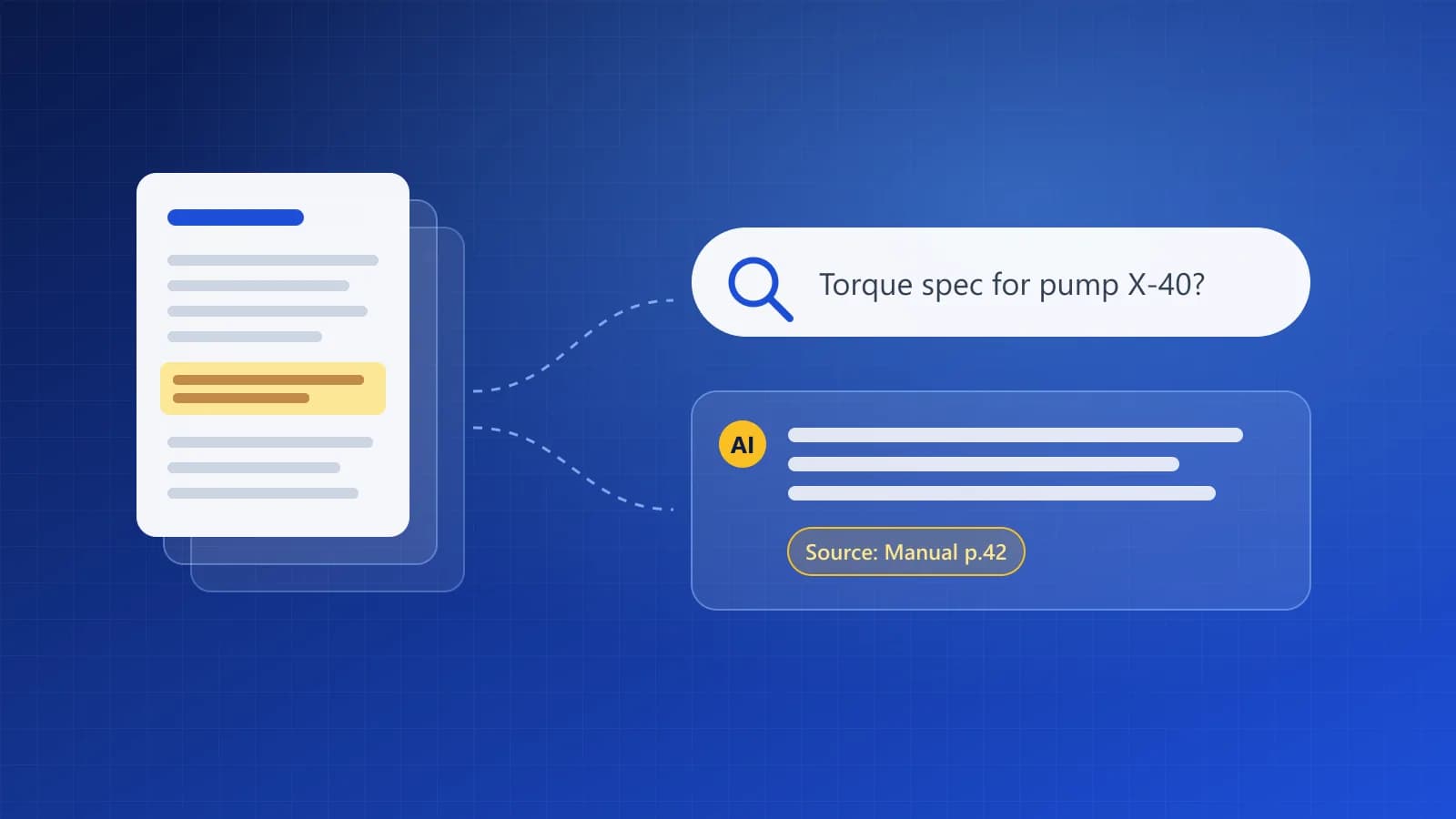
Enterprise Document Intelligence System
A manufacturing company has thousands of technical documents and employees spend hours searching them. Build an AI-powered document search with document processing, RAG, backend APIs, authentication, response citations and cloud deployment.
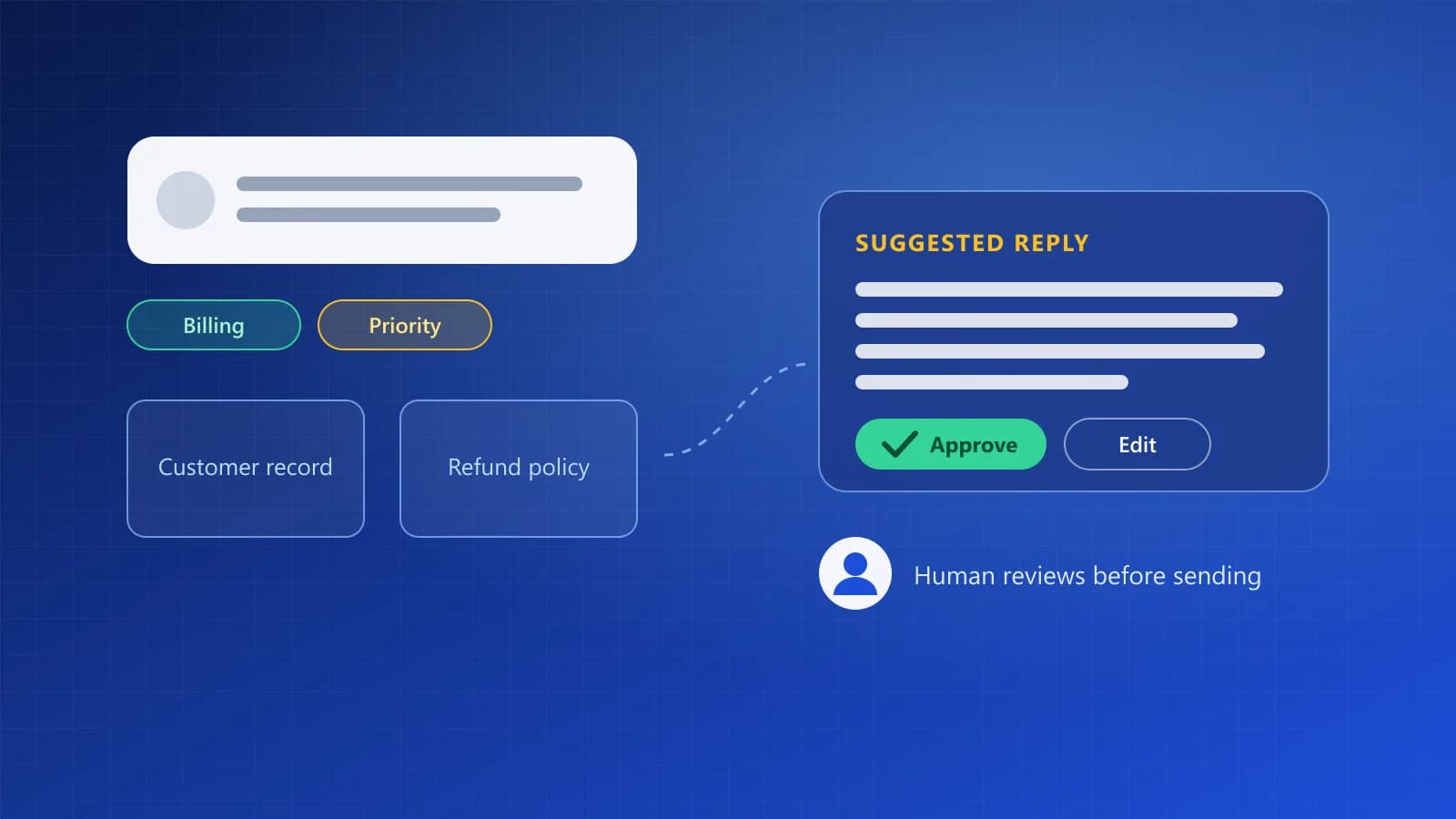
AI-Powered Customer Support System
Classify customer requests, retrieve customer information and company policies, and suggest AI-generated responses that a human approves before use — with activity logging and integration into existing systems.
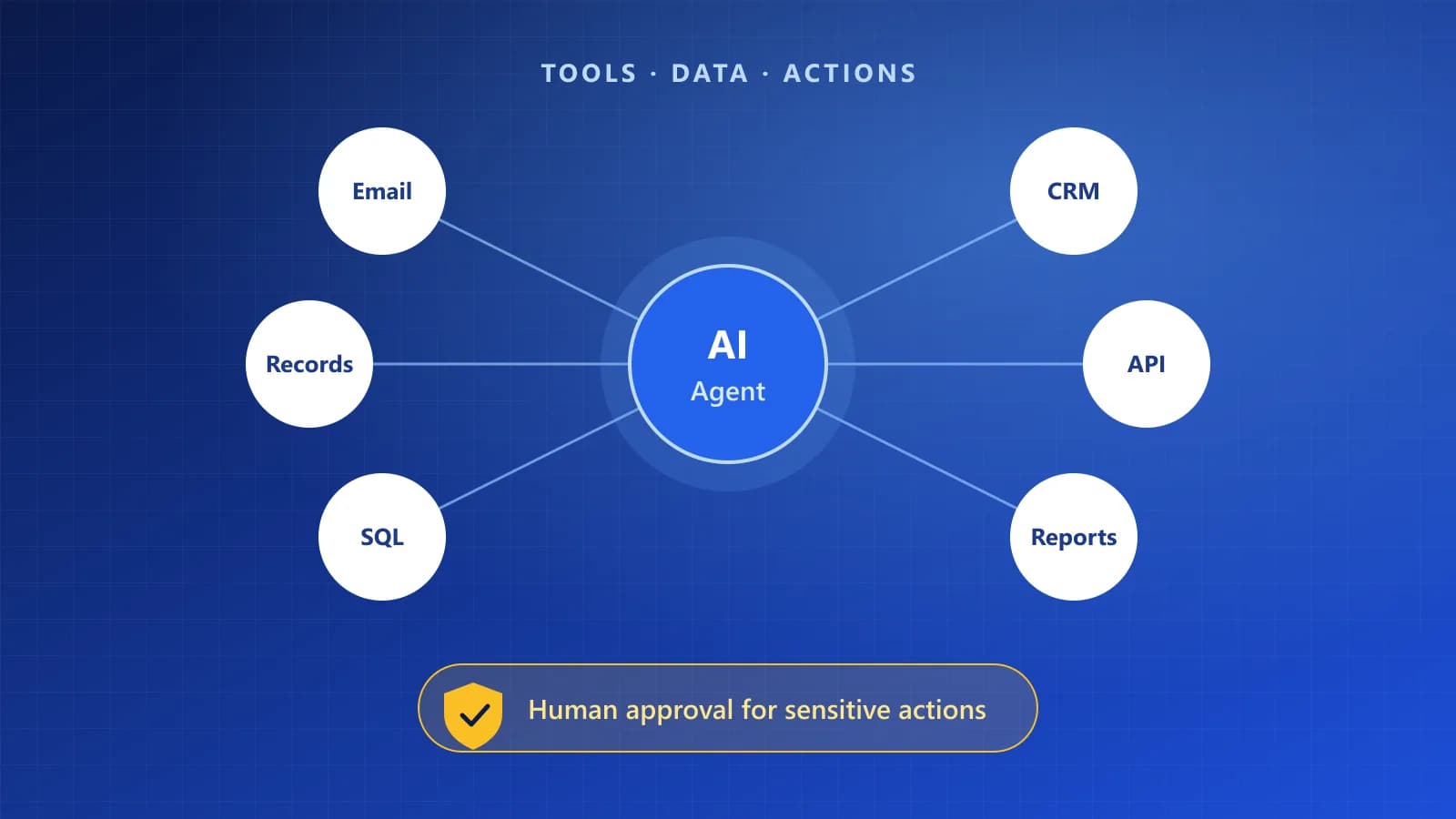
AI Business Operations Agent
An agent that reads emails, retrieves customer information, queries databases, calls APIs, updates CRM records and generates reports, with human approval for sensitive operations.
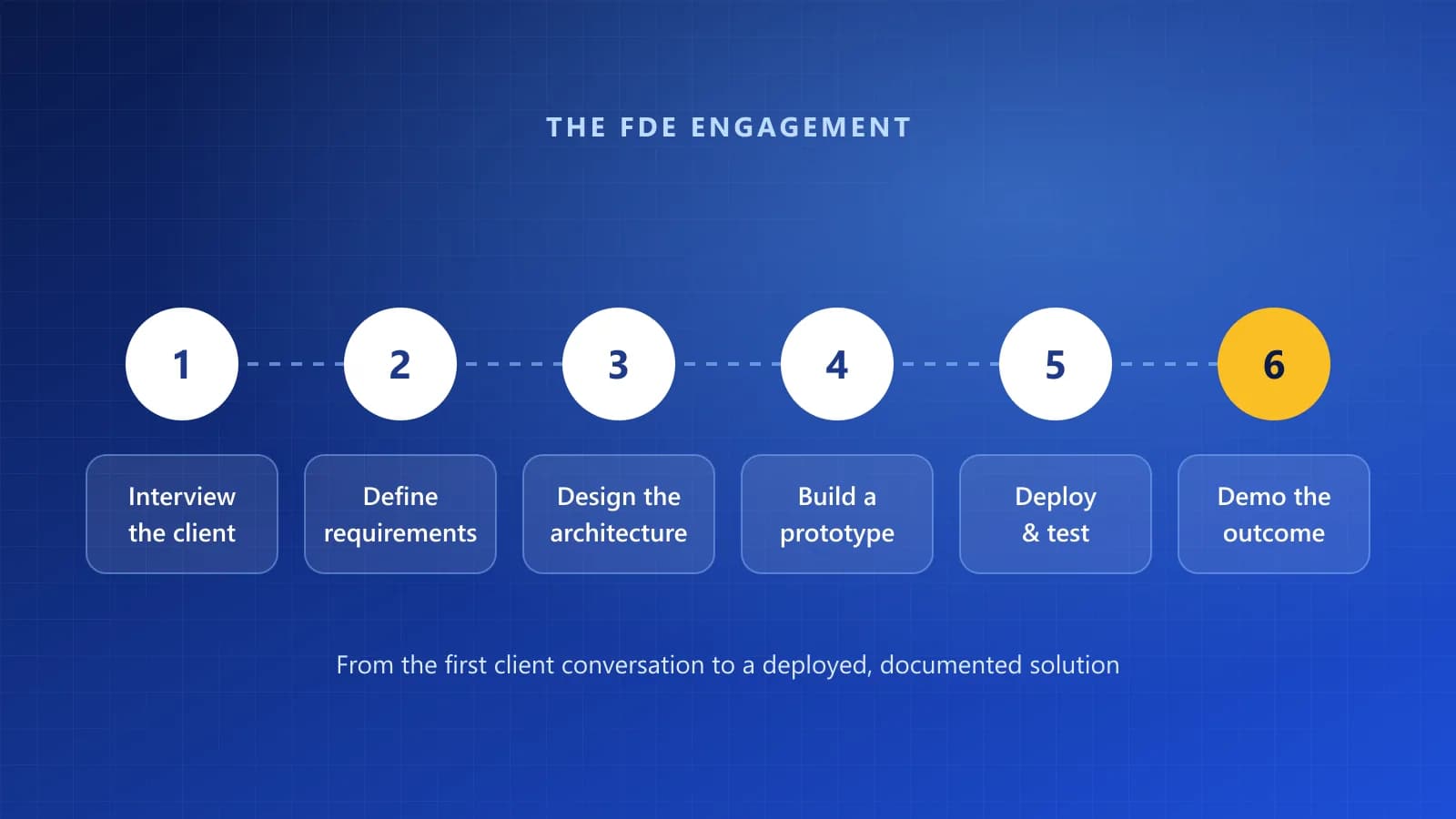
Final Capstone: an End-to-End FDE Engagement
Interview the client, identify the real problem, prepare requirements, design the architecture, build and present a prototype, handle changing requirements, then deploy, test, document and demonstrate the business outcome.
Learn it. Build it. Make it yours.
Every project moves through the same loop: understand the brief, build with guidance, then explain the decisions behind your work.
Understand
Break a real requirement into a clear plan and the right tools.
Enterprise Document Intelligence SystemBuild
Work hands-on with trainer feedback while the decisions are still easy to change.
AI-Powered Customer Support SystemPresent
Turn the finished work into a portfolio story you can defend in an interview.
AI Business Operations AgentWhy students choosetechcadd
With AI, Generative AI, automation and cloud computing transforming the industry, students need more than basic programming knowledge: practical exposure, technical understanding and the ability to apply technologies to real business challenges. At techcadd, the programme is built around a multidisciplinary approach that connects all of these.
Industry-oriented FDE curriculum
Programming, AI and cloud computing are connected through practical development workflows instead of being taught as separate subjects — from Python and FastAPI to RAG, Agentic AI, Docker and requirement discovery.
Practical learning with real-world scenarios
Students work through business scenarios such as document intelligence, AI customer support and automated business operations — understanding requirements, building prototypes, integrating systems and testing applications.
From software engineering to AI engineering
Learners first build a foundation in programming, architecture, databases and APIs, then progress to Generative AI, AI agents, automation and cloud deployment.
Focus on complete project development
Plan the solution, select technologies, prototype, integrate databases and APIs, implement AI features, deploy, test and improve based on feedback.
Future-focused IT skills
Explore Agentic AI, LLM applications, cloud infrastructure and enterprise system integration, building a foundation for further learning and professional growth.
What you are reallybeing taught
Tools in this syllabus will change. These ideas are what a Forward Deployed Engineer is really being taught — understanding not just how a technology works, but when and why to use it.
Understand the problem before the code
Every engagement starts with the business challenge: discover requirements, talk to stakeholders and define the scope before selecting any technology.
Choose technology for a reason
FastAPI for a backend, PostgreSQL for structured data, RAG when answers must come from documents, agents for multi-step workflows — knowing why a tool fits matters as much as knowing how to use it.
Review what AI produces
AI tools accelerate development, but generated code and responses still need a human to check, test, validate and consider security and reliability before anything ships.
Keep a human in the loop
AI agents can support business processes, but sensitive actions go through human approval, with evaluation, monitoring and hallucination reduction built in.
Communication is part of engineering
Explaining technical decisions, presenting prototypes, documenting solutions and responding to changing requirements decide whether a solution actually gets used.
Judge the whole solution
Project work is evaluated on implementation, architecture decisions, deployment, requirement understanding, communication, documentation and business outcome — not only on whether the code runs.
Frequently Asked Questions
A Forward Deployed Engineer (FDE) course teaches students how to understand business problems and develop practical technology solutions. It combines software engineering, Artificial Intelligence, API integration, cloud deployment and client communication. The Forward Deployed Engineer course in Jalandhar at techcadd introduces learners to these skills through structured modules and project-based learning.
Students from BCA, MCA, B.Tech, BE and computer science backgrounds can explore this programme. It may also suit Python developers, full-stack developers, IT professionals and graduates interested in AI-powered application development. Basic programming knowledge is helpful for understanding the technical modules.
The programme covers Python and JavaScript/TypeScript fundamentals, along with object-oriented programming concepts. Learners also explore Git, GitHub, Linux, REST APIs and backend development using FastAPI. These skills support students interested in Python development training in Jalandhar and modern software engineering.
Yes. The programme includes Generative AI concepts such as Large Language Models (LLMs), prompt engineering, structured outputs, function calling, embeddings, vector databases and Retrieval-Augmented Generation (RAG). These topics help learners understand how AI-powered applications can retrieve information and generate useful responses.
Agentic AI involves AI systems that can use tools and perform multi-step workflows to support specific tasks. The programme introduces AI agents, tool usage, LangGraph or similar frameworks, MCP, multi-agent systems and human approval workflows. These concepts are relevant to learners interested in Agentic AI training in Jalandhar.
The flagship programme is planned for approximately 4–6 months. Its learning phases cover engineering foundations, backend and data, Generative AI, Agentic AI, cloud deployment, FDE concepts and industry projects. The exact schedule should be confirmed with techcadd before enrolment.
Yes. The programme covers the technical foundations required to develop AI-powered applications, including Python, FastAPI, APIs, LLMs, embeddings, vector databases and RAG. Learners also explore AI agents and business automation workflows through practical project examples.
Yes. Cloud and deployment topics include Docker, cloud fundamentals, AWS/Azure/GCP fundamentals, CI/CD, environment variables, secrets management, logging, monitoring and production debugging. Basic Kubernetes concepts are also included in the programme outline.
The programme outlines project examples such as Enterprise Document Intelligence, AI Customer Support and AI Business Operations Agents. These projects demonstrate how programming, databases, APIs, AI models and automation can be combined to address business requirements.
A Software Engineer generally focuses on designing, developing and maintaining software systems. A Forward Deployed Engineer combines software development with customer interaction, requirement discovery, solution design, system integration, deployment and business problem-solving. Both roles require technical skills, but the FDE role places additional emphasis on understanding and implementing solutions for specific customer needs.
Yes, freshers with an interest in programming, software development and Artificial Intelligence can explore this learning path. Basic programming knowledge is helpful, but learners should be prepared to develop their understanding of Python, databases, APIs, AI technologies and deployment step by step.
Depending on their skills and practical experience, learners may explore roles such as Forward Deployed Engineer, Forward Deployed AI Engineer, AI Solutions Engineer, Applied AI Engineer, Implementation Engineer, Customer Engineer, AI Automation Engineer and Technical Consultant. Employment depends on individual capability and employer requirements; completing a course does not guarantee a job.
It can be an interesting career direction for MCA and B.Tech students who enjoy programming, AI technologies, system integration and problem-solving. The learning path combines software engineering, Generative AI, Agentic AI, cloud deployment and communication skills that may be relevant to emerging technology roles.
techcadd's programme is structured around software engineering foundations, backend development, data handling, Generative AI, Agentic AI, cloud deployment and industry-oriented projects. It introduces learners to the complete development process, from understanding requirements and designing solutions to testing and deployment.
Basic programming knowledge is helpful, especially familiarity with Python or another programming language. An understanding of computer fundamentals can also make the learning process easier. However, the programme includes engineering foundations covering Python, Git, Linux, APIs and software development concepts.
Every module,stage by stage
The programme runs for approximately 4–6 months, depending on your entry-level knowledge, learning requirements and project depth. Instead of covering technologies as separate subjects, the curriculum connects them through practical engineering workflows, and each phase builds on the one before it.
Foundations, Backend & Data
Phases 1–2 · Modules 1–6
Engineering foundations (3–4 weeks) and backend development with data engineering (3–4 weeks). Learn to write, manage and understand software, build backend services and integrate data.
Generative & Agentic AI
Phases 3–4 · Modules 7–12
Generative AI development (4 weeks) and Agentic AI with automation (3–4 weeks). Build AI applications that retrieve knowledge, and agents that use tools with human oversight.
Deployment, FDE Practice & Projects
Modules 13–18 · Capstone
Cloud deployment and production engineering, client communication, AI-assisted development, industry projects and an end-to-end capstone engagement.
| Module | Stage 1 | Stage 2 | Stage 3 |
|---|---|---|---|
| 01Programming FundamentalsPython programming fundamentals, JavaScript and TypeScript fundamentals, and Object-Oriented Programming (OOP). | Included | Included | Included |
| 02Engineering Tools & PrinciplesGit and GitHub for version control, Linux fundamentals, REST API concepts, software engineering principles and application architecture basics. | Included | Included | Included |
| 03Backend Development with FastAPIBackend services and REST API development using FastAPI — how applications communicate with databases and process information. | Included | Included | Included |
| 04SQL, PostgreSQL & Data ModellingSQL and PostgreSQL, database design and data modelling for software applications. | Included | Included | Included |
| 05Data Processing with PandasPandas for data processing, data cleaning and transformation, and CSV and JSON processing. | Included | Included | Included |
| 06Data Ingestion & PipelinesAPI-based data ingestion, ETL fundamentals and data pipeline concepts. | Included | Included | Included |
| 07LLMs & Prompt EngineeringLarge Language Models, prompt engineering, structured outputs, and function and tool calling. | Not included | Included | Included |
| 08Embeddings, Vector Databases & RAGEmbeddings, vector databases and Retrieval-Augmented Generation, so applications can retrieve relevant knowledge before they respond. | Not included | Included | Included |
| 09Document Intelligence & AI EvaluationDocument intelligence, AI evaluation, hallucination reduction and human-in-the-loop workflows. | Not included | Included | Included |
| 10AI Agents & Tool IntegrationIntroduction to AI agents, agent architecture, tool usage and integration, and multi-step AI workflows. | Not included | Included | Included |
| 11LangGraph, MCP & Multi-Agent SystemsLangGraph or similar frameworks, the Model Context Protocol (MCP) and multi-agent systems. | Not included | Included | Included |
| 12Business Process AutomationBusiness process automation, agent evaluation and monitoring, and human approval workflows for sensitive operations. | Not included | Included | Included |
| 13Docker, Cloud & DeploymentDocker and containerisation, cloud computing with AWS, Azure and GCP fundamentals, and deployment on Vercel, Render or similar platforms. | Not included | Not included | Included |
| 14Production EngineeringCI/CD fundamentals, environment variables and configuration, secrets management, logging and monitoring, basic Kubernetes, and production debugging. | Not included | Not included | Included |
| 15Client Communication & Business UnderstandingRequirement discovery, client interviews, solution architecture, feasibility, estimation, prototyping, presentations, documentation and stakeholder communication. | Not included | Not included | Included |
| 16AI-Assisted Software DevelopmentUsing AI for coding, review, debugging, documentation, SQL and test generation, research and troubleshooting — while reviewing and validating every output. | Not included | Not included | Included |
| 17Industry ProjectsEnterprise Document Intelligence, AI-Powered Customer Support and an AI Business Operations Agent, built on realistic business scenarios. | Not included | Not included | Included |
| 18Final Capstone ProjectAn end-to-end simulated FDE engagement: interview the client, define requirements, design, prototype, handle changing requirements, deploy, document and demonstrate the outcome. | Not included | Not included | Included |
Durations are approximate. Experienced developers may move through the foundations faster, and the exact schedule should be confirmed with techcadd before enrolment.
Build your future with Forward Deployed Engineering
Move beyond writing code towards understanding problems and delivering complete technical solutions. Book a free demo class at techcadd Jalandhar and explore the programme with a counsellor.
Ask aboutForward Deployed Engineer
Send your question and a counsellor will call you back about batch timings, fees, EMI options, placement record, or whether this course fits your degree.
- Free counselling and demo class
- Weekday, evening, weekend or 1-on-1, all 2-hour classes
- Internship letter and placement support