Marketing is not just posting
Likes and follower counts can grow while enquiries do not. The goal is to connect every activity to a measurable action and to judge results honestly, not to chase vanity numbers.
Make your final semester count. Learn how people search, how a website earns visibility and how campaigns are measured — SEO, Google Search Console, GA4, Tag Manager, Google Ads, Meta Ads, WordPress, content and email through a structured six-month pathway — and check whether the format fits your university requirements.
Ask for the current fee, format, schedule, project supervision and certificate details in writing before enrolling.
Overview
Digital marketing is the work of helping the right people find, understand and act on an offer online — through search, content, social media, paid advertising and email — and measuring what actually happened. Six months gives you time to practise the whole loop: research an audience, plan content, improve a site, set up tracking, run or plan a campaign, read the data and explain what you would change.
A workplace internship usually includes supervised responsibilities in an organisation; industrial training centres on instruction, lab work and guided projects. Both can be valuable, but they are not interchangeable — ask who supervises the work, what deliverables are required and which documents your university accepts.
Likes and follower counts can grow while enquiries do not. The goal is to connect every activity to a measurable action and to judge results honestly, not to chase vanity numbers.
SEO and content build visibility over months; paid campaigns buy attention now. Measurement shows which is doing what, and where the budget is wasted.
Jalandhar students coordinate lab sessions with semester classes, examinations and final presentations. A nearby centre makes mentoring and project reviews easier to reach.
Compare mentor availability, project depth, feedback, assessment, timetable and clear administrative processes before choosing any six-month programme.
Who can apply
Whatever your degree, check eligibility, assessment standards, attendance rules, laptop or lab access and university permission before enrolling.
Connect web technology and programming subjects with technical SEO, site speed, structured data, tag setup and event tracking in GA4.
Build from web and computer applications topics toward WordPress, on-page SEO, analytics reports and portfolio-ready campaign plans.
Explore measurement plans, tag management, conversion tracking, reporting dashboards and documentation for larger marketing projects.
Apply web and analytical skills to search visibility, landing pages and data-led decisions about content and campaigns.
Marketing, customer behaviour and budgeting subjects map directly onto campaign planning, audience research and performance reporting.
Eligibility depends on starting skills, available time and academic requirements rather than a one-size-fits-all promise.
Why a six-month marketing path?
SEO changes take weeks to show in Search Console, campaigns need time to gather data, and content plans need several cycles of publishing and review. A semester gives each of them room.
Search data, analytics and campaign reports need weeks to accumulate. A short course rarely shows what happens after you make a change.
A keyword map, an SEO audit, a measurement plan, ad drafts, a content calendar and a campaign proposal that explains its assumptions.
Marketers explain numbers to people who may never open GA4. Presentations and written summaries teach you to turn reports into decisions.
Compare SEO, paid media, social media, content, email and analytics roles before committing to a specialisation.
A structured project helps you practise reporting and viva presentations — but acceptance as compulsory industrial training depends on your college or university.
Tools & technologies
Taught in the order a marketer uses them: understand the audience and search intent first, then the website, then measurement, then paid and social channels. Ethics, privacy and honest reporting run through every module. Ask for the module-by-module list for your batch.
What people are really looking for, keyword grouping, competitor gaps and choosing realistic targets with Semrush or Ahrefs and free sources.
Titles, descriptions, headings, internal links, images and content that answers the query, applied on WordPress with Yoast.
Indexing, sitemaps, robots rules, page experience, structured data and reading Search Console performance and coverage reports.
Building and editing pages, plugins, basic HTML, forms and landing pages designed around a single clear action.
Events, conversions, traffic sources, engagement and building reports that answer a question rather than listing numbers.
Tags, triggers and variables, form and click tracking, consent considerations and testing tags before trusting the data.
Search campaign structure, match types, ad copy, bidding concepts, budgets, quality signals and conversion-based optimisation.
Facebook and Instagram audiences, creative testing, organic posting plans, community handling and reading campaign reports.
Content calendars, briefs, blog and video outlines, and social creatives in Canva that follow a consistent brand style.
Permission-based lists, segments, newsletters, simple automations and measuring opens, clicks and unsubscribes in Mailchimp.
Syllabus & learning roadmap
Each month ends in a deliverable. A typical week holds one concept lesson, one guided lab, one independent exercise and one review — confirm contact hours and mentor arrangements for your batch.
Audiences, the customer journey, positioning, channels and how search engines work. Keyword research, intent grouping and competitor review. Deliverable: an audience profile and keyword map for a sample business.
Building pages in WordPress, basic HTML, titles, headings, internal links, sitemaps, indexing and page speed, with Google Search Console set up and read. Deliverable: an SEO audit with prioritised fixes.
Content calendars and briefs, Canva creatives, organic posting on Facebook, Instagram, LinkedIn and YouTube, and permission-based email in Mailchimp. Deliverable: a one-month content and email plan.
Measurement planning, events and conversions, Tag Manager tags and triggers, UTM parameters, consent and reporting in GA4 and Looker Studio. Deliverable: a measurement plan and a tested tracking setup.
Search campaign structure, keywords and match types, ad copy, budgets and bidding; Meta audiences, creatives and campaign objectives. Any real ad spend only with the account owner's written permission. Deliverable: campaign drafts with targeting and budget assumptions.
Bring the channels together for one business: goals, audience, keywords, content, paid plan, tracking and reporting, all on realistic assumptions. Practise explaining SEO, GA4 and ad metrics. Deliverable: a campaign proposal, a reporting template and a presentation.
Course vs internship vs industrial training
Engineering colleges use “industrial training”, “six-month training” and “internship” differently. Your university handbook, department coordinator and academic policy decide what counts — not the programme title.
Real-world marketing projects
Certificates & deliverables
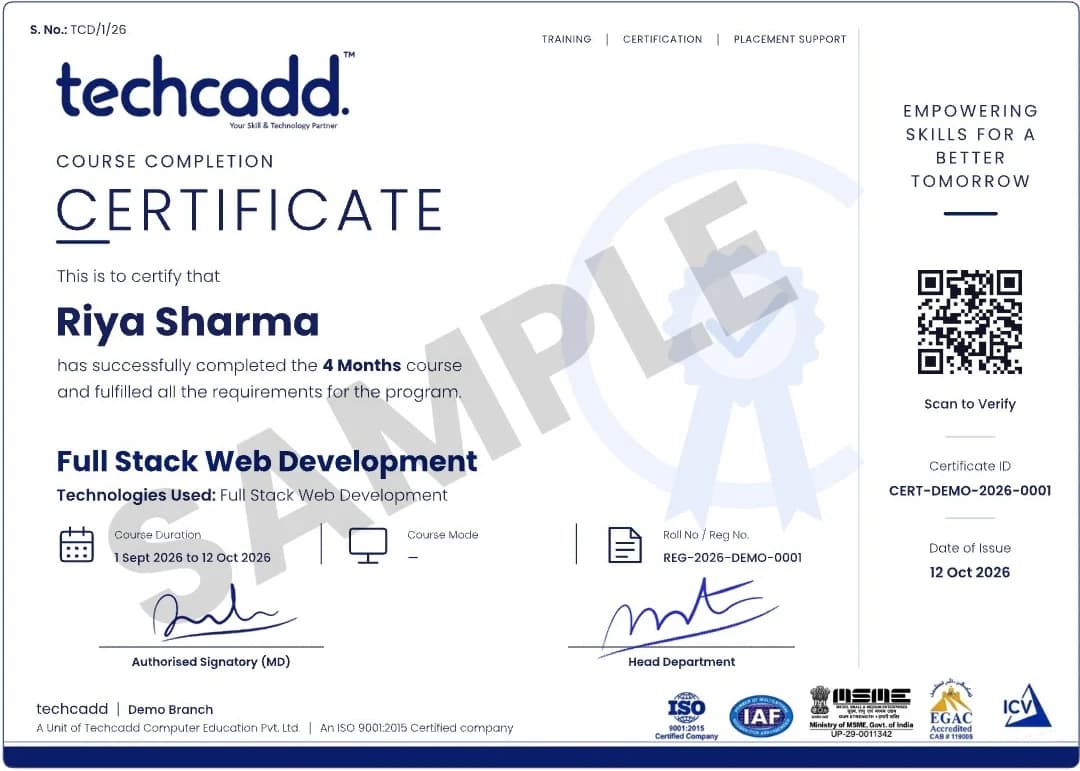
Issued on finishing the programme, with a QR code and certificate ID anyone can verify.
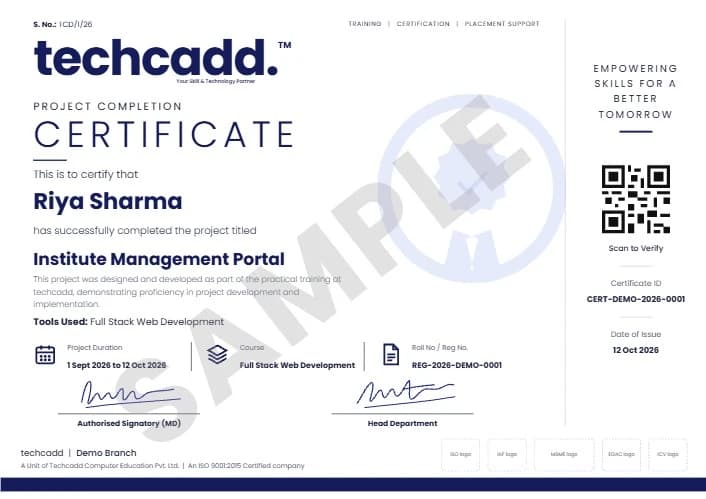
A separate certificate naming the live project you designed and built during training.
Project ideas
Each follows the same method: pick the business and the action that matters, research the audience and search intent, plan the channels, define how success is measured, use a practice site or approved account, and finish with a report that separates measured results from assumptions.
A technical and on-page review of a practice or permitted site, with prioritised fixes and how each would be checked in Search Console.
Intent-grouped keywords for a niche, mapped to pages and a three-month publishing calendar.
A measurement plan, tested events and conversions, and a Looker Studio report on a practice website.
Campaign structure, keywords, negative keywords, ad copy and a budget built on stated cost assumptions.
Audience options, creative variations in Canva and what result would decide the winner.
A month of posts across platforms for a sample brand, with goals and how each would be measured.
A permission-based sign-up form and a short Mailchimp sequence with subject-line variations.
A WordPress landing page built around one action, with form tracking and a list of improvements to test.
Organic, paid, social and email channels for one business, on realistic assumptions, as the capstone.
How to apply
Six steps, so you know what is confirmed in writing before you pay and what is assessed at the end.
Share your degree, semester, preferred start month and whether your university requires a specific type of placement.
Review prerequisites, curriculum, format, hours, fees, project expectations and documentation.
Receive current programme details, policies and any required approvals before registration.
Begin with audience research, SEO and WordPress, then measurement and paid channels, with regular exercises.
Select a business and a goal, plan checkpoints and receive structured feedback on each channel.
Present the campaign proposal, explain your assumptions and submit the report and portfolio materials.
University & college requirements
Ask your training and placement cell or department coordinator before paying, keep copies of written approvals, and ask techcadd to confirm which documents it can genuinely issue.
Requirements differ between universities and even departments. A practical checklist includes the department handbook, approval email, project scope, timetable, attendance method, evaluation rubric and final submission date. Do not assume an institute certificate alone satisfies a university internship requirement.
Duration, semester planning & batches
Six months can align with a final-semester calendar, but confirm the actual dates, weekly hours and holidays for your batch.
Plan around examinations, faculty reviews, report submission and commuting time.
Ask for the current intake month, batch format and seat availability rather than relying on an “admissions open” banner.
Guided labs are not enough on their own. Budget regular time each week for writing, site edits and reading reports.
Eligibility, fees & what is included
Ask for the real programme fee in writing and what it includes. Compare total cost and the quality of supervision, not a headline discount.
Basic computer and internet skills and clear written English help; no coding is assumed. Some HTML is introduced for WordPress and technical SEO, and the depth depends on the batch and your project.
Career scope
Entry-level roles you might work towards — job titles, hiring criteria and salaries vary by employer:
A six-month programme does not guarantee employment; a credible portfolio and continuing practice support future applications.
Research keywords, audit sites, improve pages and report on organic visibility in Search Console and GA4.
Plan, build and monitor Google and Meta campaigns, test creatives and manage budgets that belong to someone else.
Plan and produce content, run email programmes, set up tracking and explain what the numbers mean for the business.
Why students consider techcadd
Ask about instructor experience, class size, practical lab time, access to current marketing tools, project feedback and mentoring — and ask to see sample audits and student work published with permission.

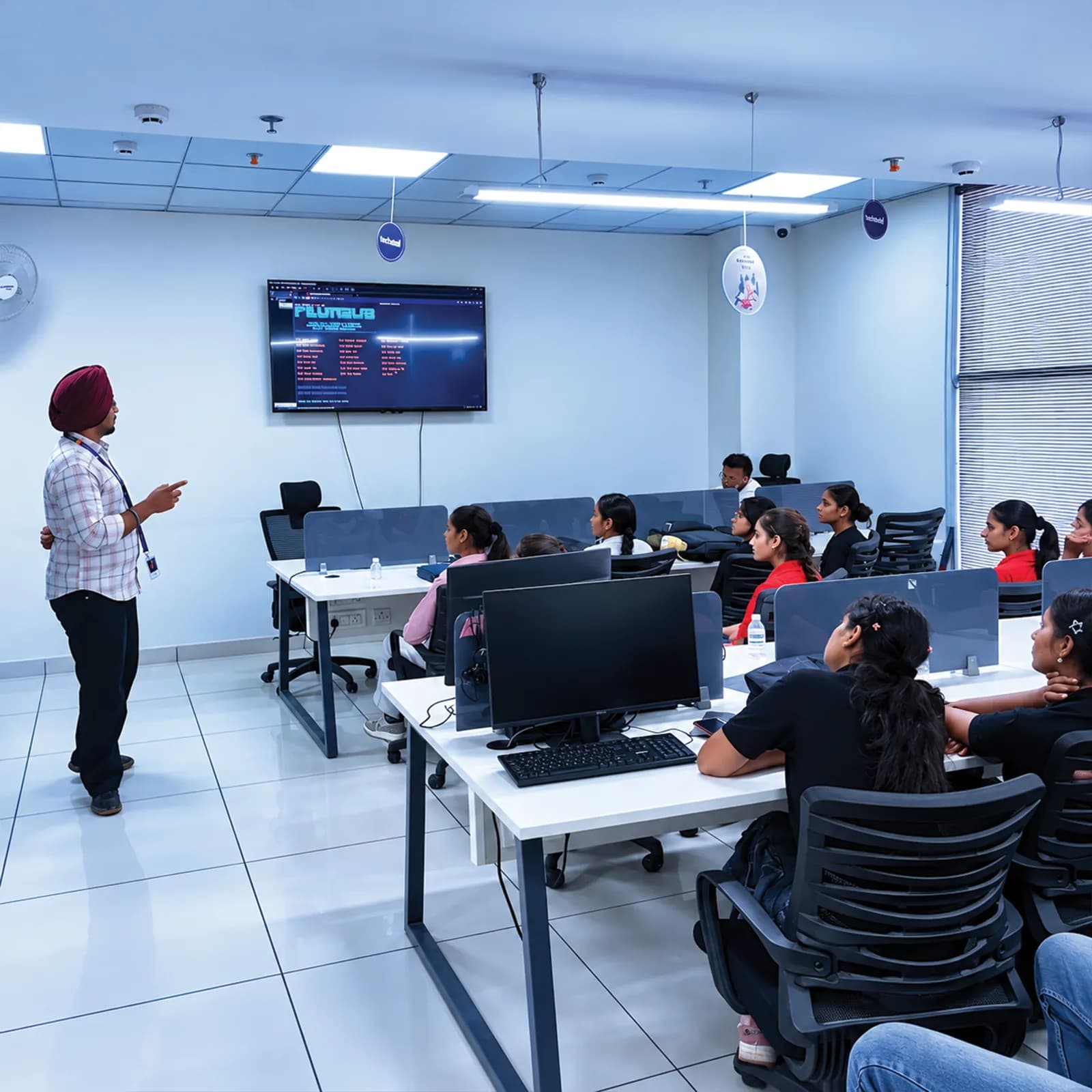
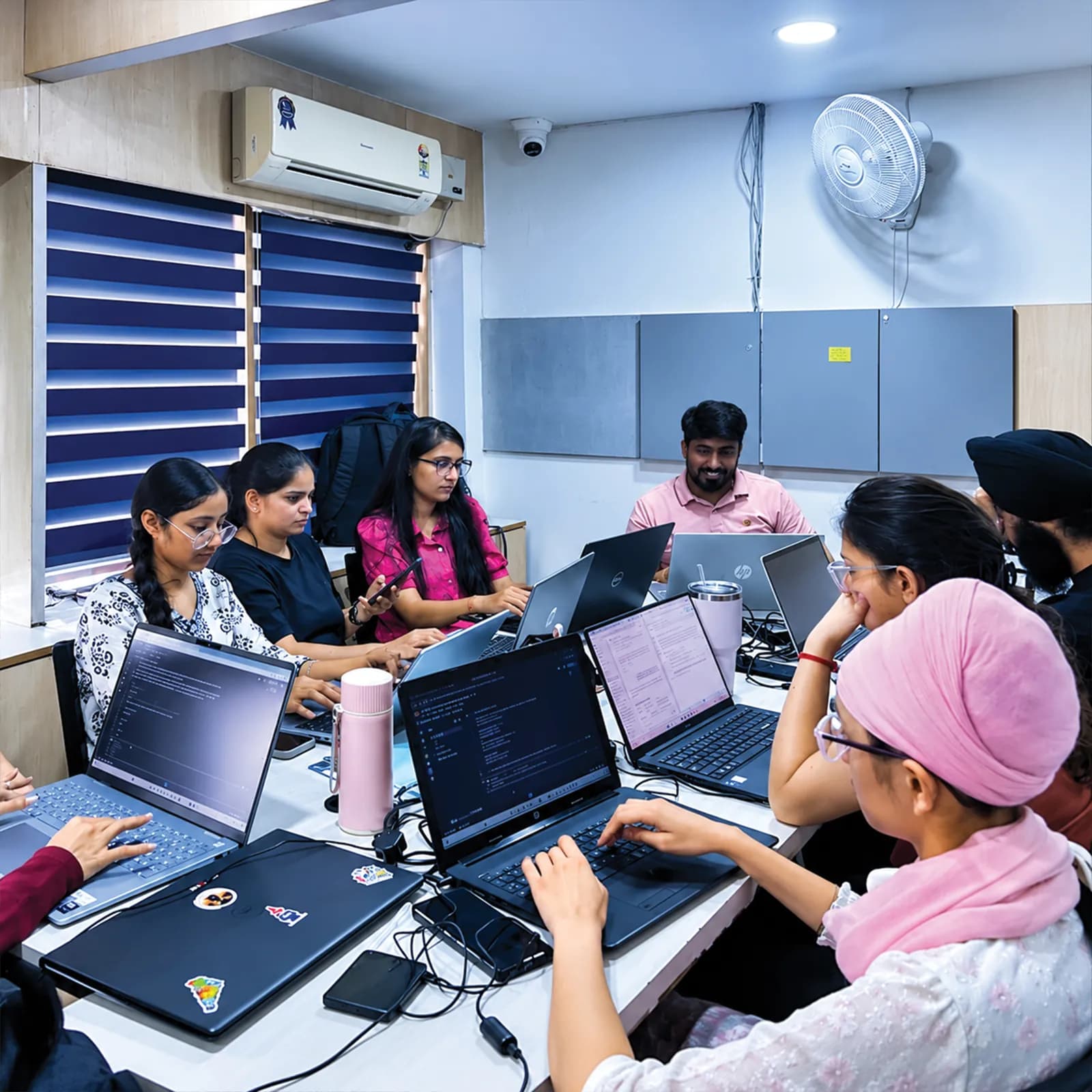
A deliverable at the end of every month, so you can see your progress and what is assessed.
Hands-on lab time in Search Console, GA4, Tag Manager, Google Ads, Meta Ads, WordPress, Canva and Mailchimp.
Fees, documents, project expectations and how outcomes are assessed — explained before admission.
Visit the centre, meet the trainers and look at the labs before you confirm a batch.
The centre is at 2nd Floor, Crystal Plaza, SCS 78, Opposite PIMS Hospital, Jalandhar. Ask about the learning format, counselling hours and public transport before you join, and check your travel time against your college timetable.
techcadd Jalandhar — 2nd Floor, Crystal Plaza, SCS 78, Opposite PIMS Hospital, Jalandhar, Punjab 144001Frequently asked questions
Answers can differ by degree, semester and batch — confirm any academic requirement directly with your institution.
You can enquire about the current digital marketing programme at techcadd. Confirm whether it is a workplace internship or industrial training.
It can be, especially if you enjoy web, data and communication work. Technical SEO and tracking draw on web skills; check your university's requirements for the training type.
Yes, many marketing and business topics carry over directly. Check the programme eligibility and how your college treats the training.
No coding is assumed. Basic HTML is introduced for WordPress and technical SEO, and is useful but not the main focus.
Google Search Console, Google Analytics 4, Google Tag Manager, Google Ads, Meta Ads Manager, WordPress, Canva, Mailchimp and Semrush or Ahrefs, among others. Ask for the module-by-module list for your batch.
SEO improves how a site appears in unpaid search results and takes time; Google Ads places paid ads that appear while the budget runs.
Ad spend is real money. Campaigns run only in accounts where the owner has given written permission and approved a budget; otherwise you plan and build drafts. Ask how this is handled for your batch.
No one can promise rankings. You learn the practices that improve visibility and how to measure progress honestly in Search Console.
Results depend on the brand, budget, competition and time. The programme teaches how to plan, measure and improve, not a promised number of followers or leads.
GA4 records how people arrive at and use a website or app, so you can measure events and conversions and compare channels.
Those are issued by Google and Meta through their own exams. Ask whether the programme covers preparation; a techcadd certificate is not one of them.
Only if actual supervised client work is available and appropriately authorised. Ask for written details.
Confirm the exact document issued, the conditions, and whether it reflects actual work or training.
Only your college or university can confirm recognition for its academic requirements.
Request the current fee sheet and ask which services, tool access and assessment charges are included, and whether any ad spend is expected.
No. Evaluate any career support separately, and don't treat training as a job guarantee.
Ask about lab availability and the recommended specification for independent practice.
Objectives, audience research, channel plan, tracking setup, results or stated assumptions, limitations and references.
Send an enquiry from this page or call +91 98881 22254, share your degree and semester, and request the verified syllabus and joining details.
techcadd Jalandhar is at 2nd Floor, Crystal Plaza, SCS 78, Opposite PIMS Hospital, Jalandhar, Punjab 144001. Visit for a counselling discussion before you confirm a batch.
Apply
Looking for a 6 months digital marketing internship in Jalandhar, an SEO or Google Ads industrial training programme or a final-semester marketing project pathway? Tell us your degree, university requirements, preferred start month and learning goals, and request the syllabus, fee structure, project evaluation process and documentation before you enrol.