Hacking is not just running tools
A scanner can list hundreds of findings that turn out to be false positives. The goal is judgement — understanding the protocol, confirming the issue and explaining its real risk — not memorised commands.
Make your final semester count. Learn how networks, operating systems and web applications are attacked and defended — networking, OSINT, the OWASP Top 10 with Burp Suite and PortSwigger labs, SQL injection, Nmap, Metasploit, Wireshark and Python — through a structured six-month pathway in an authorised lab, and check whether the format fits your university requirements.
Every exercise runs in a permitted lab. Ask for the current fee, format, schedule, project supervision and certificate details in writing before enrolling.
Overview
Cybersecurity protects systems, networks and data from misuse. Ethical hacking is the authorised side of offence: finding weaknesses with permission so they can be fixed before someone else abuses them. Six months gives you time to practise the whole cycle — understand how a system works, map it, test it within an agreed scope, detect what happened in the logs and write a report someone can act on.
A workplace internship usually includes supervised responsibilities in an organisation; industrial training centres on instruction, lab work and guided projects. Both can be valuable, but they are not interchangeable — ask who supervises the work, what deliverables are required and which documents your university accepts.
A scanner can list hundreds of findings that turn out to be false positives. The goal is judgement — understanding the protocol, confirming the issue and explaining its real risk — not memorised commands.
Testing shows where a system is weak; monitoring, logging and hardening make sure the next attempt is seen and stopped. A useful analyst understands both sides.
Every exercise runs against lab machines, intentionally vulnerable applications or systems you have written permission to test. Scanning or attacking anything else is illegal, whatever the intention.
Compare mentor availability, lab setup, project depth, feedback, assessment, timetable and clear administrative processes before choosing any six-month programme.
Who can apply
Whatever your degree, check eligibility, assessment standards, attendance rules, laptop or lab access and university permission before enrolling.
Connect computer networks, operating systems and web technologies subjects with packet analysis, hardening, vulnerability assessment and incident investigation.
Build from familiar computer applications topics toward Linux, networking basics, web security and portfolio-ready lab reports.
Explore more advanced web application testing, scripting for automation, log analysis, threat modelling and professional report writing.
Apply programming and systems knowledge to security questions, with emphasis on evidence, method and clear documentation.
Diploma holders in computer or electronics streams can start with networking and Linux foundations. Confirm the entry requirements for your batch.
Eligibility depends on starting skills, available time and academic requirements rather than a one-size-fits-all promise.
Why a six-month security path?
Networking, Linux, web protocols and log analysis each take repeated practice before they feel natural. A semester gives each of them room, and gives you time to learn the method rather than just the tools.
Security rests on networking and operating systems. A semester-long plan leaves time to learn them properly before moving to testing and detection.
Lab write-ups, packet captures with explanations, a vulnerability assessment report and a detection rule you built and tested yourself.
A finding is only useful if someone can understand and fix it. Written reports teach you to explain risk, evidence and remediation to people who are not security specialists.
Compare SOC analyst, vulnerability assessment, network security and application security work before committing to a specialisation.
A structured project helps you practise reporting and viva presentations — but acceptance as compulsory industrial training depends on your college or university.
Tools & technologies
Taught in the syllabus order: foundations and networking first, then OSINT and malware awareness, web application testing, network and system testing, Python, and a capstone. Ethics, scope and permission run through every module. Ask for the module-by-module list for your batch.
The OSI and TCP/IP models, IP addressing and subnetting, ports, DNS, HTTP and HTTPS, routing, firewalls and VPN concepts — the ground every attack and defence stands on.
CLI commands, how proxies and VPNs work and when to use them, Windows security, BitLocker, the group policy editor and the registry editor.
Setting up an isolated virtual lab in VMware with intentionally vulnerable machines, so every exercise stays inside a permitted environment.
Host discovery, port and service scanning, version detection and reading scan output carefully — only against lab targets in scope.
Capturing and filtering packets, following TCP streams and spotting cleartext credentials, odd DNS traffic and scan patterns in a capture.
Intercepting and modifying web requests, the repeater and intruder workflow, session handling and testing input validation on lab applications.
Injection, broken access control, authentication failures, misconfiguration and the other common web risks — how they arise and how developers fix them.
Understanding exploits, payloads and post-exploitation concepts on deliberately vulnerable lab machines, with the emphasis on why a system was exposed and how to patch it.
How Snort and other intrusion detection and prevention systems spot attacks, what a honeypot is for, and how compromised systems are detected.
Open-source intelligence with Maltego and search operators, what is legal and what is not, email header tracing, data recovery, image forensics and disk imaging.
Databases and SQL, SQL injection types, manual and automated testing with SQLmap and Burp Suite, and the prevention developers should apply.
A full month of Python — variables, loops, data structures, functions, classes, file handling, exceptions and modules — to automate security tasks.
Hardening, patching, passwords and multi-factor authentication, backups, scope documents, rules of engagement and clear vulnerability reports with remediation advice.
Syllabus & learning roadmap
Following the centre's own syllabus. Every exercise runs in an authorised lab or on PortSwigger's practice labs — never against systems you do not have written permission to test. Confirm contact hours and mentor arrangements for your batch.
Cybersecurity fundamentals and the CIA triad, VMware, CLI commands, proxies and VPNs; networking, the OSI model, TCP/UDP, DNS, firewalls and Windows security; OSINT with Maltego and the phases of ethical hacking; malware, keyloggers, trojans, batch scripting and the WannaCry case study.
DoS and DDoS, zero-days, and scanning with Nmap, Netcat, Masscan and Zenmap; penetration testing, CVE and CVSS, Metasploit and msfvenom; Snort, IDS, IPS and honeypots, WPScan, Wireshark and Wi-Fi security — with access control and authentication bypass practice on PortSwigger labs.
SQL and SQL injection with SQLmap, parameter tampering and file upload risks; cross-site scripting and brute force; vulnerability scanning with OWASP ZAP, Nikto and dirb; man-in-the-middle attacks, ARP poisoning and SSL stripping; cryptography and hashing — with SQLi, XSS and SSRF practice on PortSwigger labs.
HTML, PHP, databases and HTTP; phishing types and prevention, email tracing and headers; digital forensics, data recovery and disk imaging; search operators, Tor and the dark web; VAPT, the OWASP Top 10, bug bounty and authentication bypass with Burp Suite, then brute-force practice on PortSwigger labs.
A full month of Python: variables, operators, data types and strings, loops, lists, tuples, sets and dictionaries, functions, classes and objects, file handling, polymorphism, exception handling and modules.
A review of everything so far, advanced lab work on vulnerability assessments and exploits, web application security challenges and deeper practice with Burp Suite and Nmap — then two weeks on an end-to-end project you write up and present.
Course vs internship vs industrial training
Engineering colleges use “industrial training”, “six-month training” and “internship” differently. Your university handbook, department coordinator and academic policy decide what counts — not the programme title.
Real-world security projects
Certificates & deliverables
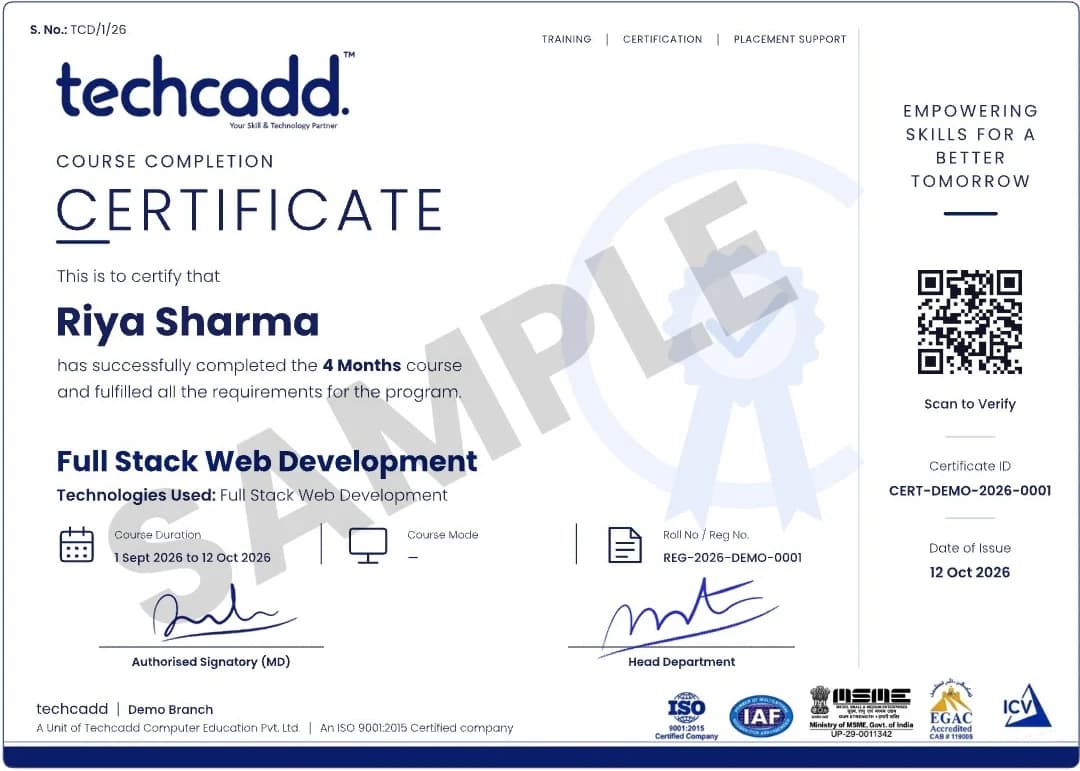
Issued on finishing the programme, with a QR code and certificate ID anyone can verify.
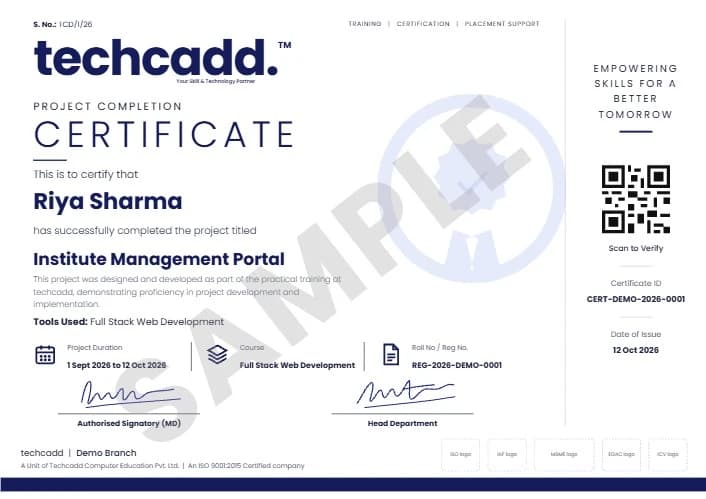
A separate certificate naming the live project you designed and built during training.
Project ideas
Each follows the same method: agree a written scope, build or use an isolated lab or intentionally vulnerable target, record your method and evidence, separate confirmed findings from guesses, and finish with a report, remediation advice and a short presentation.
Map a virtual lab network with Nmap, document services and versions, and recommend hardening steps.
Analyse a public or lab-generated capture in Wireshark and explain what happened, step by step.
Test an intentionally vulnerable web application against the OWASP Top 10 with Burp Suite and rate each finding.
Harden a Linux server — users, SSH, firewall, updates and logging — and show the before-and-after checks.
Write Snort rules that flag a port scan and a brute-force attempt in the lab, and test them against your own traffic.
Examine sample phishing emails for header, link and attachment indicators, and write a short awareness guide.
Compare password and multi-factor settings against published guidance in a lab directory, with recommendations.
Write small tools to parse logs, check file hashes or summarise scan output, with tests and documentation.
Walk a simulated ransomware or account-takeover scenario through each response phase and write the incident report.
How to apply
Six steps, so you know what is confirmed in writing before you pay and what is assessed at the end.
Share your degree, semester, preferred start month and whether your university requires a specific type of placement.
Review prerequisites, curriculum, lab setup, format, hours, fees, project expectations and documentation.
Receive current programme details, policies, the lab code of conduct and any required approvals before registration.
Begin with networking and Linux, then reconnaissance, web testing and log analysis, with regular lab exercises.
Agree a scope and lab target, plan checkpoints and receive structured feedback on your method and report.
Demonstrate your findings, explain your method and submit the report and portfolio materials.
University & college requirements
Ask your training and placement cell or department coordinator before paying, keep copies of written approvals, and ask techcadd to confirm which documents it can genuinely issue.
Requirements differ between universities and even departments. A practical checklist includes the department handbook, approval email, project scope, timetable, attendance method, evaluation rubric and final submission date. Do not assume an institute certificate alone satisfies a university internship requirement.
Duration, semester planning & batches
Six months can align with a final-semester calendar, but confirm the actual dates, weekly hours and holidays for your batch.
Plan around examinations, faculty reviews, report submission and commuting time.
Ask for the current intake month, batch format and seat availability rather than relying on an “admissions open” banner.
Guided labs are not enough on their own. Budget regular time each week for Linux, networking and lab practice on your own isolated setup.
Eligibility, fees & what is included
Ask for the real programme fee in writing and what it includes. Compare total cost and the quality of supervision, not a headline discount.
Basic computer skills help; no prior security experience is assumed. Comfort with networking concepts and the command line makes the early months easier, and the scripting level needed depends on the batch and your project.
Career scope
Entry-level roles you might work towards — job titles, hiring criteria and salaries vary by employer:
A six-month programme does not guarantee employment; a credible portfolio, continuing practice and, later, recognised certifications support future applications.
Monitor alerts, triage events, investigate logs and escalate incidents with clear notes in a security operations centre.
Run authorised scans and tests within an agreed scope, confirm findings and write reports that developers and administrators can act on.
Apply the same skills to hardening, network security, cloud configuration, policy and compliance work.
Why students consider techcadd
Ask about instructor experience, class size, practical lab time, how the lab is isolated, project feedback and mentoring — and ask to see sample reports and student work published with permission.

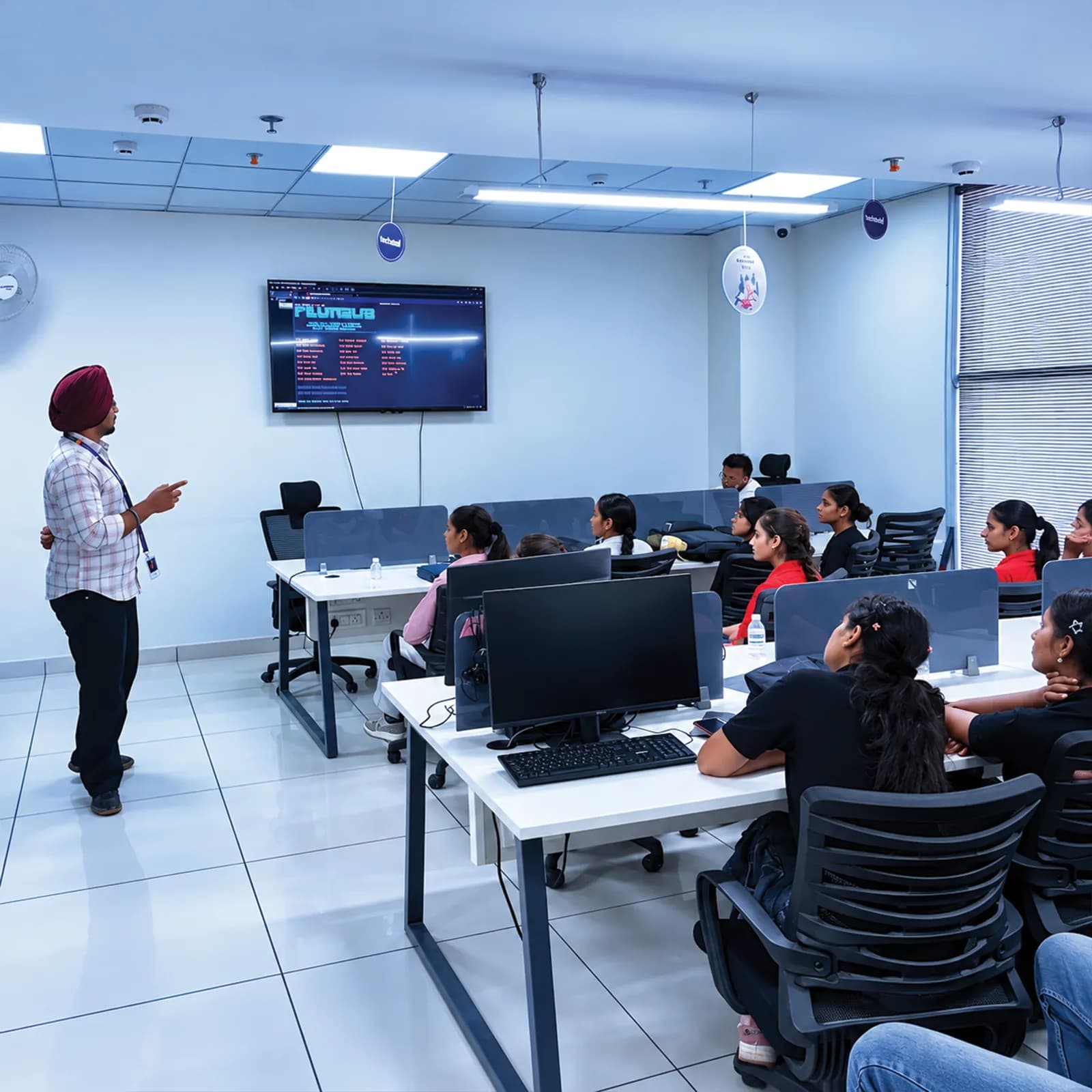
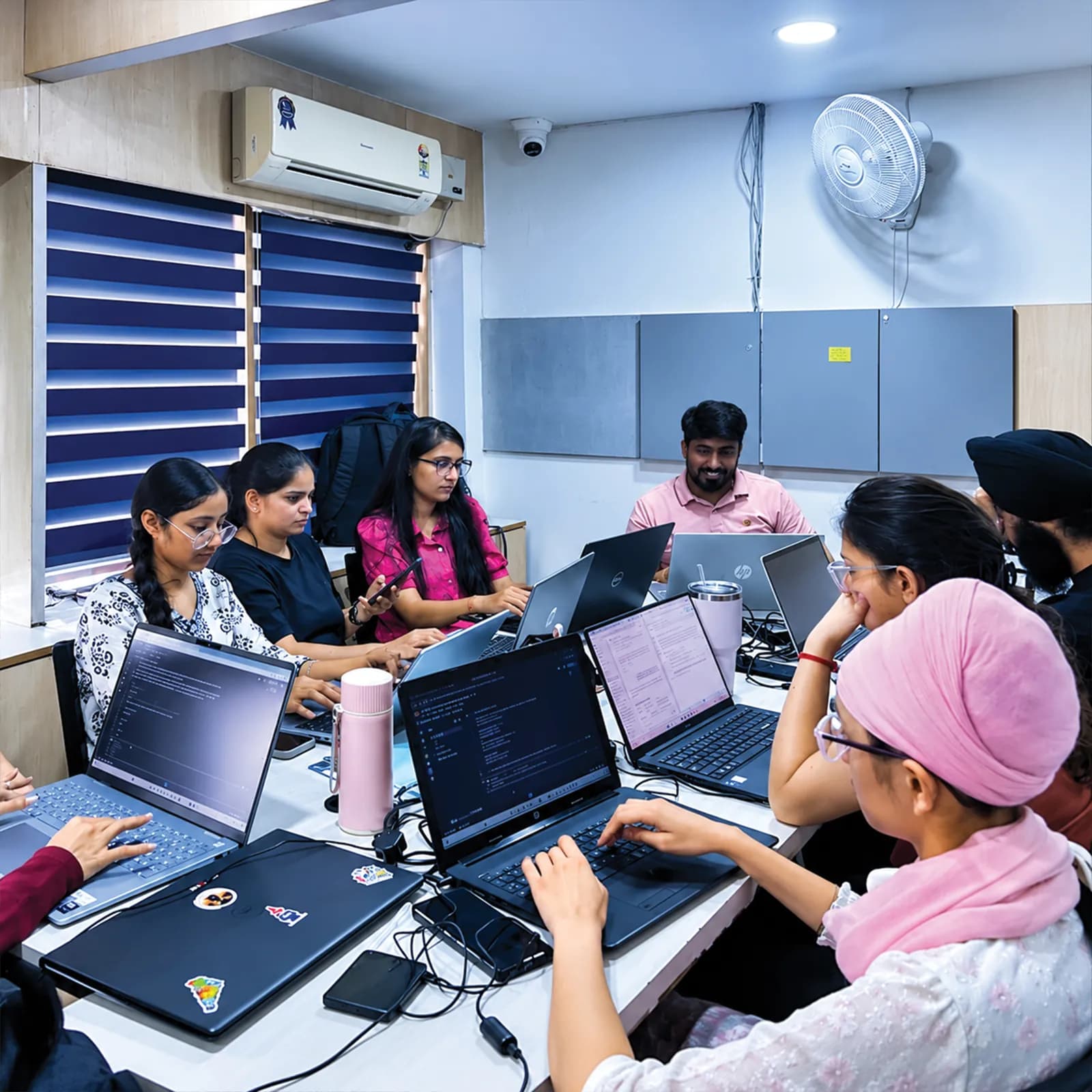
A deliverable at the end of every month, so you can see your progress and what is assessed.
Lab time with Burp Suite, PortSwigger labs, Nmap, Metasploit, Wireshark and Python.
Every exercise is authorised and runs in a permitted lab, so you learn the professional habits along with the techniques.
Visit the centre, meet the trainers and look at the labs before you confirm a batch.
The centre is at 2nd Floor, Crystal Plaza, SCS 78, Opposite PIMS Hospital, Jalandhar. Ask about the learning format, counselling hours and public transport before you join, and check your travel time against your college timetable.
techcadd Jalandhar — 2nd Floor, Crystal Plaza, SCS 78, Opposite PIMS Hospital, Jalandhar, Punjab 144001Frequently asked questions
Answers can differ by degree, semester and batch — confirm any academic requirement directly with your institution.
You can enquire about the current cybersecurity and ethical hacking programme at techcadd. Confirm whether it is a workplace internship or industrial training.
It may suit students who want applied networking, Linux and security practice, subject to university requirements.
BCA students can often start with networking and Linux foundations before moving to testing. Confirm the entry requirements.
A vulnerability assessment or detection capstone can be appropriate if it meets the department's academic rules.
Testing is legal only with explicit permission from the system owner. Every exercise in this programme runs in a permitted lab or on intentionally vulnerable targets — never against systems without written permission.
Cybersecurity covers protecting systems as a whole, including monitoring, hardening and response; ethical hacking is the authorised testing part of it.
VMware, Maltego, Burp Suite with PortSwigger labs, SQLmap, OWASP ZAP, Nikto, Nmap, Netcat, Metasploit, Snort, WPScan, Wireshark and Python. Ask for the module-by-module list for your batch.
Not to start. Batch scripting is covered in month one and month five is a full month of Python, so you learn the scripting you need during the programme.
A security operations centre analyst monitors alerts, investigates suspicious activity in logs and escalates real incidents.
A widely used list of the most common web application security risks, such as injection and broken access control.
Only if actual supervised client work is available and the client has given written authorisation. Ask for written details.
The topics overlap with many entry-level certifications, but this programme is not a vendor certification. Check each exam's own syllabus and requirements.
Confirm the exact document issued, the conditions, and whether it reflects actual work or training.
Only your college or university can confirm recognition for its academic requirements.
Request the current fee sheet and ask which services and assessment charges are included.
No. Evaluate any career support separately, and don't treat training as a job guarantee.
Ask about lab availability and the recommended specification for running virtual machines during independent practice.
Objectives, scope and permissions, lab setup, methodology, findings, risk ratings, remediation, limitations and references.
Send an enquiry from this page or call +91 98881 22254, share your degree and semester, and request the verified syllabus and joining details.
techcadd Jalandhar is at 2nd Floor, Crystal Plaza, SCS 78, Opposite PIMS Hospital, Jalandhar, Punjab 144001. Visit for a counselling discussion before you confirm a batch.
Apply
Looking for a 6 months cybersecurity internship in Jalandhar, an ethical hacking industrial training programme or a final-semester SOC project pathway? Tell us your degree, university requirements, preferred start month and learning goals, and request the syllabus, fee structure, lab setup, project evaluation process and documentation before you enrol.