Cybersecurity Certificate Program in Jalandhar
A nine-month AI-Powered Cybersecurity programme — ethical hacking, SOC and SIEM operations, cloud security and AI-assisted threat detection — built on 20+ hands-on labs, 10+ mini projects and one industry capstone.
- Live client projects
- Practitioner trainers
- Placement support
- Certificate + internship

- Duration
- 9 Months
- Practical
- 20+ Labs, 10+ Projects
- Mode
- Classroom, Weekend & 1-on-1
- Includes
- Internship Letter
- Students trained
- 25,000+Students trainedsince 2016
- Google rating
- 4.9★Google rating556+ reviews
- Practical training
- 100%Practical traininglive client work
Course overview
techcadd's Cybersecurity Certificate Program in Jalandhar runs as a nine-month AI-Powered Cybersecurity programme, with one theme per month and something you built at the end of each. Months one to four cover the foundation and the offensive side: computer hardware and operating systems, Linux and Windows administration, networking fundamentals and TCP/IP, virtualisation with VMware or VirtualBox, Git and GitHub, then Kali Linux, information gathering, vulnerability assessment, Nmap and Wireshark, then web security through the OWASP Top 10 with Burp Suite — SQL injection, XSS, CSRF and authentication attacks — and finally password attacks, wireless security, Active Directory basics, Metasploit, Hydra, social engineering awareness and professional reporting.
Months five and six shift to defence and automation, which is where most of the jobs actually are. You run a Security Operations Centre — SIEM fundamentals, Wazuh, Splunk, log analysis, MITRE ATT&CK, threat hunting, AI threat detection and AI security analytics — then move into cloud and DevSecOps: AWS and Azure security, IAM, Docker and Kubernetes security, Python security automation, and the OpenAI and Gemini API integrations that let you build your own AI security tooling rather than buy it. By the end of month six you can perform penetration testing, run vulnerability assessments, work as a SOC analyst, deploy SIEM solutions, secure cloud infrastructure, detect threats using AI and write a penetration test report someone can act on.
Months seven and eight are one industry capstone in two phases — project planning, threat modelling, security architecture, AI integration, SOC dashboard development and threat intelligence, then advanced AI features, testing, deployment, cloud hosting, documentation and presentation. The deliverable is an industry-level AI cybersecurity platform with threat detection, SIEM, a dashboard, full documentation, a GitHub repository and a live demonstration. Month nine is placement preparation: networking, Linux, cybersecurity and ethical hacking interview questions, SOC analyst preparation, SIEM practicals, resume and GitHub portfolio work, LinkedIn optimisation, aptitude, HR and mock interviews, freelancing and job preparation.
All lab work runs on Kali Linux, Ubuntu and Windows Server against systems you are permitted to test — your own lab, deliberately vulnerable applications like DVWA and Juice Shop, and the TryHackMe, Hack The Box, PortSwigger Academy and OverTheWire platforms — with a trainer supervising each exercise. You finish with 20+ documented labs, 10+ mini projects, a capstone platform on GitHub, a programme completion certificate and interview practice for SOC Analyst, Security Analyst, Penetration Tester and AI Security Engineer roles.
One field,many security careers
Cybersecurity is the work of protecting computers, networks, websites and data from being misused. It is not one job but a family of jobs: some people test systems for weaknesses, some watch for attacks as they happen, some secure cloud servers, and some write the policies everyone else follows.
Think of a bank branch in Jalandhar. One person checks the locks and finds the weak door before a thief does (ethical hacking). Another watches the CCTV screens all day and raises the alarm (the SOC). Another designs the vault (security architecture). All of them do security, with different daily work. This programme covers the testing side and the monitoring side in depth, and gives you a working base in cloud security and AI automation. Each field below shows how much of it these nine months actually cover.
- Job-ready focus3 fields
- The course trains you for entry-level work in this field.
- Strong foundation3 fields
- You learn the base skills here; one specialised course makes you job-ready.
- Introduced1 field
- You will use it in the course, but it is not a specialisation.
- Not covered
- Not part of this course; available as a separate techcadd course.
What this course makes you job-ready for
Job-ready focusSecurity Operations (SOC) & Threat Detection
Watching an organisation's systems around the clock, reading alerts from a SIEM tool, deciding which ones are real attacks and escalating them before damage is done. This is where most entry-level security jobs are.
A SOC analyst sees fifty failed logins on a hospital's server within two minutes, checks where they came from, confirms it is a password-guessing attempt and blocks it.
- Cybersecurity tools used
- WazuhSplunkELK StackSysmonMITRE ATT&CK
- Job roles
- SOC Analyst L1/L2Security Operations EngineerBlue Team Analyst
Month 5 (SIEM, Wazuh, Splunk, log analysis, MITRE ATT&CK, threat hunting, AI threat detection), with SOC analyst preparation and SIEM practicals in Month 9. Project: SOC Dashboard & AI Log Analyser.
Ethical Hacking & Vulnerability Assessment (VAPT)
Testing systems, networks and websites with the owner's written permission to find weaknesses before criminals do, then writing a report that tells the owner exactly what to fix.
A company asks you to test its customer portal before launch. You find that a login form can be tricked into revealing data, and your report shows how to fix it.
- Cybersecurity tools used
- Kali LinuxNmapBurp SuiteMetasploitOWASP ZAPNikto
- Job roles
- Ethical HackerPenetration TesterVulnerability Assessment Engineer
Months 2–4 (reconnaissance, vulnerability assessment, OWASP Top 10, Burp Suite, Metasploit, reporting). Projects: Vulnerability Assessment Report, Web Security Assessment.
Security Automation with Python & AI
Writing scripts and small tools that do repetitive security work automatically, and using AI models to help read logs, summarise alerts or flag suspicious activity faster than a person could.
A Python script that pulls the day's alerts, asks an AI model to group and summarise them, and sends the analyst a short morning report instead of a thousand raw log lines.
- Cybersecurity tools used
- PythonBashPowerShellOpenAI APIGoogle GeminiLangChain
- Job roles
- Security Automation EngineerAI Security EngineerAI SOC Analyst
Month 6 (Python security automation, OpenAI and Gemini API integration) and the Months 7–8 capstone. Projects: AI Security Assistant & Scanner, Industry AI Security Capstone.
What this course lays the foundation for
Strong foundationCloud Security & DevSecOps
Keeping servers, storage and applications that run on AWS or Azure safe: who can log in, what is exposed to the internet, and whether containers are configured securely.
Finding that a company's cloud storage folder of customer invoices was accidentally left open to anyone with the link, and locking it down.
- Cybersecurity tools used
- AWSAzureIAMDockerKubernetes
- Job roles
- Cloud Security Engineer (junior)DevSecOps Engineer (junior)
Month 6 covers AWS and Azure security, IAM, Docker and Kubernetes security and DevSecOps, ending in a cloud security assessment. Building and running cloud infrastructure itself is taught in techcadd's AWS Cloud, Microsoft Azure and DevOps Engineering courses.
Threat Hunting & Incident Response
Going looking for attackers who may already be inside a network, and when an attack is confirmed, containing it, cleaning up and recording what happened.
After a phishing email reaches staff at an export house, checking which laptops clicked the link, isolating them and tracing what the attacker touched.
- Cybersecurity tools used
- SplunkWazuhMITRE ATT&CKSysmon
- Job roles
- Threat HunterIncident Response Analyst
Threat hunting, log analysis and MITRE ATT&CK in Month 5, with a threat hunting case study. These roles usually go to analysts after some time on a SOC floor, so treat this as a strong base rather than a first job.
Network Security
Designing and protecting the network itself: routers, switches, firewalls, VPNs and Wi-Fi, so that only the right traffic gets through.
Setting up separate networks for a school's staff, students and CCTV cameras so a student's laptop cannot reach the office accounts system.
- Cybersecurity tools used
- Cisco Packet TracerWiresharkNmap
- Job roles
- Network Security EngineerNOC Engineer
Networking fundamentals in Month 1 and TCP/IP, network services, Nmap and Wireshark in Month 2: enough to read and test a network. Configuring routers, switches and firewalls in depth is taught in techcadd's Network Security & CCNA course.
What this course introduces
IntroducedDigital Forensics & Malware Analysis
Investigating after an incident: recovering evidence from disks, memory and phones, and studying malicious software to understand what it did.
Examining a laptop seized in a fraud case to recover deleted files and show, step by step, what happened and when.
- Cybersecurity tools used
- AutopsyFTK ImagerVolatility
- Job roles
- Digital Forensics AnalystMalware Analyst
Log analysis and threat hunting give you the investigative mindset, and a malware detection system is one of the capstone options. Disk, memory and mobile forensics are not modules here; they are taught in techcadd's Cyber Forensics course.
Clearing up common confusions
Is cybersecurity the same as ethical hacking?
No. Ethical hacking is one branch of cybersecurity: the attacking-to-defend side. Cybersecurity also includes monitoring (SOC), cloud security, incident response and compliance. This programme teaches both the offensive and the defensive side, which is why it runs nine months rather than three.
“AI-powered” here means using AI for security, not building AI models.
You learn to connect existing AI models to security tools through their APIs. Training your own models is a separate subject, taught in techcadd's Machine Learning and Artificial Intelligence courses.
Cybersecurity also covers…
Governance, risk and compliance (GRC): writing security policies, running audits and preparing for standards such as ISO 27001. The Month 1 password policy project touches this, but GRC is not a module of this programme. Security awareness training and secure software development are also separate specialisations. The foundations you build here carry over to all of them.
At a glance: what this course covers
| Field | Coverage in this course | Where you learn it | Next step at techcadd |
|---|---|---|---|
| SOC & Threat Detection | Job-ready focus | Months 5, 9; SOC Dashboard project | Ready to apply |
| Ethical Hacking & VAPT | Job-ready focus | Months 2–4; assessment projects | Ready to apply |
| Security Automation & AI | Job-ready focus | Month 6, capstone (Months 7–8) | Ready to apply |
| Cloud Security & DevSecOps | Strong foundation | Month 6 | AWS Cloud, Microsoft Azure, DevOps Engineering |
| Threat Hunting & Incident Response | Strong foundation | Month 5 | Grow into it from a SOC role |
| Network Security | Strong foundation | Months 1–2 | Network Security & CCNA |
| Digital Forensics | Introduced | Month 5 (log analysis) | Cyber Forensics course |
| GRC & Compliance | Not covered | — | Learn on the job |
Which Cybersecurity pathsuits you?
You do not need to pick a security speciality before you join. Everyone goes through the same foundations, offensive months and SOC month, and most students find their direction somewhere around Month 4 or 5. If you already have a feeling, this guide helps:
| If you… | You will probably enjoy | Typical first job |
|---|---|---|
| Like puzzles and figuring out how things can be broken | Ethical Hacking & VAPT | Junior Penetration Tester, VA Engineer |
| Are calm under pressure and like spotting patterns in data | SOC & Threat Detection | SOC Analyst L1 |
| Enjoy writing scripts and making tools do the boring work | Security Automation with Python & AI | Security Automation Engineer, AI SOC Analyst |
| Are interested in AWS, Azure and how modern apps are hosted | Cloud Security & DevSecOps | Junior Cloud Security / DevSecOps Engineer |
| Like investigating and building a timeline of what happened | Threat Hunting, Incident Response, Forensics | SOC Analyst first, then Incident Responder |
| Want to freelance or work remotely | Vulnerability assessment and reporting | Freelance VAPT / Security Consultant |
| Are not sure yet | Start with this programme | Decide with your trainer once you have done both the hacking and the SOC months |

Industry-Ready Training in Cybersecurity
- 100% practical, project-based learning
- AI tools integrated into every module
- Live client projects under trainer supervision
- Internship letter and placement support
- Small batches with daily doubt clearing
What you will
actually build
The syllabus is a nine-month calendar, one theme per month, and every month ends with mini projects rather than a set of notes. Months 1–4 build the foundations and the offensive side, months 5–6 turn to AI-powered SOC, cloud security and automation, months 7–8 are the industry capstone in two phases, and month 9 is placement preparation. Modules run in the order a security career runs: understand the systems, learn how they are attacked, learn how attacks are detected and answered, then build one substantial thing and go and defend it in an interview.
Cybersecurity Foundations
- Introduction to cybersecurity and core concepts
The vocabulary and threat landscape every later month assumes — CIA triad, threat actors and attack surfaces — before any tool is opened.
- Computer hardware and operating systems
How hardware, BIOS/UEFI and an OS actually boot and run processes, the layer every later exploit or defence ultimately touches.
- Linux administration
Users, permissions, processes and the command line on Ubuntu — the OS every later Kali Linux and server exercise assumes you can navigate.
- Windows administration
Windows Server administration and Active Directory basics, the target environment behind most enterprise SOC alerts you will later triage.
- Networking fundamentals
IP addressing, subnetting and the OSI model on Cisco Packet Tracer — the map every later Nmap scan and Wireshark capture is read against.
- Virtualisation with VMware and VirtualBox
Building isolated virtual machines to host your own attack and target boxes safely, ahead of the home lab mini project.
- Git and GitHub
Version control for lab write-ups and code, the same repository skill the month-eight capstone publishes as a GitHub portfolio.
- AI tools for cybersecurity
A first pass with ChatGPT, GitHub Copilot and Ollama for security work, ahead of building your own tooling on the OpenAI and Gemini APIs later.
- Mini projects: secure Linux installation, home cybersecurity lab, network documentation, password policy implementation
Month one's four deliverables — a hardened Linux box, your own virtual lab, a documented network, and a written password policy.
Useful for: Every security field. Linux, Windows and networking are what every later month assumes.
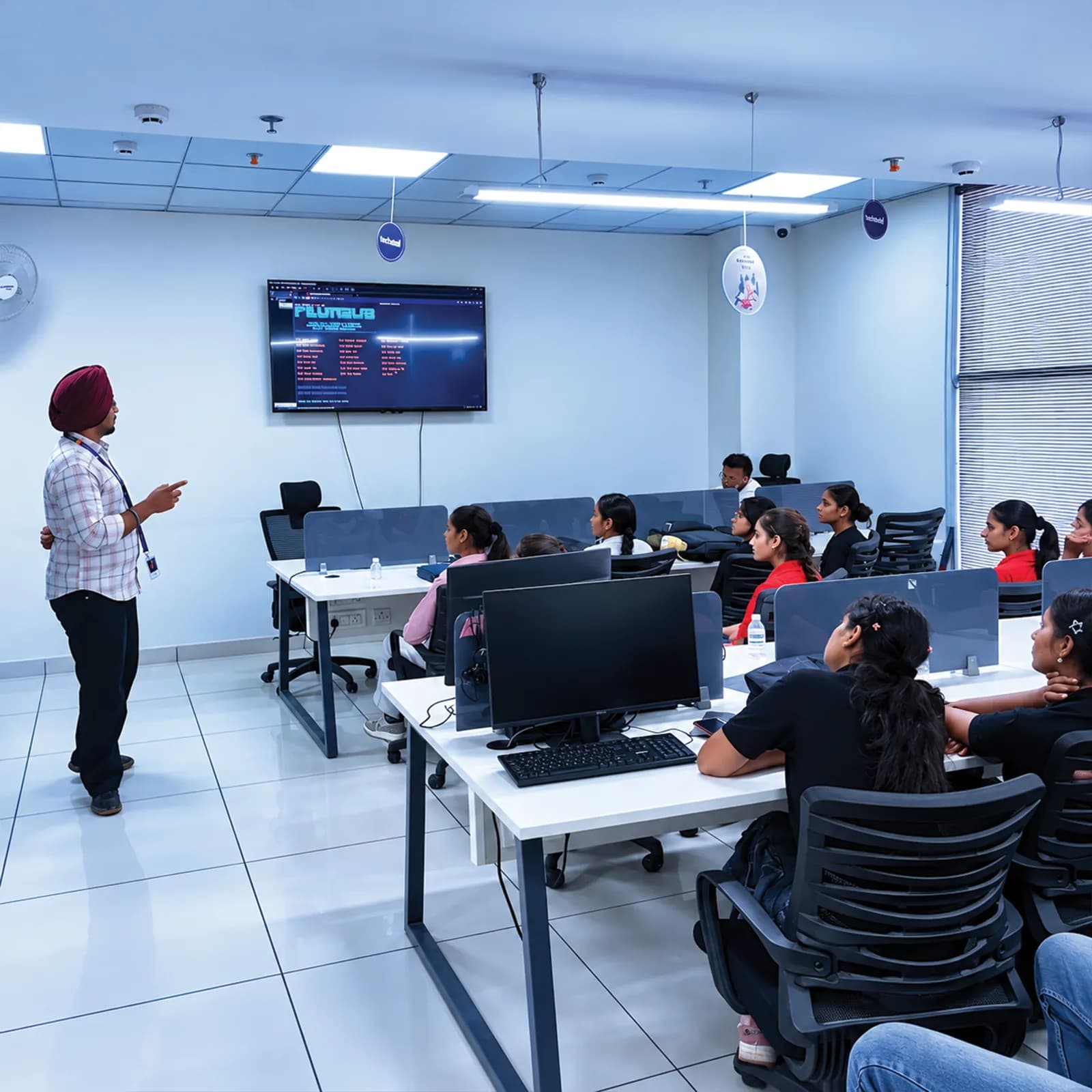
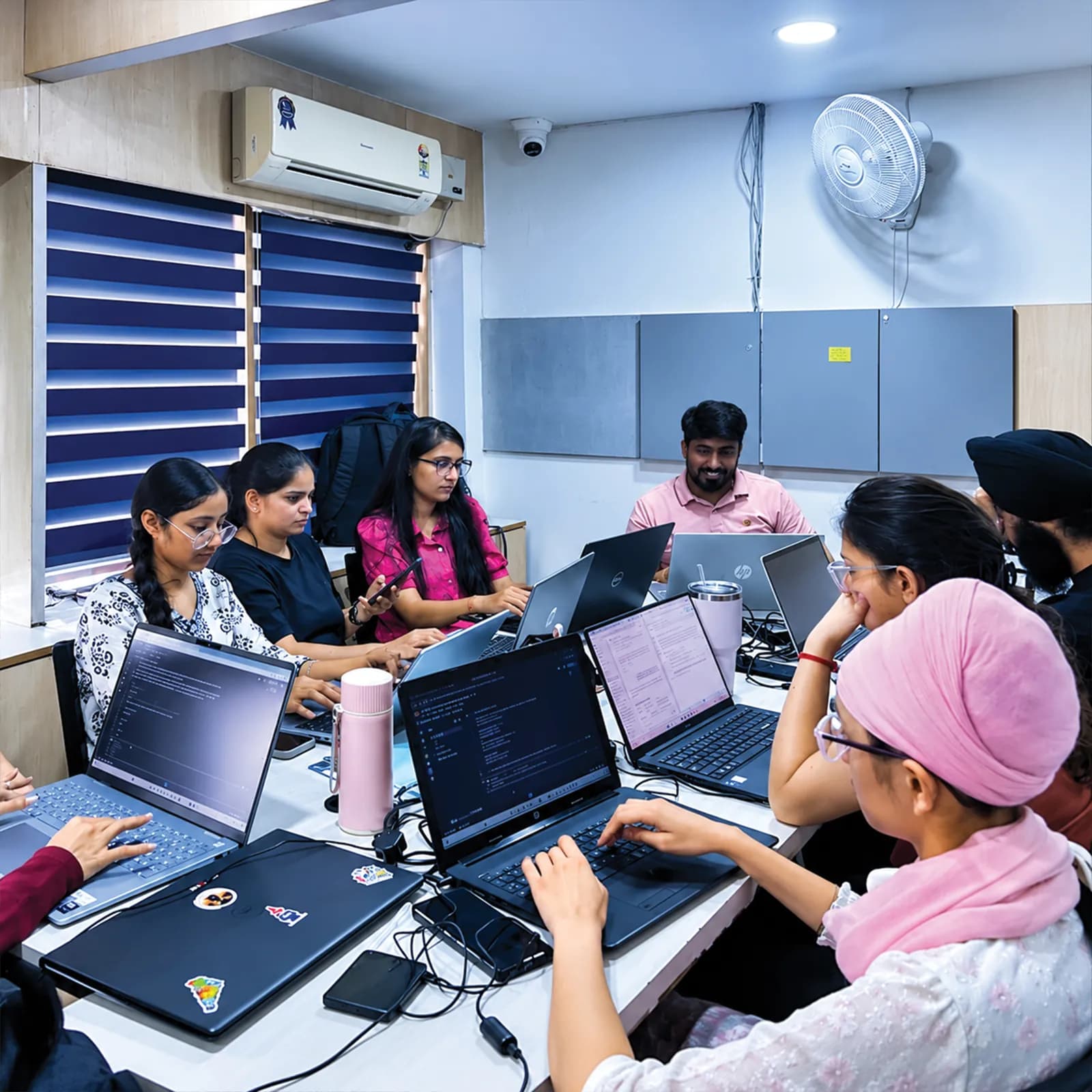

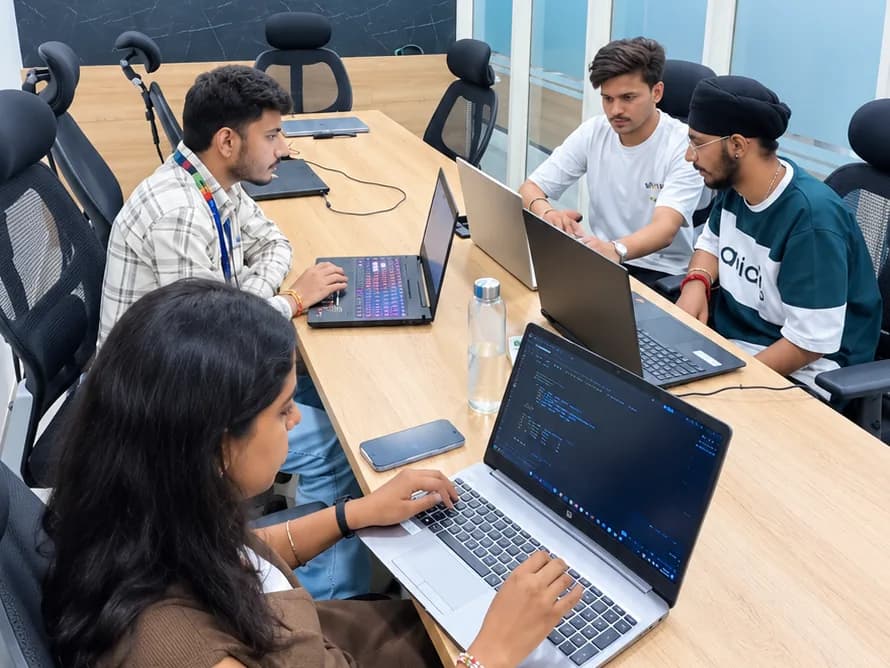


AI-Powered Cybersecurity Is Powering the Next Generation of Industry Leaders
- 20+ supervised labs, 10+ mini projects and a two-month industry capstone — on real tooling, against systems you are permitted to test.
- SOC Analyst and Security Analyst roles in Punjab start around ₹20,000 – ₹35,000 a month for a fresher with a documented portfolio.
Reviewed by mentors. Built for interviews.Who can dothis course
The Cybersecurity programme is built for people at six different starting points, and the batch is deliberately mixed. Month one starts at computer hardware, operating systems and networking, so nothing is assumed — but this is a nine-month programme, and what decides your outcome is turning up consistently and finishing the labs each month asks for.
Students after 12th
Join from any stream. Months one and two teach the hardware, Linux, Windows and networking a security career is built on, and most students run the programme alongside a degree at a Jalandhar college using the weekday or weekend batch.
Graduates and final-year students
If you are finishing a BCA, B.Sc IT or B.Tech, this is the shortest route from degree to a SOC floor. You enter placement season with a capstone platform on GitHub and 10+ mini projects behind it instead of a blank CV.
Working IT professionals
The weekend batch exists for people already earning. Support engineers, network admins and system admins usually find months one and two familiar and move quickly into SIEM, cloud security and the AI automation work in months five and six.
Business owners and freelancers
Owners take this programme to judge the security advice they are being sold. Freelancers take it for vulnerability assessment and penetration test reporting, which is billable work anywhere — month nine carries a freelancing module for exactly that.
Career restarters
A gap on the CV counts for less than work you can point at. The programme starts at zero and finishes with a documented internship letter, a GitHub portfolio and a live demonstration you can walk an interviewer through.
Self-taught learners
If TryHackMe rooms and free videos left you with scattered notes, what changes here is a structured nine-month calendar, a trainer who reviews your lab write-ups each week, and a capstone with a deadline attached to it.
One course.A mesh of real tools.
Everything below is installed on the lab machines and used on live client work, not shown once in a slide and forgotten.
- Kali Linux
- The Linux system testers use, with security tools pre-installed
- Wireshark
- Captures network traffic so you can see exactly what is being sent
- Nmap
- Finds which devices and services are running on a network
- Burp Suite
- Sits between browser and website to test web apps for flaws
- Metasploit
- A framework for safely testing known weaknesses in a lab
- Wazuh
- An open-source SIEM and endpoint monitoring platform
- Splunk
- A widely used SIEM for searching and analysing logs
- Python
- The language you use to automate security tasks
- OpenAI API
- Connects your own tools to OpenAI's models
- Google Gemini
- Google's AI models, used through their API in your tools
- MITRE ATT&CK
- A public catalogue of attacker techniques that analysts map alerts to
- SQLMap
- Tests web apps for SQL injection in a permitted lab
- Hydra
- Tests how well login systems resist password guessing
- Nikto
- Scans web servers for outdated software and risky settings
- Nuclei
- Runs ready-made vulnerability checks against permitted targets
- OWASP ZAP
- A free web app security scanner, an alternative to Burp Suite
- Gobuster
- Finds hidden pages and folders on a web server
- John the Ripper
- Audits password strength by testing password hashes
- Aircrack-ng
- Tests the security of Wi-Fi networks you own
- ELK Stack
- Elasticsearch, Logstash and Kibana for collecting and viewing logs
- Sysmon
- Records detailed Windows activity for security monitoring
- AWS
- Amazon's cloud platform, which you learn to secure
- Azure
- Microsoft's cloud platform, which you learn to secure
- Docker
- Packages applications into containers that must be secured
- Kubernetes
- Runs and manages containers at scale
- Ubuntu
- A popular Linux system used for servers and lab targets
- Windows Server
- The server system behind most office networks and Active Directory
- Cisco Packet Tracer
- Simulates networks so you can practise without real hardware
- Bash
- Linux command-line scripting
- PowerShell
- Windows command-line scripting and administration
- LangChain
- A library for building AI-assisted tools and workflows
- Ollama
- Runs AI models locally on your own machine
- GitHub Copilot
- An AI assistant that helps you write code faster
- TryHackMe
- A legal online platform with guided security practice rooms
- Hack The Box
- A legal online platform with practice machines to test
- PortSwigger Academy
- Free, legal web security labs from the makers of Burp Suite
- Git
- Saves every version of your scripts and lab write-ups
- VS Code
- The code editor for your scripts and tools
Get Certified in
Cybersecurity
Complete the course with a portfolio of live projects and receive an industry-recognised certificate, plus a documented internship letter accepted by Punjab universities.
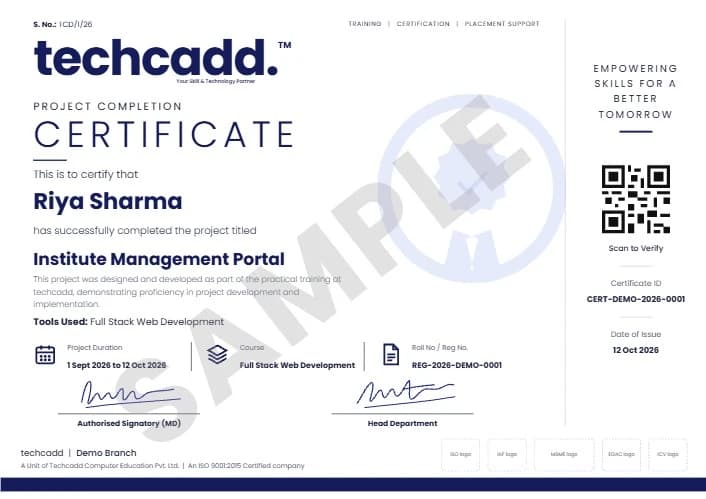
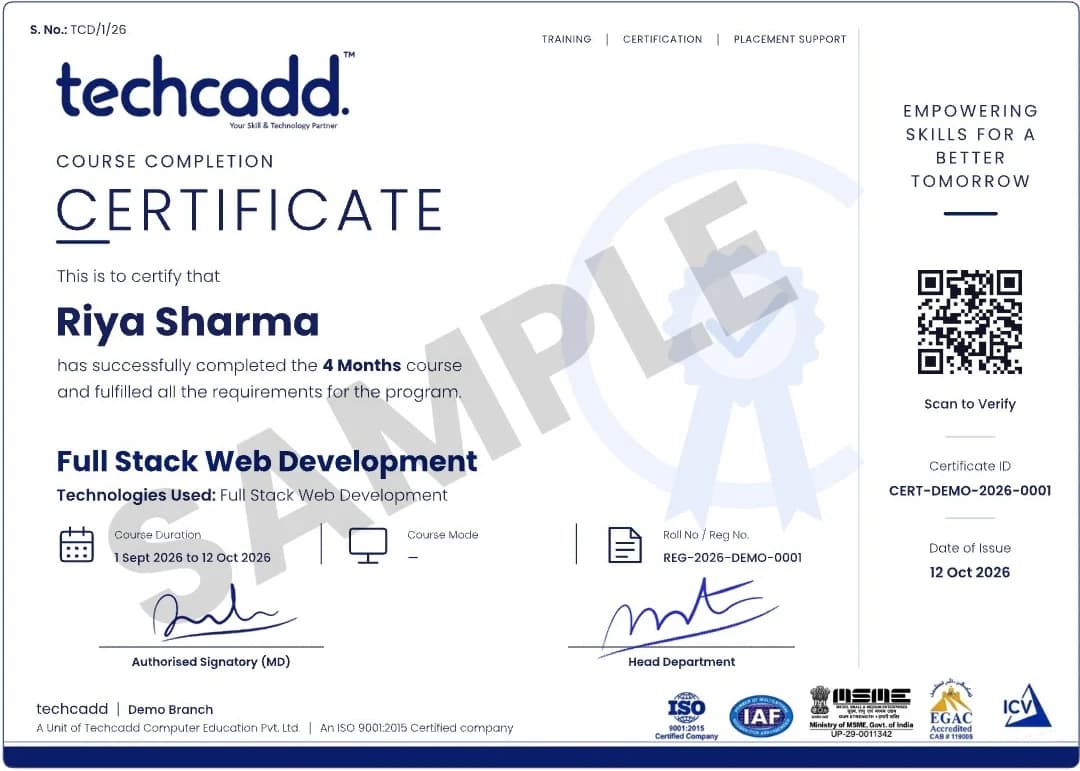
Two certificates on completion — the course certificate and a separate capstone project certificate.
Where this coursetakes you
The roles this opens, what they pay in Punjab and beyond, and who is hiring for them — the same figures our free Salary Estimator publishes, not a brochure number.
Cybersecurity Analyst
Protects networks, applications, and data from security threats.
- Starting package
- ₹2.5–4.5LPA
- After 2 years
- ₹5–9LPA
Indicative ranges for Cybersecurity Analyst roles, compiled from public job-market listings and drawn on the same scale in every market. Actual offers vary by employer, skillset and interview performance — Punjab pay typically reaches 2× the fresher ceiling within two years of delivery experience.
Open the salary estimatorWhere Cybersecurity Analyst graduates get hired
- SOC teams at IT services and BPO companies
- Banks, insurance and fintech security teams
- Government and defence contractors
- Bug bounty platforms and freelance pen-testing
What job roles open up after the Cybersecurity programme?
Because the programme covers both attack and defence, you can apply to roles on either side. They fall into two groups:
- SOC Analyst L1
- Cybersecurity Analyst
- Junior Penetration Tester / Ethical Hacker
- Vulnerability Assessment Engineer
- Security Automation / AI SOC Analyst
- Freelance VAPT and security reporting
- Cloud Security Engineer (with AWS Cloud or Microsoft Azure course)
- DevSecOps Engineer (with DevOps Engineering course)
- Network Security Engineer (with Network Security & CCNA course)
- Digital Forensics Analyst (with Cyber Forensics course)
- Threat Hunter / Incident Responder (after SOC experience)
What will I actually be able to do at the end?
By month six you can perform penetration testing, conduct vulnerability assessments, work as a SOC analyst, deploy SIEM solutions, automate security tasks using AI, build AI-powered security tools, secure cloud infrastructure, detect threats using AI and generate professional penetration testing reports. Months seven to nine turn that into one industry-level platform and an interview you are ready to sit.
What job roles open up after this programme?
The programme is written against SOC Analyst L1/L2, Cybersecurity Analyst, Ethical Hacker, Penetration Tester, Security Engineer, Vulnerability Assessment Engineer, Security Operations Engineer, Threat Hunter, Incident Response Analyst, Malware Analyst, Digital Forensics Analyst, Cloud Security Engineer, DevSecOps Engineer, Security Consultant, Red Team Operator, Blue Team Analyst, GRC Analyst and the newer AI Security Engineer, AI SOC Analyst and AI Security Automation Engineer titles.
What can I earn, and how fast does it grow?
A fresher with a documented portfolio starts around ₹20,000 – ₹35,000 a month in the Jalandhar market. With two years on a SOC floor that typically doubles, and specialists in cloud security, threat hunting or AI security automation move well beyond it — those are the roles employers currently struggle hardest to fill.
Does this prepare me for industry certifications?
Yes, that is one of the stated outcomes. The syllabus overlaps heavily with the entry-level security and SOC analyst certification bodies of knowledge — networking, Linux, threats and vulnerabilities, OWASP, SIEM and incident response — so you sit those exams having already done the practical work rather than only having read about it.
Can I freelance or work remotely with this skill?
Yes. Vulnerability assessment and penetration testing reports are billable work anywhere, and a Jalandhar address costs you nothing on a remote brief. Month nine carries a freelancing module alongside the placement preparation, and reporting and documentation are taught as their own module in month four so what you deliver looks professional.
Which industries hire for this in Punjab?
Beyond IT and managed-service companies, banks and NBFCs, hospitals, immigration consultancies, export houses, schools and government-adjacent bodies across Jalandhar and Ludhiana now hire directly for security, and the cloud and DevSecOps months matter for every one of them.
Your Cybersecurity careerroadmap
This nine-month programme is the complete Step 1 for most security careers, and for several roles it is enough on its own. For a few specialised roles you add one focused course. Here is how each path looks:
| Goal | Step 1 | Step 2 | Where you arrive |
|---|---|---|---|
| SOC Analyst | Cybersecurity Certificate Program | Ready to apply | SOC Analyst L1 |
| Penetration Tester | Cybersecurity Certificate Program | Ready to apply (keep practising on legal labs) | Junior Penetration Tester |
| AI Security Engineer | Cybersecurity Certificate Program | Ready to apply | Security Automation / AI Security Engineer |
| Cloud Security Engineer | Cybersecurity Certificate Program | AWS Cloud or Microsoft Azure | Cloud Security Engineer |
| DevSecOps Engineer | Cybersecurity Certificate Program | DevOps Engineering | DevSecOps Engineer |
| Network Security Engineer | Cybersecurity Certificate Program | Network Security & CCNA | Network Security Engineer |
| Digital Forensics Analyst | Cybersecurity Certificate Program | Cyber Forensics | Digital Forensics Analyst |
Hands-on projectsyou will ship
Home Cybersecurity Lab
Month one's build: a virtualised lab with a secure Linux installation, a documented network and an implemented password policy. Every later exercise runs inside it.
Field: Foundations for every security field
Vulnerability Assessment Report
A network scanned with Nmap, traffic analysed in Wireshark and findings written up as a report a client could act on — with AI-assisted reconnaissance used to speed the discovery, not to replace it.
Field: Vulnerability Assessment, Network Security
Web Security Assessment
DVWA and Juice Shop worked end to end in Burp Suite — SQL injection, XSS, CSRF and authentication attacks against the OWASP Top 10, on deliberately vulnerable targets you are permitted to test.
Field: Ethical Hacking, Web Application Security
SOC Dashboard & AI Log Analyser
Wazuh and Splunk with live log sources mapped to MITRE ATT&CK, plus an AI log analyser and a threat hunting case study written from what it surfaced.
Field: SOC & Threat Detection
AI Security Assistant & Scanner
Python security automation on the OpenAI and Gemini APIs: an AI security assistant, an automated vulnerability scanner and a cloud security assessment across AWS and Azure.
Field: Security Automation, Cloud Security
Industry AI Security Capstone
Two months on one platform — threat modelling, security architecture, AI integration, a SOC dashboard, threat intelligence, cloud hosting, documentation, a GitHub repository and a live demonstration. This is the one interviewers ask about.
Field: SOC, AI Security Engineering (depends on the capstone you choose)
Learn it. Build it. Make it yours.
Every project moves through the same loop: understand the brief, build with guidance, then explain the decisions behind your work.
Understand
Break a real requirement into a clear plan and the right tools.
Home Cybersecurity LabBuild
Work hands-on with trainer feedback while the decisions are still easy to change.
Vulnerability Assessment ReportPresent
Turn the finished work into a portfolio story you can defend in an interview.
Web Security AssessmentWhy students choosetechcadd
There are many places to learn this in Jalandhar and the brochure syllabus looks similar at all of them. What differs is who teaches, whether you ever touch the real tools, whether the AI modules are more than a demo video, and whether anyone picks up the phone after you have paid. techcadd has trained students across Punjab since 2016 on the same model: small batches, working practitioners as trainers, supervised lab work as coursework.
Trainers who still do the work
Your trainer is not a full-time lecturer. They handle security work for techcadd's services arm, so the examples in class are current rather than a case study from five years ago.
A lab you actually build
Month one ends with your own virtualised home lab on VMware or VirtualBox. Every attack and every defence for the next eight months happens in it, or on TryHackMe, Hack The Box, PortSwigger Academy and OverTheWire — never against systems you have no permission to touch.
Both sides of the fence
Red team and blue team, in that order: four months of offensive technique so that the SIEM, threat hunting and incident response work in months five and six is something you understand from the attacker's side.
AI on your own API keys
You build security tooling against the real OpenAI and Gemini APIs — an AI log analyser, an AI security assistant, an automated vulnerability scanner — instead of watching someone else's screen recording of one.
Two months on one capstone
Months seven and eight are a single industry-level AI cybersecurity platform: threat modelling, security architecture, a SOC dashboard, documentation, a GitHub repository and a live demonstration. This is what the interview is about.
A placement cell that persists
Month nine is nothing but preparation — SOC analyst drills, SIEM practicals, aptitude, HR and mock interviews, resume, GitHub portfolio and LinkedIn — followed by drives with hiring partners across Jalandhar and Ludhiana, repeated after a rejection, not abandoned.
How techcaddcompares
The module headings look similar everywhere. These are the rows where a cybersecurity programme in Jalandhar is actually decided.
| Feature | techcadd | Other institutes |
|---|---|---|
| AI in security | AI runs through all nine months: AI-assisted reconnaissance, web testing and exploit analysis, AI threat detection and security analytics, and Python tooling built on the OpenAI and Gemini APIs. | An 'AI in cybersecurity' bullet on the brochure, delivered as one recorded demo of ChatGPT writing a script. |
| SOC and SIEM | A full month on SOC operations — SIEM fundamentals, Wazuh, Splunk, log analysis, MITRE ATT&CK and threat hunting — with a SOC dashboard and an AI log analyser built as mini projects. | SIEM named in the syllabus and covered as theory, with no deployment a student can show. |
| Cloud and DevSecOps | AWS and Azure security, IAM, Docker and Kubernetes security and DevSecOps, ending in a cloud security assessment. | Usually absent, or sold separately as a second course. |
| Lab volume | 20+ hands-on labs and 10+ mini projects across nine months, each one documented and reviewed by a trainer. | A few guided walkthroughs, mostly demonstrated on the trainer's screen. |
| Capstone | Two full months on one industry-level AI security platform, delivered with documentation, a GitHub repository and a live demonstration. | A final project assembled in the last week from the trainer's own template. |
| Reporting | Professional penetration test reports and documentation taught as their own module — the deliverable clients and employers actually pay for. | Left to you, on the assumption you will pick it up on the job. |
| Where you practise | Your own virtual lab plus DVWA, Juice Shop, TryHackMe, Hack The Box, PortSwigger Academy and OverTheWire — legal targets, every time. | Vague guidance about 'practising online', with no permitted environment provided. |
| Placement support | An entire month: SOC analyst preparation, SIEM practicals, interview question banks by subject, aptitude, HR and mock interviews, resume, GitHub portfolio, LinkedIn and freelancing. | A certificate, a list of consultants and no follow-up after the fee is paid. |
Rows describe what is commonly on offer in the market, not any one named institute. Ask any institute — including this one — to show you a student's capstone repository and lab documentation before you pay.
What our studentsin Jalandhar say
- Google
I was switching careers and worried I would be behind. Half the Cybersecurity batch were doing the same thing, and nobody made me feel slow.
Vikas ChopraWeekend Batch · Ludhiana GoogleMonth five was the turning point. Building a SOC dashboard in Wazuh and an AI log analyser is what my interview ended up being about.
Neha BansalSOC Analyst L1 · Jalandhar GoogleWhat made Cybersecurity click for me was the lab time. You can sit after class and someone will still explain it until you get it.
Arshdeep SinghTrainee Engineer · Adampur GoogleI was switching careers and worried I would be behind. Half the Cybersecurity batch were doing the same thing, and nobody made me feel slow.
Vikas ChopraWeekend Batch · Ludhiana GoogleMonth five was the turning point. Building a SOC dashboard in Wazuh and an AI log analyser is what my interview ended up being about.
Neha BansalSOC Analyst L1 · Jalandhar GoogleWhat made Cybersecurity click for me was the lab time. You can sit after class and someone will still explain it until you get it.
Arshdeep SinghTrainee Engineer · Adampur
- Google
Nine months sounded long until month seven. Having two whole months for the capstone is why I had something real on GitHub to show.
Pooja RaniGraduate · Kartarpur GoogleI travelled in for the weekend Cybersecurity batch and it was worth every trip. Small batch, real work, no time wasted on theory nobody uses.
Karan MehtaB.Tech Student · Jalandhar Googletechcadd's placement cell kept calling me for drives until I was placed. That persistence mattered more than anything else for Cybersecurity.
Sandeep KaurPlaced Fresher · Phillaur GoogleNine months sounded long until month seven. Having two whole months for the capstone is why I had something real on GitHub to show.
Pooja RaniGraduate · Kartarpur GoogleI travelled in for the weekend Cybersecurity batch and it was worth every trip. Small batch, real work, no time wasted on theory nobody uses.
Karan MehtaB.Tech Student · Jalandhar Googletechcadd's placement cell kept calling me for drives until I was placed. That persistence mattered more than anything else for Cybersecurity.
Sandeep KaurPlaced Fresher · Phillaur
Choose howyou want to learn
Every mode covers the same syllabus, projects and placement support. Pick the schedule that fits your life.
Weekday Classroom
Two hours a day at the Jalandhar centre, on lab machines with your trainer in the room. The default for the nine-month programme.
Learn moreWeekend Batch
For people already working in IT. Same nine months, same labs and capstone, delivered across Saturday and Sunday sessions.
Learn moreLive Online
Live classes, not recordings, with the same weekly review of your lab write-ups and reports. For students outside Jalandhar.
Learn more1-on-1 Training
Your own schedule and pace — useful if you are already working in IT and want to compress months one and two, or are preparing for a specific SOC interview.
Learn moreFrequently Asked Questions
The AI-Powered Cybersecurity programme runs for 9 months: four months of foundations and ethical hacking, two months of AI-powered SOC, cloud security and automation, two months of industry capstone project, and one month of placement preparation. Weekday, evening and weekend batches cover the same syllabus, and 1-on-1 training is available if you would rather set your own pace. Every class runs for 2 hours, whichever format you choose.
Because of what is in it. Four months of offensive technique, two months of SIEM, cloud and AI automation, and two months on a single capstone cannot be compressed without dropping something an employer tests for — and the thing usually dropped is the practical work. A three-month programme can teach you the vocabulary; nine months is what it takes to have 20+ documented labs and a platform on GitHub to show for it.
Fees depend on the course length and subject. techcadd counsellors share the current fee sheet and EMI options on request, and a demo class is free.
Students after 12th, graduates and final-year students, working IT professionals switching into security, and business owners all join this programme. Month one starts at computer hardware, operating systems and networking, so a technical background helps but is not required.
No. Python is taught in month six specifically for security automation — scripting scanners, parsing logs and calling the OpenAI and Gemini APIs — starting from what the earlier months' Bash and PowerShell work has already given you. There is no model training and no data-science prerequisite.
Everything is done on systems you are permitted to test: your own virtual lab built in month one, deliberately vulnerable applications such as DVWA and Juice Shop, and the TryHackMe, Hack The Box, PortSwigger Academy and OverTheWire platforms. Scanning or attacking systems you do not own or have written permission to test is a criminal offence, and the programme teaches the authorisation, scoping and reporting practices that keep professional work on the right side of that line.
Graduates typically move into SOC Analyst L1/L2, Cybersecurity Analyst, Penetration Tester, Security Engineer, Threat Hunter, Incident Response Analyst, Cloud Security Engineer or DevSecOps Engineer roles, with AI Security Engineer and AI SOC Analyst opening off the AI modules. Security roles are growing faster than the local supply of trained people, which keeps salaries above average.
A fresher with a documented portfolio typically starts around ₹20,000 – ₹35,000 per month in the Jalandhar market, rising substantially within two years of experience. Freelancers delivering vulnerability assessments and penetration test reports often earn more, since that work is not limited by location.
20+ hands-on labs and 10+ mini projects across the nine months — a home lab, a network scanner, a packet analysis, DVWA and Juice Shop labs, a penetration test report, a password audit, a SOC dashboard, an AI log analyser, a threat hunting case study, an AI security assistant, an automated vulnerability scanner and a cloud security assessment — plus one industry-level AI security capstone.
Two months on one industry-level AI cybersecurity platform. You choose the shape — an AI SOC platform, AI threat hunting platform, AI phishing or malware detection system, AI vulnerability scanner, AI incident response platform, AI security chatbot or AI threat intelligence dashboard — and deliver it with AI integration, threat detection, SIEM, a dashboard, documentation, a GitHub repository and a live demonstration.
No training provider can honestly guarantee a job, and you should be cautious of anyone in Jalandhar who claims one. techcadd guarantees placement support, and month nine is given entirely to it: SOC analyst preparation, SIEM practicals, subject-wise interview questions, aptitude, HR and mock interviews, resume, GitHub portfolio and LinkedIn optimisation, followed by repeated drives with hiring partners across Jalandhar and Ludhiana.
Kali Linux, Ubuntu and Windows Server; Cisco Packet Tracer, Wireshark and Nmap; Burp Suite, Metasploit, Hydra, SQLMap, Gobuster, Nikto, Nuclei, OWASP ZAP, John the Ripper and Aircrack-ng; Wazuh, Splunk, the ELK Stack, Sysmon and MITRE ATT&CK; AWS, Azure, Docker and Kubernetes; Python, Bash and PowerShell; and the AI toolchain — ChatGPT, GitHub Copilot, the OpenAI and Gemini APIs, Ollama, LangChain, CrewAI, AutoGen and prompt engineering for security. Practice platforms are TryHackMe, Hack The Box, PortSwigger Academy and OverTheWire, with GitHub and VS Code throughout.
Yes. Every student receives a programme completion certificate plus a documented internship letter based on live work. The internship satisfies the industrial training requirement at most Punjab universities, and the capstone repository and lab documentation are what you show alongside it.
Yes. techcadd Jalandhar runs weekday, evening and weekend batches in parallel so working professionals and college students can both attend, and 1-on-1 training is available for a fully personal schedule. Every class (batch or 1-on-1) runs for 2 hours; book a free demo class to see the lab and meet the trainer before enrolling.
This programme prepares you directly for SOC and threat detection, ethical hacking and vulnerability assessment, and security automation with Python and AI. It gives you a strong base in cloud security, threat hunting and network security, and introduces digital forensics. Each of those can be deepened with one more focused course.
No. A SOC analyst defends: they watch alerts, investigate and respond. An ethical hacker attacks with permission to find weaknesses. Most entry-level openings in Punjab are SOC and analyst roles, which is why this programme gives a full month to SOC work and a month of SOC-focused placement preparation, not only hacking.
It gives you a solid start: Month 6 covers AWS and Azure security, IAM, Docker and Kubernetes security and DevSecOps. Most cloud security roles also expect you to build and run cloud infrastructure, which is taught in techcadd's AWS Cloud, Microsoft Azure or DevOps Engineering course.
Only the investigative side that a SOC analyst uses: log analysis, threat hunting and MITRE ATT&CK. Recovering evidence from disks, memory and phones, and preparing it for legal proceedings, is taught in techcadd's Cyber Forensics course.
Choose the Ethical Hacking course if you are sure you want offensive work and want a shorter course. Choose this programme if you want both attack and defence, cloud security and AI automation, or if you are not yet sure which side of security suits you. Our counsellor can help you compare them.
No. You learn to use existing AI models through the OpenAI and Gemini APIs inside your own security tools, such as a log analyser or security assistant. Training AI models is a different subject, covered in techcadd's Machine Learning and Artificial Intelligence courses.
Every module,stage by stage
The Cybersecurity syllabus runs as 3 stages inside one enrolment. A tick shows the stage each module first appears in — the ladder is cumulative, so a later stage builds on the earlier ones instead of replacing them.
Foundations
3 modules
Opens with Cybersecurity Foundations through Web Security & Ethical Hacking. 3 modules, taught, practised in the lab and assessed on work you keep.
Core skills
+3 modules
Adds Advanced Ethical Hacking & Security Operations through AI-Powered Cloud Security & Automation, on top of everything stage 1 already covers.
Advanced & capstone
+3 modules
Adds Industry Capstone Project, Phase I through Placement Preparation & Career Readiness, on top of everything stage 2 already covers.
| Module | Stage 1 | Stage 2 | Stage 3 |
|---|---|---|---|
| 01Month 1 — Cybersecurity FoundationsIntroduction to cybersecurity and core concepts; Computer hardware and operating systems; Linux administration; Windows administration. | Included | Included | Included |
| 02Month 2 — Networking & Ethical Hacking FundamentalsAdvanced networking and TCP/IP deep dive; Network services; Kali Linux; Information gathering; Vulnerability assessment; Nmap and Wireshark. | Included | Included | Included |
| 03Month 3 — Web Security & Ethical HackingWeb technologies and HTTP/HTTPS; OWASP Top 10; Burp Suite; SQL injection; XSS and CSRF; Authentication attacks; AI-assisted web security testing. | Included | Included | Included |
| 04Month 4 — Advanced Ethical Hacking & Security OperationsPassword attacks; Wireless security; Active Directory basics; Metasploit and Hydra; Social engineering awareness; AI-assisted exploit analysis. | Not included | Included | Included |
| 05Month 5 — AI-Powered SOC & Threat DetectionSecurity Operations Centre and SIEM fundamentals; Wazuh and Splunk; Log analysis; MITRE ATT&CK; Threat hunting; AI threat detection. | Not included | Included | Included |
| 06Month 6 — AI-Powered Cloud Security & AutomationAWS security and Azure security; IAM; Docker and Kubernetes security; DevSecOps; Python security automation; OpenAI API integration. | Not included | Included | Included |
| 07Month 7 — Industry Capstone Project, Phase IProject planning; Threat modelling; Security architecture; AI integration; SOC dashboard development; Threat intelligence; Documentation. | Not included | Not included | Included |
| 08Month 8 — Industry Capstone Project, Phase IIAdvanced AI features; Testing; Deployment and cloud hosting; Documentation; Presentation; Portfolio development. | Not included | Not included | Included |
| 09Month 9 — Placement Preparation & Career ReadinessNetworking revision and Linux interview questions; Cybersecurity and ethical hacking interview questions; SOC analyst preparation and SIEM practicals. | Not included | Not included | Included |
Every stage sits inside the one programme: nothing is dropped as you move up, and nothing is charged for twice. If you are not sure which stage matters most for the role you are aiming at, a counsellor will map it against the jobs actually hiring in Punjab right now.
Not sure which cybersecurity path is right for you?
Tell a counsellor what you enjoy, whether it is breaking things, watching for attacks or writing scripts, and we will show you where you would fit in security and how these nine months get you there. Book a free demo class and see the lab before you decide.
Ask aboutCybersecurity
Send your question and a counsellor will call you back about batch timings, fees, EMI options, placement record, or whether this course fits your degree.
- Free counselling and demo class
- Weekday, evening, weekend or 1-on-1, all 2-hour classes
- Internship letter and placement support