How a 45-day training works
Six weeks in one technology: the fundamentals first, then guided lab practice, then a mini-project that pulls the pieces together and is written up as a report and presented.
Spend a summer or winter break learning one technology properly: the fundamentals, guided lab practice and a mini-project with a report and presentation. Explore the domains and request the six-week syllabus before you decide.
Confirm the required training duration and format with your college. Batch dates, documentation and available domains should be confirmed with the centre before enrolment.
Overview
Forty-five days — about six weeks — is short, focused training in one technology. Many B.Tech, BCA, MCA and diploma courses ask for four to six weeks of summer or semester-break training after the 2nd or 3rd year. This page explains what six weeks covers, what you hand in at the end, and what to check with your college first.
When comparing options, look beyond slogans such as “industry ready” or “job guaranteed.” Ask to see an indicative timetable, sample assignments, project rubrics and examples of acceptable deliverables.
Six weeks in one technology: the fundamentals first, then guided lab practice, then a mini-project that pulls the pieces together and is written up as a report and presented.
Ask what happens in a typical week, how questions are resolved, what happens if you miss a session, and how the mini-project is assessed. Clear answers matter more than big claims.
Forty-five days is enough to learn the core of one tool or language and build something small that works. It is not enough to become job-ready in a domain — that takes longer, sustained practice.
Even in a short programme, your exercises and mini-project should be reviewed and returned with comments, and you should be able to explain the choices you made.
Who can apply
Six weeks suits students between semesters and beginners exploring a domain. Whatever your course, confirm the required duration and format with your college before you choose a batch.
Many B.Tech schemes ask for four to six weeks of summer or industrial training between semesters. Confirm the required duration, format and documents with your department first.
A six-week track in programming, web or data is a practical companion to the theory in a BCA or B.Sc IT, and gives you a first project to show.
Useful for picking up a specific tool or framework quickly, or for a short training your programme requires between semesters.
Polytechnic and diploma courses often include a short summer training. Check the hours and report format your institute expects before choosing a batch.
If you are not sure whether data, web, security or cloud suits you, six weeks in one is a low-commitment way to find out before a longer programme.
Final-semester industrial training is usually a six-month requirement. If that applies to you, look at the six-month internship instead — and confirm with your college.
Why 45 days?
A short programme will not make you an expert, but it gives you a real start: one technology learned properly and a first project you can explain.
One technology, six weeks, a clear finish line. It fits a vacation without competing with your semester.
A small, working mini-project with a report is concrete evidence you can show a teacher — and a starting point for bigger work later.
Find out whether you enjoy a domain day to day before you commit six months, a final-year project or a job search to it.
Where your course asks for summer or semester-break training, a 45-day programme with attendance and a report can cover it — if your college confirms the format.
Training domains
Six weeks is enough for the core of one domain, not several. If you enjoy data, start with data science or analytics; if you like building interfaces, web development; if systems interest you, cloud or security. Each domain continues into a six-month internship if you want to go further.
Python basics, NumPy and pandas, and a first supervised model with scikit-learn — trained, evaluated and explained in a short report.
Python, pandas and charts in Jupyter notebooks — cleaning and exploring an open dataset and presenting what it shows.
Excel, core SQL and a first Power BI dashboard, ending in a short report built on one clean dataset.
HTML, CSS and Python, then a small Django app with a database, forms and pages — built step by step and documented.
JavaScript and React fundamentals, plus a simple Node.js and Express API — enough for a small working app with a few screens.
Networking basics, Linux commands and security hygiene, with introductory exercises run only in an authorised lab environment.
Linux, Git and cloud service models, and deploying a simple application to a cloud service with cost awareness in mind.
Search intent, on-page SEO, social media planning and analytics basics, ending in a small campaign plan with realistic assumptions.
Dart and Flutter basics — widgets, layouts and navigation — ending in a small app with a few screens.
Sensors, a microcontroller and basic embedded logic, ending in a small, safely tested demonstrator.
Syllabus & learning roadmap
The outline every domain follows. The tools and mini-project inside it depend on the domain you choose — ask for its detailed syllabus.
Onboarding, a skill baseline, installing the tools, and the first fundamentals of the chosen technology.
The core concepts of the domain, practised in short guided lab exercises with feedback.
Progressively harder exercises, troubleshooting, and version control or the domain's working tools.
Choosing a small, realistic problem, writing the synopsis and objectives, and planning the steps.
Building and testing the mini-project, with a review of progress and the bugs that came up.
Finishing the mini-project, writing the training report, and presenting what you built and learned.
Course vs internship vs industrial training
Training programmes can include internship-like projects without being employment internships, and colleges and providers use these terms differently. Compare the actual learning environment, supervision, deliverables and academic recognition — not just the programme label.
| Course | Industrial training | Internship | |
|---|---|---|---|
| Main focus | A defined curriculum and its assessments | Structured skill development, often during a semester break | Supervised practical work with defined responsibilities |
| Where it happens | Classroom or online | Classroom or lab, with a guided mini-project | A professional or supervised work setting |
| What you come away with | Assessed knowledge of the syllabus | A demonstrable mini-project and its report | Work deliverables and a record of supervised experience |
Mini-project
Certifications & deliverables
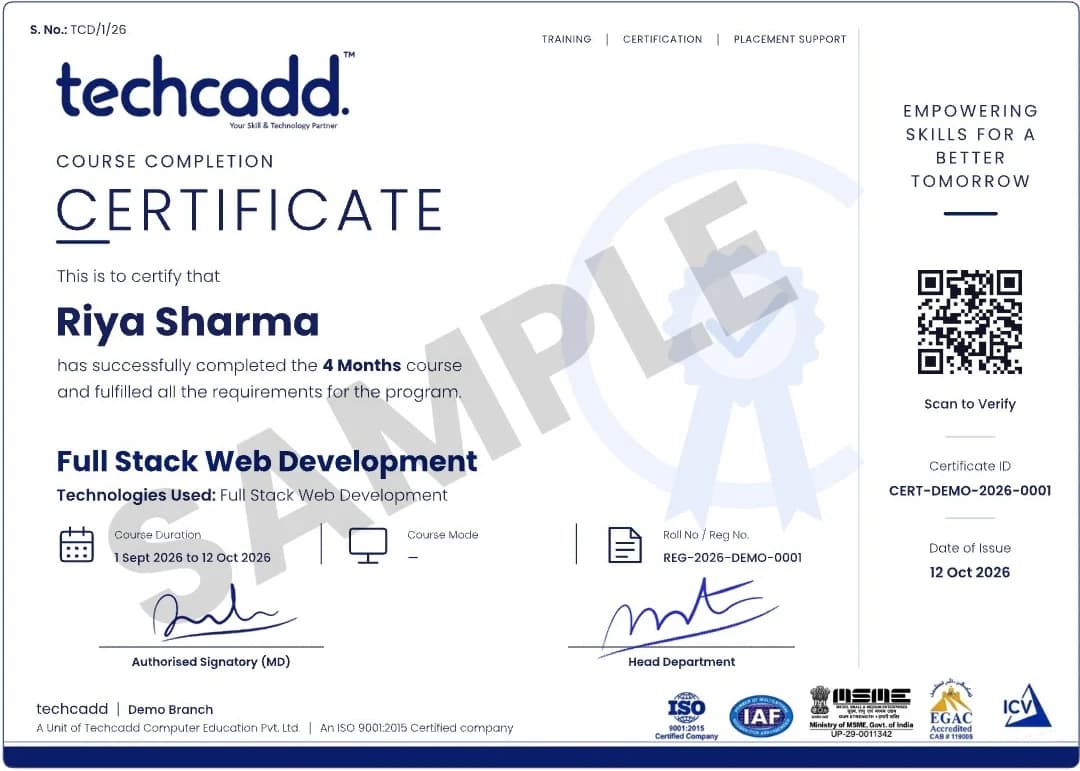
Issued on finishing the programme, with a QR code and certificate ID anyone can verify.
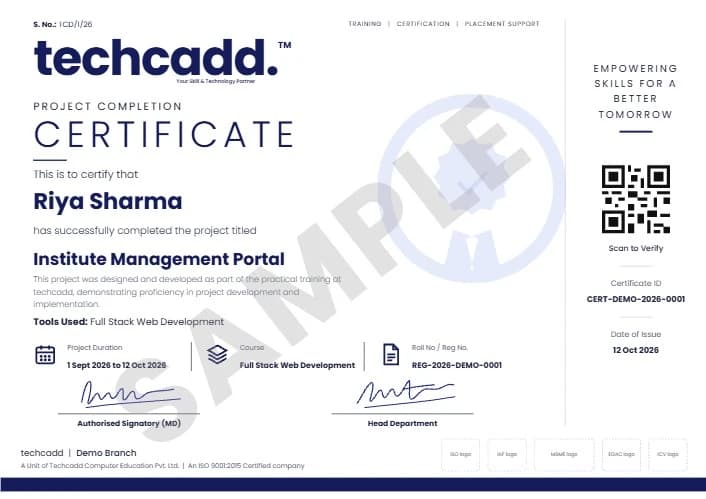
A separate certificate naming the live project you designed and built during training.
University & college requirements
Documents that may be relevant to your college. Their availability and wording must be confirmed with the centre for your batch.
No training centre can guarantee acceptance by every university. Get written guidance from your training and placement cell or department before paying fees.
Duration & batches
Batches are commonly planned around the June–July summer break and the December–January winter break. Confirm the current start dates with the centre.
Daily session length depends on the track and batch. Ask how many hours a day it runs and whether that meets any hour count your college sets.
If you cannot attend on weekdays, ask whether a weekend batch is available for your domain — and how it changes the overall duration.
Pick a joining date that lets you finish the six weeks and the report before your college's submission deadline. Confirm it with the centre.
Fees & eligibility
Fees vary by what the programme includes, so ask for the current written fee schedule for your domain rather than relying on a figure quoted elsewhere.
Web development, digital marketing and data analytics start from the basics, which suits six weeks. AI, cybersecurity and cloud tracks move faster if you already know some programming or Linux — a counsellor can assess where you are before you choose.
After 45 days
Six weeks is a start, not job readiness. Realistic next steps:
No programme alone guarantees a job, and a six-week one is not meant to. Hiring depends on skills, projects, interview performance, location, market conditions and employer criteria. See the 6-month internship.
Forty-five days builds foundations and a first project. Most entry-level roles expect deeper skills and more than one project, so plan for what comes next.
If the domain suits you, the six-month internship builds on the same foundations through to a capstone project — the format many final-year students need anyway.
Put the mini-project, its report and a short README somewhere you can share. It is the first entry in a portfolio you will keep adding to.
Why choose techcadd?
Judge us on what you can see: the centre, the trainers, the course outlines and the work students produce in these rooms.
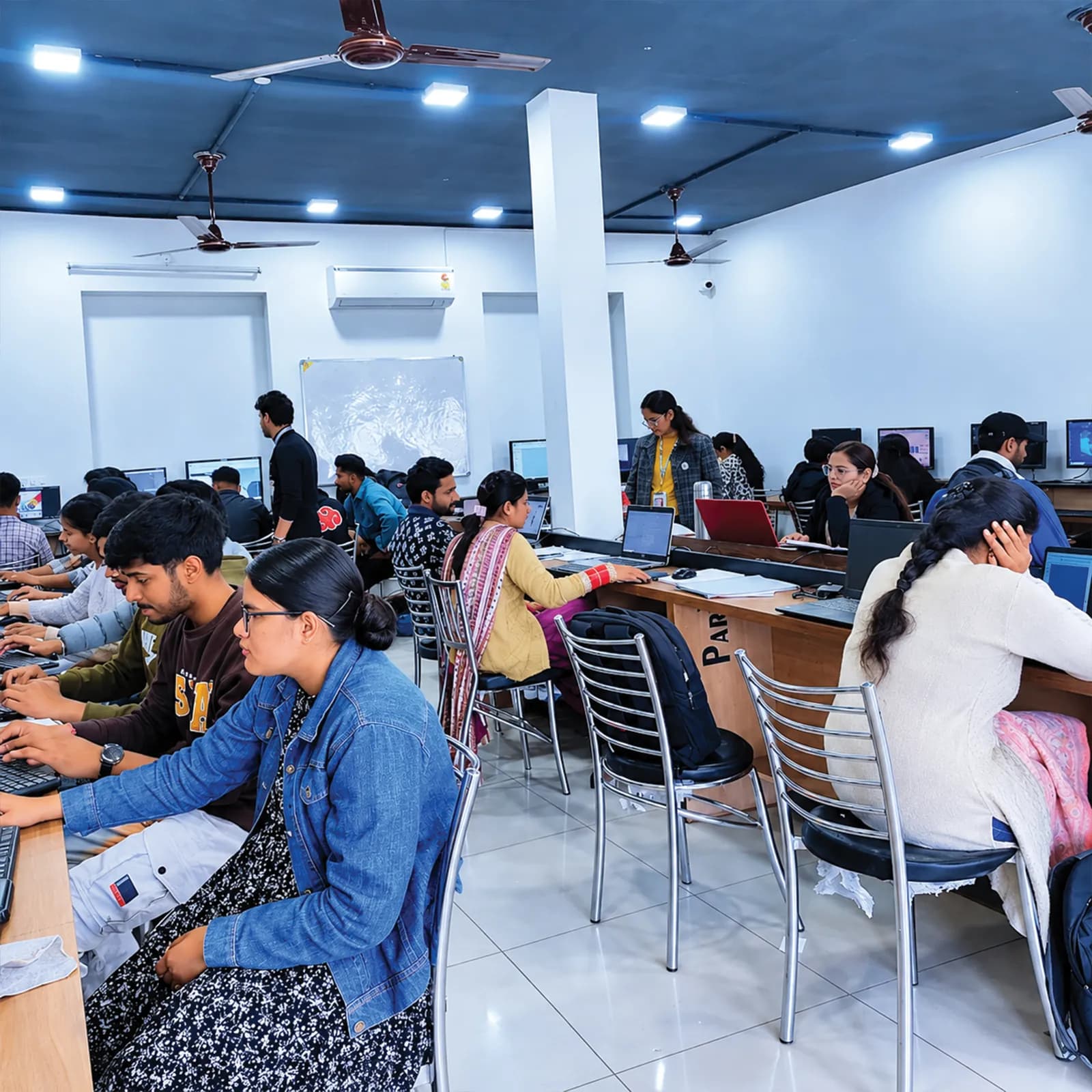
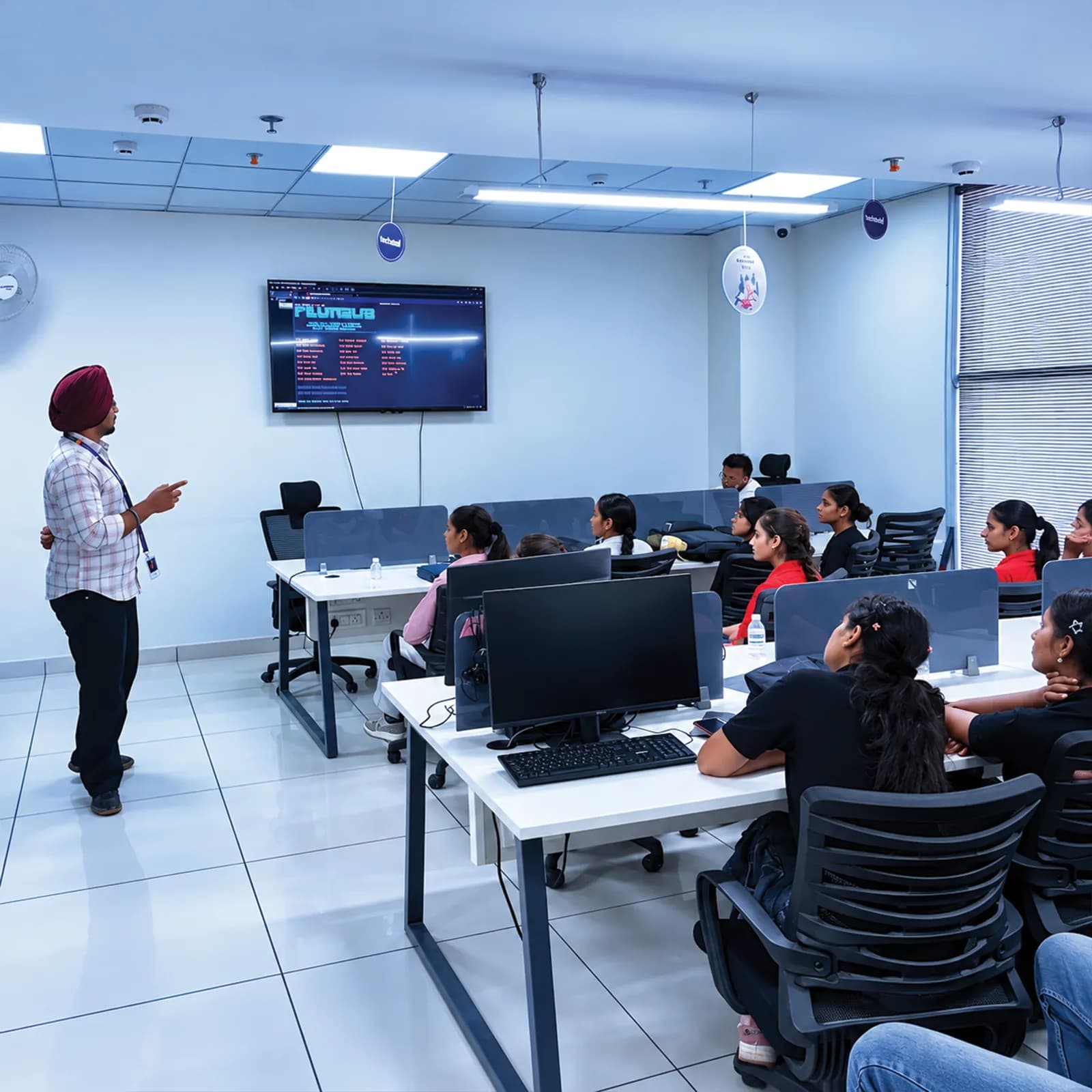
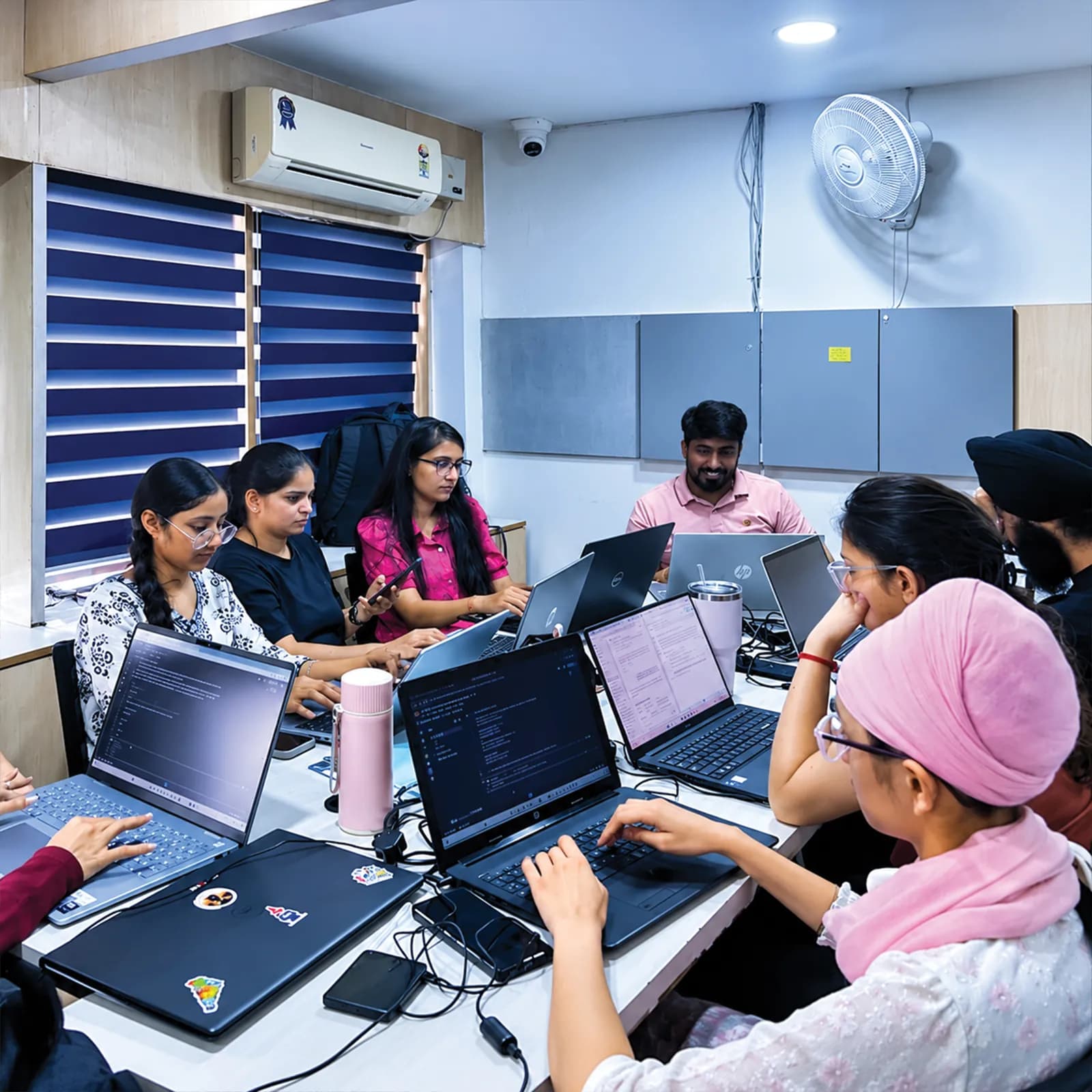
Your degree, semester and interests decide the track — a short counselling conversation comes before enrolment.
Each track follows the same six-week outline: fundamentals, guided practice and a mini-project with a report.
The same domains continue into the six-month internship, so six weeks here can be the first step of a longer plan.
Come to the centre for a syllabus discussion and see the labs and trainers before you pick a batch.
Students come in from across Jalandhar and from Phagwara, Kapurthala, Nakodar, Hoshiarpur, Adampur and Kartarpur. Plan your travel time alongside your college calendar, and visit the centre before you confirm a batch.
techcadd Jalandhar — 2nd Floor, Crystal Plaza, SCS 78, Opposite PIMS Hospital, Jalandhar, Punjab 144001Frequently asked questions
The correct answer can differ by degree, semester, domain and batch — confirm any academic requirement directly with your institution.
Forty-five days covers the fundamentals of one technology and ends in a mini-project with a report. Six months goes much deeper, through to a capstone project, and is the format usually needed for final-semester industrial training.
Broadly, yes — 45 days is roughly six weeks, and the two names are used for the same kind of short training. Check whether your college counts the requirement in days, weeks or hours.
Yes. Batches are commonly planned around the June–July summer break and the December–January winter break. Confirm the current start dates with the centre.
Only your college or university can confirm academic acceptance. Ask your department which duration, format and documents it requires before you enrol.
Many B.Tech schemes include four to six weeks of summer or industrial training after the 2nd or 3rd year, but requirements vary by university. Check your department handbook.
Yes, subject to each track's prerequisites. Confirm the duration and report format your institute expects.
Several tracks start from the basics. Advanced topics in AI, security or cloud may expect some prior programming, so a counsellor can suggest a suitable track.
Yes. Every track ends in a mini-project with a synopsis, a training report and a presentation. Ask for the domain's current syllabus for details.
Ask the centre which documents it currently issues — such as a training letter, attendance record and completion certificate — and whether they match your college's format.
Yes. The same domains continue into the six-month internship, so the foundations from 45 days carry forward. Ask the centre how the two programmes connect for your domain.
On its own, usually not. Six weeks builds foundations and a first project; entry-level roles generally expect deeper skills and more project work.
Fees depend on the domain and batch format. Request the current written fee schedule, inclusions and refund policy from the centre.
Share your degree, semester and preferred domain, review the syllabus and confirm the batch dates before registering. Call +91 98881 22254, send an enquiry from this page, or walk in to the centre.
techcadd Jalandhar is at 2nd Floor, Crystal Plaza, SCS 78, Opposite PIMS Hospital, Jalandhar, Punjab 144001. The centre is open Mon – Sat, 9:00 AM – 7:00 PM.
Apply
Planning your summer or winter training in Jalandhar? Share your degree, semester and preferred technology to request the six-week syllabus and the next batch dates.