Introductory practical training
Lessons, guided practicals and a mini project on a practice website or sample brand. You learn by doing, with a mentor reviewing your work.
Use your summer or winter break to learn how people search, how a website earns visibility and how campaigns are measured. In 45 days you practise SEO, Google Search Console, GA4, Google Ads and Meta Ads basics, WordPress and content planning, and finish with a mini project you can explain.
Ask for the syllabus or session plan, fee, schedule and certificate criteria in writing before paying. If your college requires academic training, get its written approval first.
Overview
Digital marketing is the work of helping the right people find, understand and act on an offer online — through search, content, social media, paid advertising and email — and measuring what actually happened. Forty-five days is a structured introduction: enough to learn the core ideas, use the main tools under guidance and complete one small, honest project.
This is introductory practical training, not an employment internship. Some universities ask for summer or industrial training of a set length; whether this programme meets that requirement is for your college to decide, so check before you join.
Lessons, guided practicals and a mini project on a practice website or sample brand. You learn by doing, with a mentor reviewing your work.
Many colleges require 4–6 weeks of summer or industrial training. Your department sets the rules, the documents and whether this programme counts.
An internship places you in supervised work inside an organisation. This training does not, and it does not include live client accounts or a stipend.
Likes can rise while enquiries do not. From the first week, every activity is tied to a measurable action and judged honestly.
Who can apply
An entry assessment checks your starting point so the pace suits you. Confirm eligibility, timings and any college permission before enrolling.
Connect web technology subjects with on-page and technical SEO, Search Console and event tracking in GA4 during a summer training window.
Build from web and computer applications topics toward WordPress pages, keyword research and a first analytics report.
Use a semester break to understand measurement plans, tag setup and campaign reporting alongside your programming work.
Apply web and analytical skills to search visibility, landing pages and data-led decisions about content.
An early start lets you explore digital marketing before choosing electives or a longer programme. No prior marketing knowledge is assumed.
Basic computer and internet skills and clear written English are enough to begin. Expect regular practice between sessions.
Why 45 days?
Forty-five days fits a summer or winter vacation and is long enough to practise each core channel once and finish a mini project. It is not long enough to master digital marketing, and it promises no job, ranking or academic credit.
Fits between semesters without competing with classes and examinations, so you can give it steady daily attention.
Try SEO, analytics, paid ads, social media, content and email once each, and find out which you want to study further.
An SEO audit, a keyword plan or a campaign plan with tracking — small, documented and something you can explain in a viva.
Search and campaign data need weeks to build up. You learn how to measure; you will not see months of results in 45 days.
Training does not guarantee jobs, rankings or followers, and only your college can decide whether it counts towards a requirement.
Tools & technologies
Taught in the order a marketer uses them: audience and search intent first, then the website, then measurement, then paid and social channels. Honest reporting runs through every topic. Ask for the session plan for your batch.
What people are really looking for, grouping keywords by intent and choosing realistic targets with Semrush and free sources.
Titles, descriptions, headings, internal links and content that answers the query, applied on a WordPress page with Yoast.
Indexing, sitemaps and reading the performance report to see which queries bring impressions and clicks.
Events, conversions and traffic sources, plus a first tested tag in Google Tag Manager, so reports answer a question.
Search campaign structure, match types, ad copy and budgets — planned as drafts, with spend only in an owner-approved account.
Facebook and Instagram audiences, a simple creative test and an organic posting plan with goals you can measure.
A short content calendar, briefs and social creatives in Canva that follow one consistent style.
Permission-based lists, a newsletter and a short welcome sequence in Mailchimp, measured by opens, clicks and unsubscribes.
Syllabus & learning roadmap
The pace depends on your entry assessment. Each day follows the same pattern: a clear objective, a guided practical, an independent task and a mentor checkpoint. Confirm contact hours and mentor arrangements for your batch.
Entry assessment, audiences, the customer journey, channels and how search engines work. Outcome: an audience profile for a sample business.
Search intent, keyword grouping with Semrush and free tools, then titles, headings, internal links and content on a WordPress page with Yoast. Outcome: a keyword map and an optimised page.
Indexing, sitemaps, robots rules, page speed and reading Search Console reports. Outcome: a short SEO audit with prioritised fixes.
A simple measurement plan, events and conversions, UTM parameters and one tested tag in Tag Manager. Outcome: a GA4 report that answers one question.
Search campaign structure, match types, ad copy and budgets; Meta audiences and creatives. Ad spend is real money — campaigns stay as drafts unless the account owner approves a budget in writing. Outcome: campaign drafts with stated assumptions.
A content calendar, Canva creatives, an organic posting plan and a short Mailchimp welcome sequence. Outcome: a two-week content and email plan.
Bring the channels together for one practice site or sample brand: goal, keywords, page fixes, tracking and a campaign plan on realistic assumptions. Outcome: a mini project report, a short presentation and mentor feedback.
Course vs training vs internship
Colleges use “summer training”, “industrial training” and “internship” differently. Your university handbook and department coordinator decide what counts — not the programme title.
Mini project
Certificate & deliverables
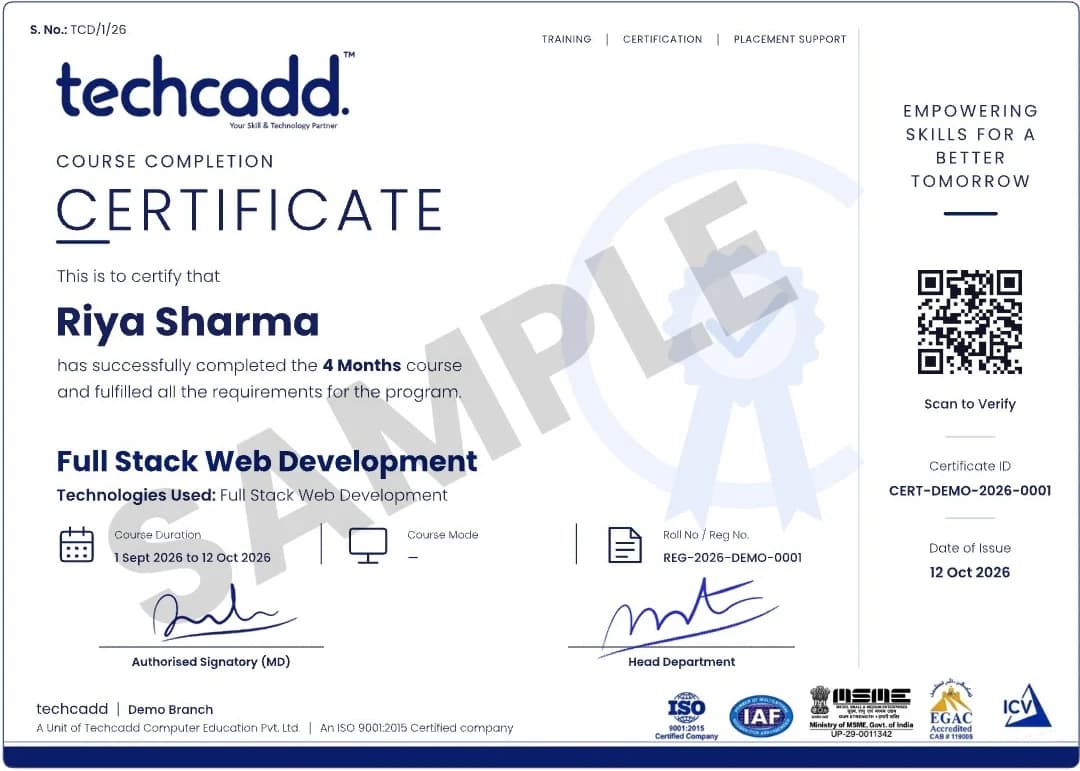
Issued on finishing the programme, with a QR code and certificate ID anyone can verify.
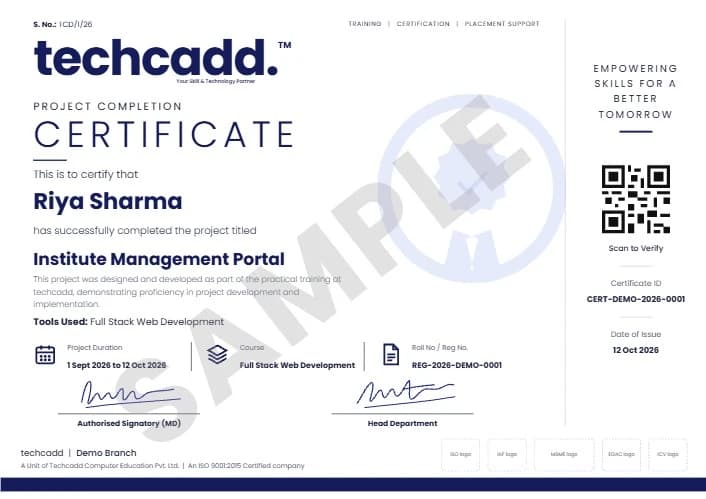
A separate certificate naming the live project you designed and built during training.
Project ideas
Each is sized for the last week of a 45-day programme: pick a practice site or sample brand, define the goal and how it is measured, do the work and report measured results separately from assumptions.
An on-page and technical review of a practice or permitted site, with five prioritised fixes.
Intent-grouped keywords mapped to the pages that should answer them.
One page rewritten around a target query, with titles, headings and internal links.
A measurement plan and one tested conversion on a practice website.
Ad groups, keywords, negative keywords, ad copy and a budget on stated assumptions.
Two audiences, three Canva creatives and the result that would decide the winner.
Posts for a sample brand with a goal and a measure for each.
A permission-based sign-up form and three Mailchimp emails with subject-line variations.
Compare three competitor sites' content and search visibility, and list the gaps you would fill.
How to apply
Six steps, so you know what is agreed before you pay and how you are assessed at the end.
Share your degree, semester, preferred start date and whether your college requires academic training.
Discuss your goals, the batch or self-study format, timings, fee and the documents you need.
A short entry assessment sets your starting point and the pace of your sessions.
Agree the session plan and mini project direction in writing before registration.
Meet your mentor, set up tool accounts and learn the daily routine and checkpoint schedule.
Attendance is recorded, the mini project is evaluated and you receive written feedback.
College requirements
Ask your training and placement cell which documents it needs before you pay, and ask techcadd to confirm which it can genuinely issue.
Requirements differ between universities and departments. If your college needs academic training, get its written approval before enrolling. A training certificate alone may not satisfy a university requirement.
Duration & batches
The most common window for 45 days of summer training after the even semester. Book early if your college has a fixed submission date.
A shorter break may need a more intensive daily plan. Ask how the 45-day schedule adapts to it.
Weekday batches move faster; weekend or part-time arrangements take longer to cover the same plan.
Ask for the actual start date, daily timings and holidays for your batch rather than relying on a banner.
Eligibility, fees & what is included
No fee is published here. Ask for the current fee in writing and exactly what it covers before you pay.
Basic computer and internet skills and clear written English. No coding or marketing experience is assumed; a little HTML is introduced for WordPress and SEO.
Career scope
Forty-five days is a starting point. These are entry-level roles you might work towards with further study and practice — not roles this training promises:
This training does not guarantee employment or placement. A portfolio and continued practice matter more than a certificate.
Maintain a practice site, publish content and read your own Search Console and GA4 data every week.
Choose SEO, paid media, social media or analytics and study it properly through a dedicated course.
The natural next step is the six-month digital marketing programme, with time for a full campaign proposal and portfolio.
Why students consider techcadd
Ask about the mentor's experience, batch size, practical time and project feedback — and ask to see sample student work shared with permission.

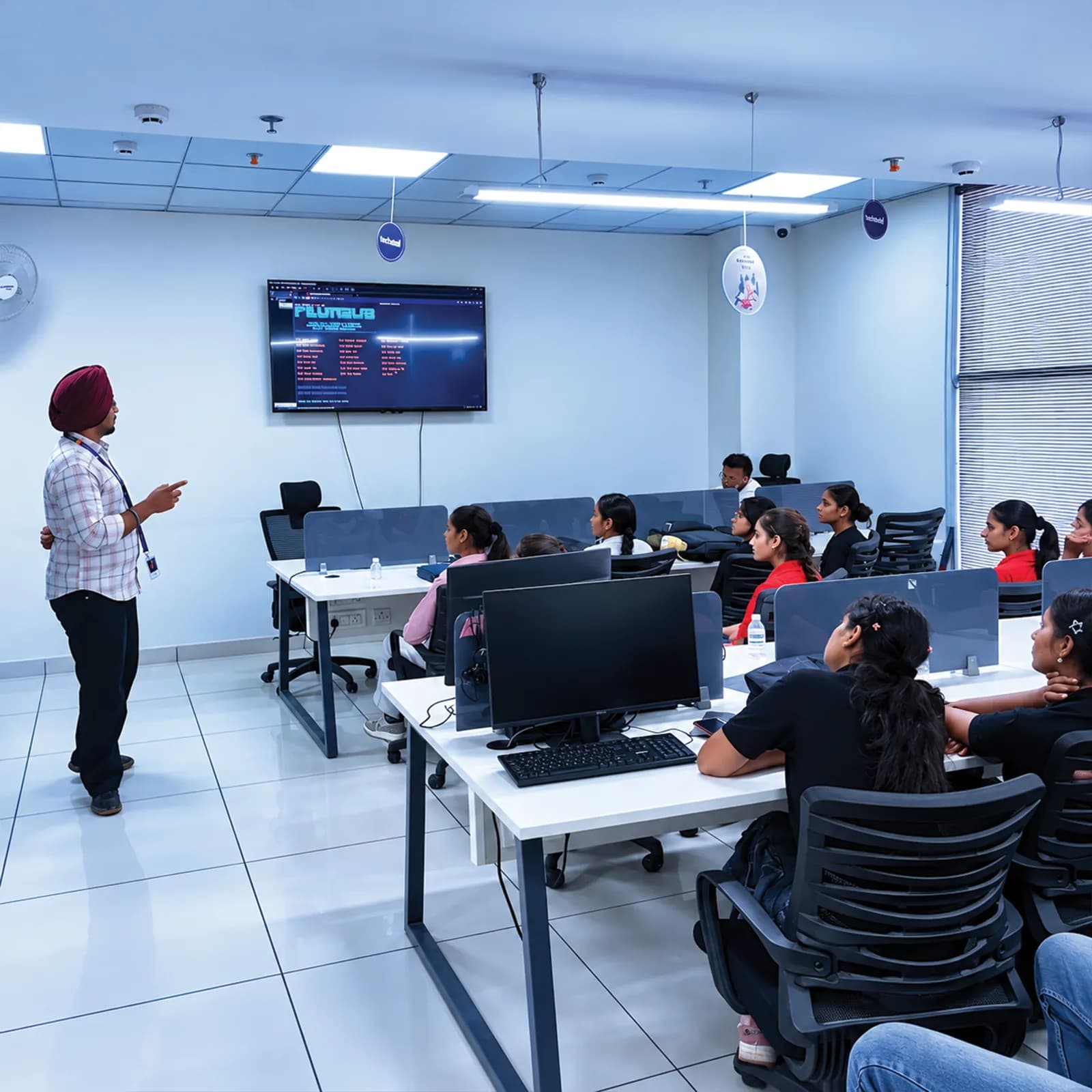
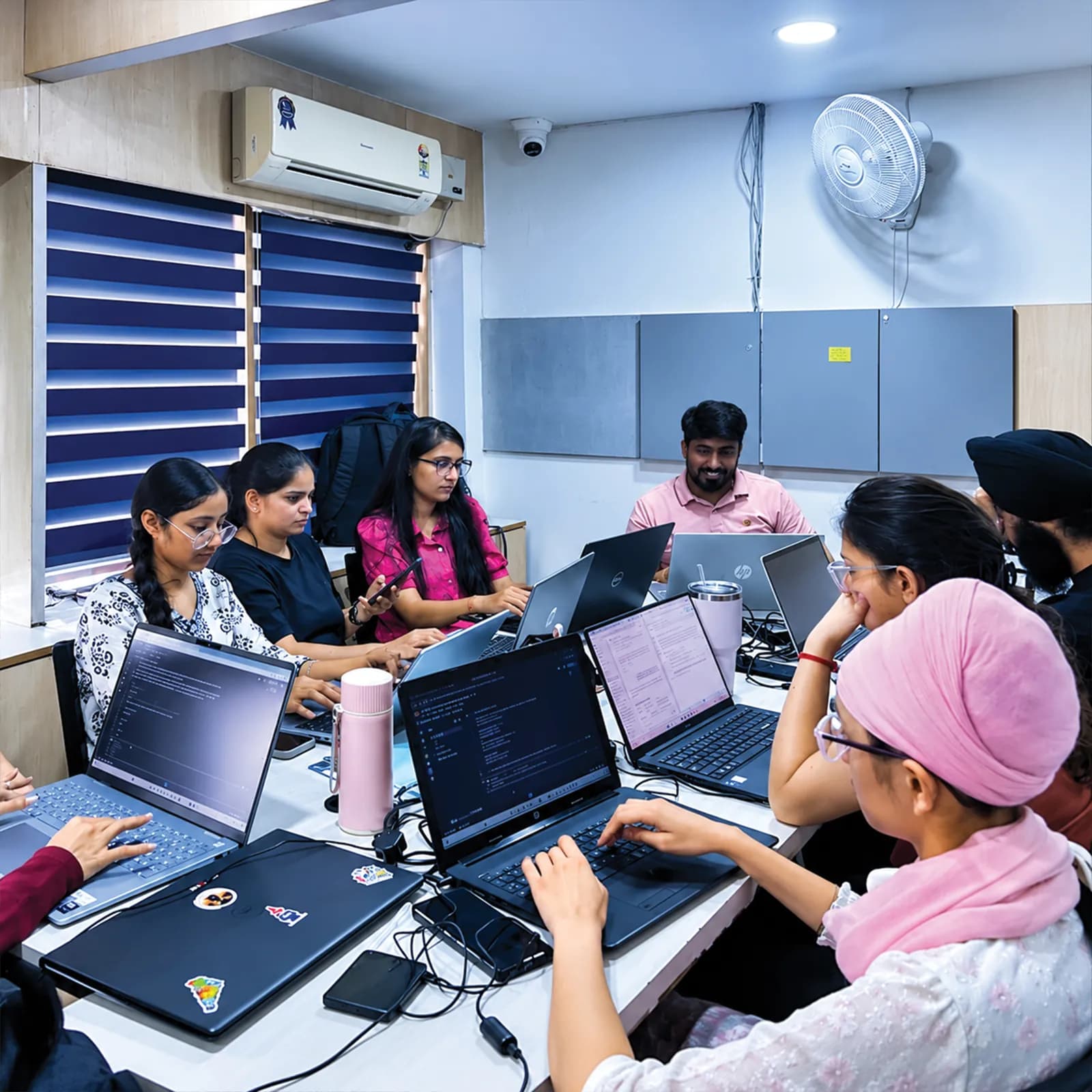
Objective, guided practical, independent task and mentor checkpoint, so you always know what each day is for.
Hands-on time in Search Console, GA4, Tag Manager, Google Ads, Meta Ads, WordPress, Canva and Mailchimp.
Fee, documents, certificate criteria and assessment explained in writing before admission.
Visit the centre, meet the mentors and look at the labs before you confirm a batch.
The centre is at 2nd Floor, Crystal Plaza, SCS 78, Opposite PIMS Hospital, Jalandhar. Check your travel time and daily timings against your vacation plans before you join.
techcadd Jalandhar — 2nd Floor, Crystal Plaza, SCS 78, Opposite PIMS Hospital, Jalandhar, Punjab 144001Frequently asked questions
Answers can differ by college, semester and batch — confirm any academic requirement directly with your institution.
It is enough for a structured introduction and one mini project. It is not enough to master the field; plan further practice or a longer programme.
Search intent and keyword research, on-page SEO on WordPress, Search Console, GA4 and Tag Manager basics, Google Ads and Meta Ads drafts, content and email. Ask for the session plan.
It is summer or winter practical training, not an employment internship. You are not placed in an organisation or paid a stipend.
Only your college can decide. Get its written approval before enrolling if you need academic training.
Ask techcadd which documents it can issue — joining letter, attendance record, completion certificate — and whether they can follow your college's format.
Ask about lab availability. A personal laptop helps with practice between sessions, but check the recommended specification first.
Yes, if you have basic computer skills and time to practise. The entry assessment sets your pace.
Yes. No coding or marketing background is assumed; basic computer use and clear written English are enough to begin.
No. A little HTML is introduced for WordPress and SEO, but coding is not the focus.
SEO improves how a site appears in unpaid search results and takes time; Google Ads places paid ads that run while the budget lasts.
Ad spend is real money. Campaigns run only in accounts whose owner has approved a budget in writing; otherwise you build and review drafts.
No one can promise rankings, followers, leads or ROI. You learn how to improve visibility and measure progress honestly.
Those come from Google's and Meta's own exams. A techcadd training certificate is not one of them.
No. This is introductory training; it does not guarantee a job or placement.
No fee is published here. Ask for the current fee, taxes, materials and refund policy in writing.
Keep practising, specialise in one channel, or continue to the six-month digital marketing programme.
Send an enquiry from this page or call +91 98881 22254, share your degree and semester, and ask for the session plan and joining details.
techcadd Jalandhar is at 2nd Floor, Crystal Plaza, SCS 78, Opposite PIMS Hospital, Jalandhar, Punjab 144001. Visit for counselling before you confirm a batch.
Apply
Looking for 45 days digital marketing training in Jalandhar, SEO summer training or a short introduction to Google Ads? Tell us your degree, semester, college requirements and preferred start date, and ask for the session plan, fee and documents before you enrol.