Best Flutter App Development Course in Jalandhar
Learn to build cross-platform apps that do more than display data — one Dart codebase, two native binaries, and real AI features wired in, taught on live client work at techcadd Jalandhar rather than from slides.
- Live client projects
- Practitioner trainers
- Placement support
- Certificate + internship
- Duration
- 3, 6 or 9 Months
- Mode
- Classroom, Weekend & 1-on-1
- Eligibility
- 12th Pass Onward
- Includes
- Internship Letter
- Students trained
- 25,000+Students trainedsince 2007
- Google rating
- 4.9★Google rating556+ reviews
- Practical training
- 100%Practical traininglive client work
Course overview
A screen that shows data is a form. A product is something that learns, responds and gets a job done end to end — a camera that reads a receipt, a chat that answers from your own documents, an assistant that books the appointment instead of just displaying the calendar. Flutter builds the surface; the model behind it is what makes users pay. This course teaches both halves.
The job runs on a loop: design the widget and the data model, build — wiring state, data and AI, ship by testing, signing and releasing, then learn from crash data and analytics. Every cycle through GitHub and CI/CD makes the next release cheaper, and that loop is the whole job. Native development in Swift and Kotlin gives you every platform API on day one at the cost of maintaining two apps; Flutter gives you one Dart codebase and two native binaries, which is why most new client apps start here — and why Module 11 still teaches the platform channels that reach native code when one codebase is not enough.
The syllabus is 26 modules in a single numbered ladder with exit points at three, six and nine months, taught in Jalandhar. Module 01 begins with Dart from the ground up, so no coding background is assumed; from Module 02 onward every session is production work on a real, running app. Stage 1 covers widgets and layout, state management, async programming, REST and WebSockets, Firebase, testing and custom UI, ending in a production-signed app. Stage 2 adds native platform channels, Riverpod and GetX, advanced Dart, Clean Architecture, performance profiling, a first AI chatbot, on-device ML Kit, store publishing and a package published to pub.dev. Stage 3 moves from app to product: a professional Git and CI/CD workflow, generative AI APIs with streaming and RAG, agentic and multimodal features, a Supabase backend, release-pipeline engineering, monetisation and analytics, and a client capstone taken from brief to store.
On-device models, generative AI APIs and agentic tool-calling have rewritten what an app means in about two years. A CRUD screen is now table stakes; the work clients pay for is the intelligence layered on top and the pipeline that ships it safely. Companies are hiring app developers with old-job skillsets into a new-shape job, and that gap is what this programme is built to fill.
Who can dothis course
The Flutter course is built for people at six different starting points, and the batch is deliberately mixed. What matters far more than your background is turning up consistently and finishing what each module asks you to build.
Students after 12th
Join from any stream. Module 01 starts at Dart syntax with no assumed knowledge, and most students run the course alongside a degree at a Jalandhar college using the weekday or weekend batch.
Graduates and final-year students
If you are finishing a BCA, B.Tech, B.Sc or MCA, this is the shortest route from degree to a shipped app. Enter placement season with a published app and a GitHub history instead of a blank CV.
Working professionals
The weekend batch exists for people already earning. Developers moving across from web or backend work typically reach interview-ready Flutter level within the six-month stage without leaving their current job.
Freelancers and agency developers
One codebase for both stores is the whole commercial argument for Flutter. Stage 3 adds the parts freelancing actually needs: a backend, a release pipeline, monetisation, and how to scope and price a client build.
Career restarters
A gap on the CV counts for less than an app anyone can install. The course starts at zero and finishes with a published app, a documented internship letter and a commit history that shows the work.
Self-taught learners
If tutorials left you with half-finished projects, what changes here is a trainer who reviews what you built this week and a graded deliverable attached to every module.
Why this programmeis worth your year
Every business that opens now expects an app, and in Jalandhar the budget rarely stretches to two native teams. One Dart codebase producing both an iOS and an Android binary is the entire commercial argument for Flutter, and it is why local studios, agencies and product startups start here. That gap between demand and trained developers is the argument for this course.
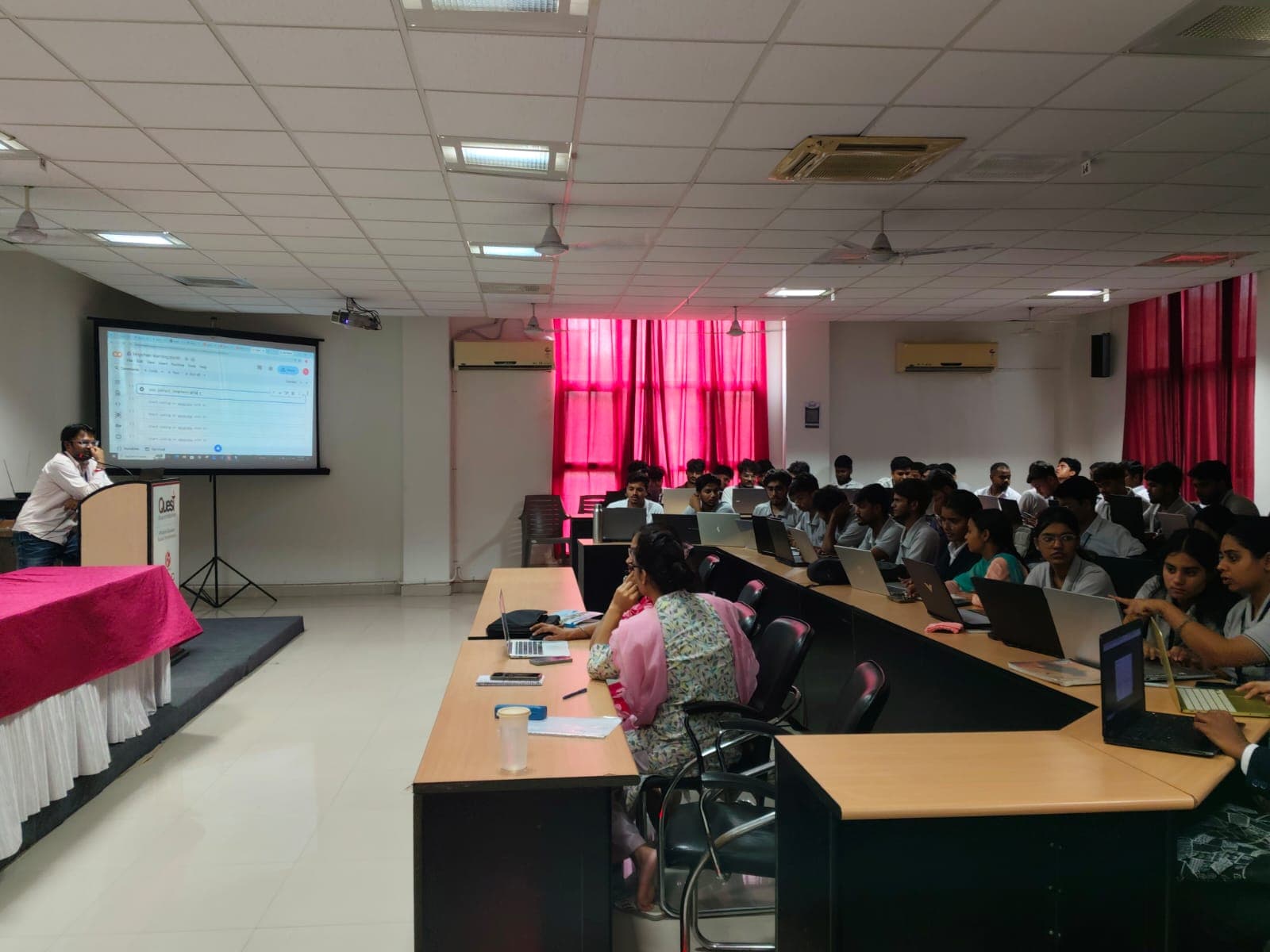
Build skills that hold up beyond the classroom.
What separates this from a playlist of tutorials is supervision on real work. From the second half of the course you build on live client projects with a trainer beside you, make decisions that have consequences, and correct them the following week. That loop is the skill. No employer will take your word for it without an app they can install and a repository they can open.
Be realistic about the shape of the market. Junior roles ask whether you can build a screen, wire state and ship without supervision; mid-level roles ask about architecture, testing and whether a feature survives code review; the AI-adjacent roles ask whether you can put a real model in a real app with a fallback for when it fails. This programme is arranged in exactly that order, so each stage ends at an employable point rather than halfway through one.
The alternative is what most people try first: free videos, a cheap online certificate, six months of half-finished projects, and nothing installable to show. A structured ladder with graded deliverables, a mentor who reviews your code, an internship letter and a placement cell that calls employers is the difference between knowing Flutter and being hired to write it.
Flutter Is How Most New Client Apps Get Built
- Live client work from the second half of the course, supervised by a trainer, not slides, not simulations.
- Every stage ends in something live — a signed build, a published package, a shipped app.
Reviewed by mentors. Built for interviews.What you will
actually build
The syllabus runs as a single ladder of 26 modules with three exit points, not three separate courses: the 6-month Professional stage continues exactly where the 3-month Practitioner stage ends, and the 9-month AI Flutter Engineer stage continues where the Professional stage ends. Module 01 teaches Dart from zero, so no programming background is assumed. Every module is specified the same way — topics, the named packages and platforms you actually run, the commercial problem the skill is hired to solve, and a graded deliverable that goes into your portfolio — and you advance when a deliverable passes review rather than when the calendar says so.
Stage 1 · Practitioner (Modules 1–10)
- Introduction to Dart
- Flutter Fundamentals
- Flutter UI Development
- State Management
- Asynchronous Programming
- Working with Data
- Firebase Integration
- Testing and Debugging
- Advanced UI Techniques
- Practitioner Capstone — Production App & Client Handoff
One course.A mesh of real tools.
Everything below is installed on the lab machines and used on live client work, not shown once in a slide and forgotten.
Get Certified in
Flutter App Development
Complete the course with a portfolio of live projects and receive an industry-recognised certificate, plus a documented internship letter accepted by Punjab universities.
 Computer Education · JalandharCertificateof Project ExcellenceThis is to certify thatStudent Name
has designed, built and deployed a live capstone project in Flutter App Development, reviewed and graded under industry mentorship.
Computer Education · JalandharCertificateof Course CompletionThis is to certify thatStudent Namehas successfully completed the professional training programme in Flutter App Development with a grade of A+.
Two certificates on completion — the course certificate and a separate capstone project certificate.
Where this coursetakes you
The roles this opens, what they pay in Punjab and beyond, and who is hiring for them — the same figures our free Salary Estimator publishes, not a brochure number.
What does a Junior Flutter Developer interview test?
The entry-level role Stage 1 prepares you for. Interviews test whether you can build a screen, wire state and ship a working app without supervision. What you show them: your first Flutter app, the themed multi-screen UI and the state-management comparison.
What does a Flutter Developer interview test?
The early-career role that Stage 1 opens and Stage 2 secures. Interviews test architecture judgement, testing discipline and whether a feature survives a code review. What you show them: the refactored Clean Architecture app, the tested feature suite and the performance audit.
What does an AI Mobile Engineer interview test?
The mid-level role that Stage 2 opens and Stage 3 secures. Interviews test whether you can wire a real model into a real app safely, with a fallback for when it fails. What you show them: the in-app chatbot, the generative AI app and the agentic feature with its failure-mode test.
What does a Flutter Tech Lead interview test?
The senior role Stage 3 prepares you for. Interviews test system design across state, backend and release pipeline, and whether you can defend the technical decisions. What you show them: the Supabase backend, the automated release pipeline and your architecture decision records.
What does a freelance or agency Flutter developer need to show?
The independent route out of Stage 3. What is tested is whether you can scope, price, build and ship a client app end to end. What you show them: the client kit — the proposal, the published app, the case study and the GitHub history behind it.
Hands-on projectsyou will ship
First Flutter App
A three-screen live app with layout widgets and interactive state, screen-recorded on a device.
Themed Multi-Screen UI
A five-screen app with Material and Cupertino theming, validated forms and animated navigation.
State Management Comparison
The same app rebuilt on Provider and on Bloc, with a written comparison of the trade-offs.
Live Data App
An API-fetched, SQLite-cached, WebSocket-updated live screen.
Firebase-Backed App
Real-time sign-in, a Firestore list and an end-to-end push notification.
Tested Feature Suite
Unit, widget and integration tests for one full feature, with a DevTools profile.
Native Platform Feature
A custom MethodChannel reading a real device sensor from Dart.
Refactored Architecture
An earlier app rebuilt into Clean Architecture with dependency injection.
Performance Audit
A documented before-and-after frame-rate, memory and build-size report.
In-App AI Chatbot
A live chat screen backed by a real text-generation API call.
On-Device Scanner
A camera-based OCR or face-detection feature running fully on-device.
Published Package
A custom Flutter plugin or package live on pub.dev, with docs and a test.
GitHub Team Workflow
A public repository with ten reviewed pull requests and a passing CI Action.
Generative AI App
Streaming AI chat plus a RAG-based Q&A feature over custom documents.
Agentic AI Feature
A confirmed, tool-calling agent action inside a live app, with a failure-mode test.
Supabase Backend
A live app on a real backend with RLS policies and a deployed Edge Function.
Automated Release Pipeline
A CI/CD pipeline shipping signed builds to both stores' test tracks.
Monetised App
A live RevenueCat paywall with a funnel analytics dashboard behind it.
Learn it. Build it. Make it yours.
Every project moves through the same loop: understand the brief, build with guidance, then explain the decisions behind your work.
Understand
Break a real requirement into a clear plan and the right tools.
First Flutter AppBuild
Work hands-on with trainer feedback while the decisions are still easy to change.
Themed Multi-Screen UIPresent
Turn the finished work into a portfolio story you can defend in an interview.
State Management ComparisonWhy students choosetechcadd
There are many places to learn Flutter in Jalandhar and the brochure syllabus looks similar at all of them. What differs is who teaches, whether you ever touch real work, and whether anyone picks up the phone after you have paid. techcadd has trained students across Punjab since 2007 on the same model: small batches, working practitioners as trainers, client projects as coursework.
Trainers who still ship apps
Your trainer is not a full-time lecturer. They deliver client builds for techcadd's services arm, so the packages and patterns in class are the ones in current use rather than a case study from five years ago.
Live projects, real consequences
You work on genuine client requirements under supervision, with real API keys and real store submissions. This is where a portfolio comes from, and it is the first thing an interviewer asks to see.
Small batches and open lab hours
Batches stay small enough that a trainer sees your screen daily. Lab time runs outside class hours and doubt sessions continue until the concept lands.
Evidence in every module
Every module ends in a graded artefact — a merged pull request, a published package, a signed release build, an AI feature with a documented failure-mode test — not a set of notes.
Internship letter and certificate
Every student finishes with an industry-recognised certificate and a documented internship on real work, accepted for university industrial training requirements.
A placement cell that persists
Mock interviews, CV reviews and drives with hiring partners across Jalandhar and Ludhiana, repeated after a rejection, not abandoned.
What you are reallybeing taught
Every package named in this syllabus will change. These ideas will not — they are what you are really being taught, and what a strong candidate can articulate under questioning.
Evidence beats opinion
Anyone can say they know Flutter. A merged pull request, a published package and a signed release build are what distinguish a developer from someone with a certificate.
The framework changes, the fundamentals don't
Widgets, packages and even Flutter's own APIs turn over every year. Async programming, state management and clean architecture have not changed in a decade — learn those deeply.
A model is a feature, not a product
An AI call with no fallback, no cost control and no confirmation step is a demo, not a shippable feature. Every AI module in this syllabus ends in a failure-mode test for exactly that reason.
A broken pipeline makes every release a guess
Manual builds, unsigned binaries and untested merges produce apps that work on one machine and crash on another. Fix the pipeline before you ship anything through it.
Shipped beats perfect
A published app with rough edges teaches more, and proves more to a hiring panel, than an unfinished one polished in isolation. Every stage in this programme ends with something live.
Frequently Asked Questions
It is building cross-platform apps in Flutter where the product's value sits in a model, not just a screen. A screen that shows data is a form; a product is something that learns, responds and finishes a job — a camera that reads a receipt, a chat that answers from your own documents, an assistant that books the appointment instead of displaying the calendar. Flutter builds the surface; the model behind it is what makes users pay.
Native — Swift and Kotlin — gives you full access to every platform API on day one, at the cost of writing and maintaining two apps. Flutter gives you one Dart codebase and two native binaries, so a feature shipped once appears on iOS and Android the same afternoon. That is why most new client apps start in Flutter, and this course teaches the native escape hatch too: Module 11 covers platform channels for the times one codebase is not enough.
There are three exit points on one 26-module ladder: 3 months (Practitioner, Modules 1–10), 6 months (Professional, Modules 11–19) and 9 months (AI Flutter Engineer, Modules 20–26). They are nested, not parallel — each stage continues where the last ended — so a shorter programme costs you scope, never depth, and you can return later without repeating a module.
No. Module 01 teaches Dart from the first line — syntax, control flow, object-oriented programming, collections and null safety — and ends with a working command-line programme. From Module 02 onward every session is production work on a real, running app.
Flutter and Dart with Android Studio and VS Code; Provider, Bloc, Riverpod and GetX for state; sqflite, Hive and SharedPreferences for storage; http, dio and WebSockets for APIs; the full Firebase suite — Auth, Firestore, Storage, Cloud Messaging, Cloud Functions, Crashlytics and Analytics; the OpenAI, Claude and Gemini APIs plus ML Kit for on-device AI; Supabase and Postgres for a real backend; get_it, injectable and freezed for architecture; flutter_test and integration_test for testing; and GitHub Actions, Fastlane, Codemagic, Play Console and App Store Connect for delivery.
Eighteen graded artefacts, one per module. Stage 1 produces a live first app, a themed multi-screen UI, a state-management comparison, a live data app, a Firebase-backed app and a tested feature suite. Stage 2 adds a native platform feature, a Clean Architecture refactor, a performance audit, an in-app AI chatbot, an on-device scanner and a package published to pub.dev. Stage 3 adds a GitHub team workflow, a generative AI app, an agentic feature, a Supabase backend, an automated release pipeline and a monetised app with an analytics dashboard.
Stage 1 prepares you for Junior Flutter Developer, Mobile App Trainee and Cross-Platform UI Developer. Stage 2 prepares you for Flutter Developer, Mobile App Developer and Cross-Platform Engineer. Stage 3 prepares you for AI Mobile Engineer, Flutter Tech Lead and freelance or agency work. Every one of those interviews asks to see shipped work, which is why each module ends in a graded deliverable.
On-device models, generative AI APIs and agentic tool-calling have rewritten what an app means in about two years. A CRUD screen is now table stakes; what clients pay for is the intelligence layered on top and the pipeline that ships it safely. Companies are hiring app developers with old-job skillsets into a new-shape job, and that gap is what this programme is built to fill.
Yes. techcadd Jalandhar runs weekday, evening and weekend batches in parallel so working professionals and college students can both attend, and 1-on-1 training is available for a fully personal schedule. Every class runs for two hours; book a free demo class to see the lab and meet the trainer before enrolling.
Yes. Every student receives an industry-recognised certificate on completion plus a documented internship letter based on live client work. The internship satisfies the industrial training requirement at most Punjab universities.
Choose the right duration for you
Start with the time you can commit consistently. Every track begins with practical foundations, then adds depth as your goals grow.
Practitioner
Learn Dart from zero and ship your first live app. Prepares you for Junior Flutter Developer, Mobile App Trainee and Cross-Platform UI Developer roles.
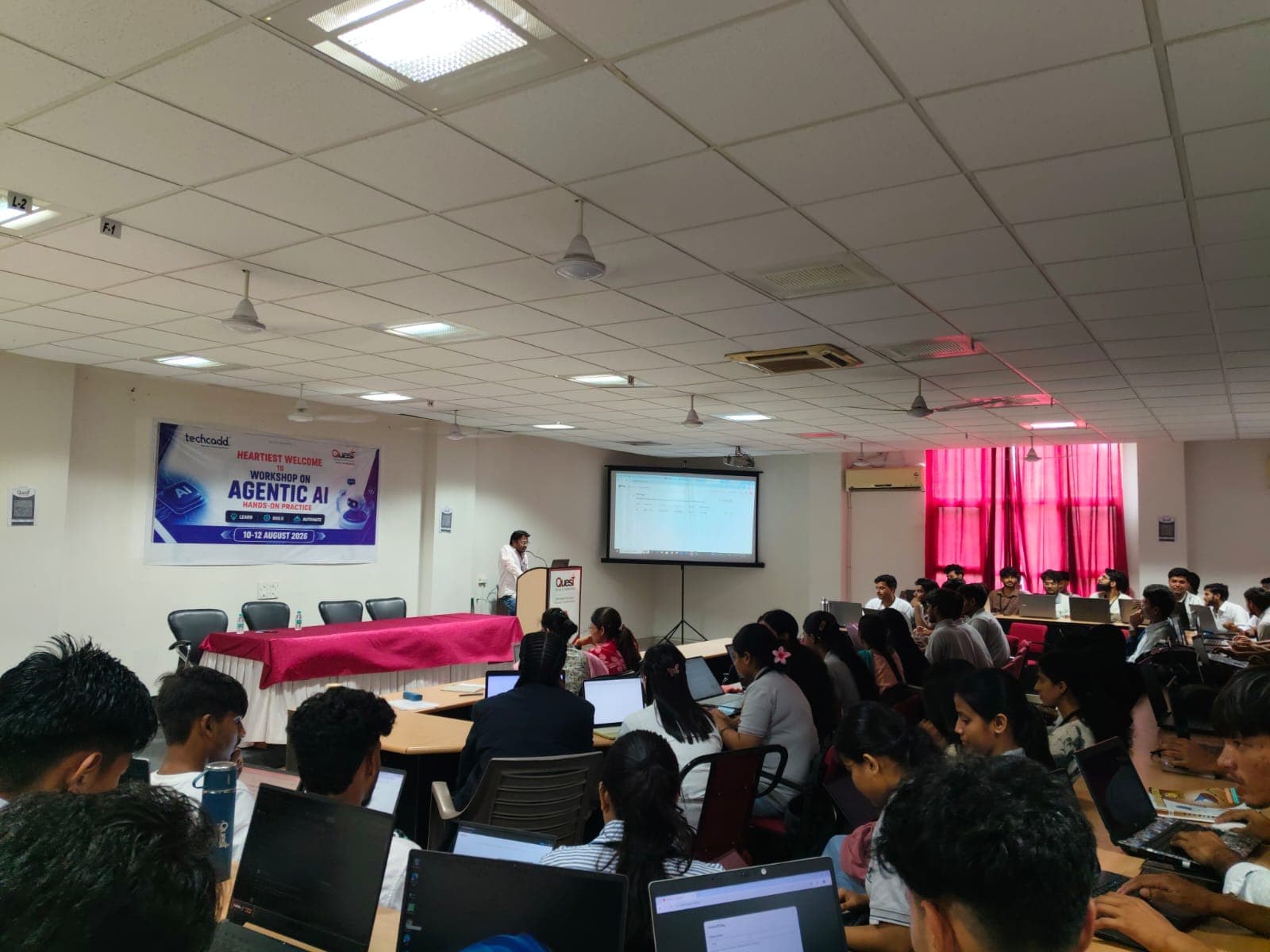
Professional
Make it production-grade — native platform access, a defensible architecture, performance discipline, a first AI feature and a signed release in both stores.
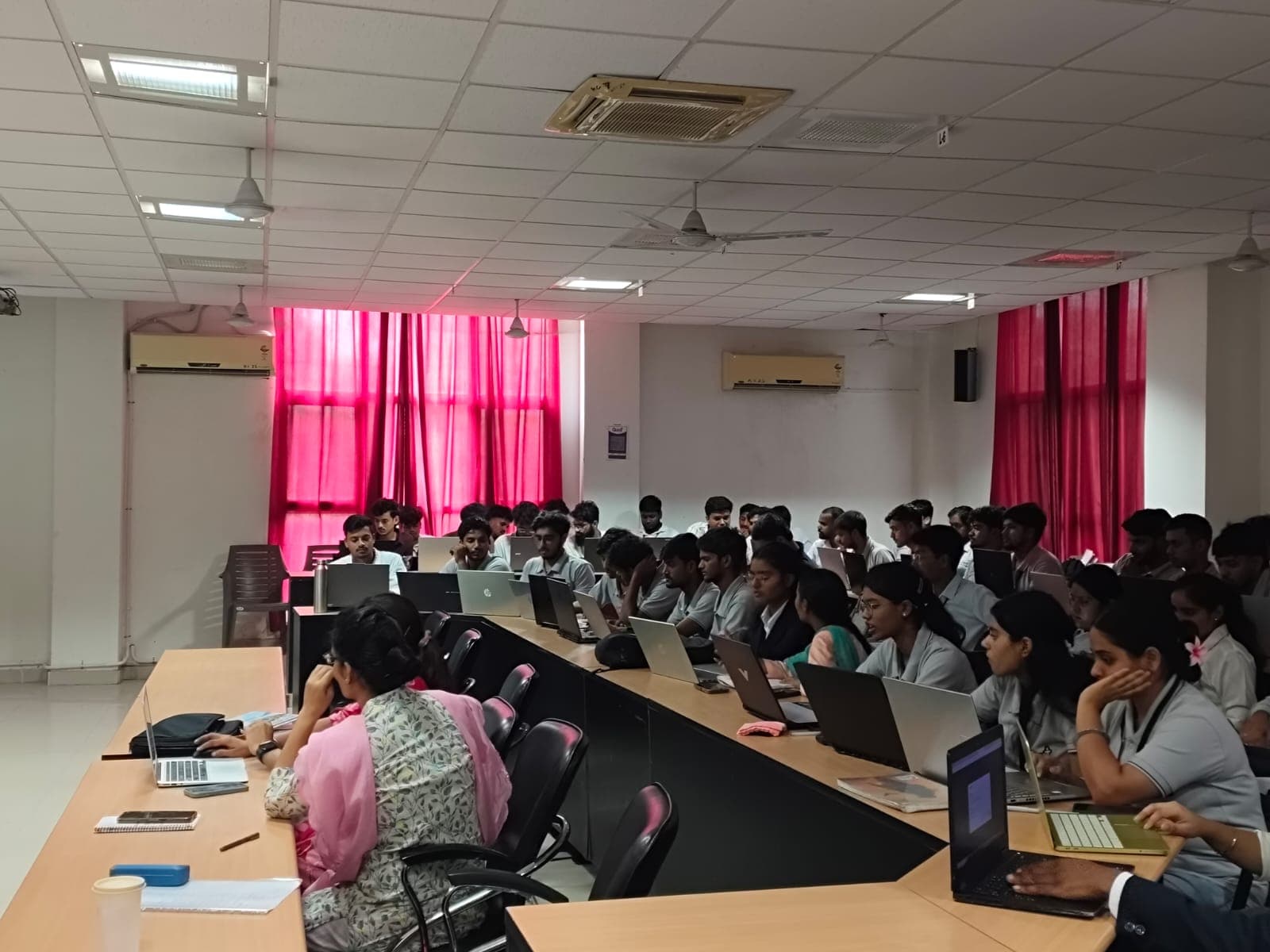
AI Flutter Engineer
Own the intelligent, deployed, team-built product: generative and agentic AI features, a real backend, a release pipeline, monetisation and the client-facing skills to deliver the whole system.
Choose the rightduration for you
Modules are numbered 01 to 26 in a single sequence, and progression is capability-gated: you advance when a deliverable passes review, not when the calendar says so. Anyone can say they know Flutter — what gets people hired is a merged pull request, a published package, a signed release build and a live AI feature with a documented failure-mode test, so every module ends in one.
Practitioner
Modules 1 – 10
Learn Dart from zero and ship your first live app. Prepares you for Junior Flutter Developer, Mobile App Trainee and Cross-Platform UI Developer roles.
Professional
Modules 11 – 19
Make it production-grade — native platform access, a defensible architecture, performance discipline, a first AI feature and a signed release in both stores.
AI Flutter Engineer
Modules 20 – 26
Own the intelligent, deployed, team-built product: generative and agentic AI features, a real backend, a release pipeline, monetisation and the client-facing skills to deliver the whole system.
| Module | 3 Months | 6 Months | 9 Months |
|---|---|---|---|
| 01Introduction to DartDart from zero: syntax, variables and type inference; control flow; functions with named and optional parameters; object-oriented programming with classes, inheritance and interfaces; List, Set and Map; null safety and the sound type system. Tools: DartPad, Dart SDK, VS Code. Deliverable: a command-line Dart programme exercising OOP, collections and null-safe types, with a written explainer of five language features used. | Included | Included | Included |
| 02Flutter FundamentalsWhat Flutter is and how the rendering engine works; setting up for Android and iOS; the widget tree; StatelessWidget versus StatefulWidget; Container, Row, Column and Stack; user input and gesture detection. Tools: Flutter SDK, Android Studio, Xcode, Flutter DevTools. Deliverable: a live first app with three screens of layout widgets and one piece of interactive state, screen-recorded on a device. | Included | Included | Included |
| 03Flutter UI DevelopmentMaterial and Cupertino widget sets; themes and design tokens; composing custom widgets; responsive and adaptive layout across phone, tablet and web; navigation and routing with named routes and nested navigators; forms and validation; animations and page transitions. Tools: Material/Cupertino, flutter_animate, go_router. Deliverable: a five-screen app with themed Material and Cupertino variants, a validated multi-field form, custom routed navigation and an animated transition. | Included | Included | Included |
| 04State ManagementsetState and lifting state up; InheritedWidget; Provider for app-wide state; an introduction to the Bloc pattern; a working comparison against Redux and MobX for state shared across many screens. Tools: Provider, flutter_bloc, Redux, MobX. Deliverable: one app rebuilt twice with the same feature set — once on Provider, once on Bloc — with a written comparison of what each pattern made easier or harder. | Included | Included | Included |
| 05Asynchronous ProgrammingFutures and async/await; Streams and StreamBuilder; isolates for CPU-bound work off the UI thread. Tools: dart:async, Isolate, StreamController. Deliverable: a live-updating screen driven by a Stream, plus one CPU-heavy task moved to an isolate with a measured frame-rate improvement. | Included | Included | Included |
| 06Working with DataJSON parsing and model serialisation; HTTP requests against REST APIs; WebSockets for real-time communication; local storage with SharedPreferences and SQLite. Tools: http/dio, json_serializable, web_socket_channel, shared_preferences, sqflite. Deliverable: an app that fetches and parses live JSON from a public API, caches it in SQLite, and updates a screen in real time over a WebSocket. | Included | Included | Included |
| 07Firebase IntegrationFirebase setup for Android and iOS; Authentication by email, Google and phone; Cloud Firestore for real-time data; Cloud Messaging for push notifications; Analytics for event tracking. Tools: Firebase Console, firebase_auth, cloud_firestore, firebase_messaging, firebase_analytics. Deliverable: a live app with working sign-in, a Firestore list updating in real time across two devices, and a push notification delivered end to end. | Included | Included | Included |
| 08Testing and DebuggingUnit testing business logic; widget testing individual UI components; integration testing full user flows; debugging technique; performance profiling with DevTools. Tools: flutter_test, integration_test, Flutter DevTools. Deliverable: a test suite covering one feature end to end — unit tests for logic, a widget test for the UI and one integration test for the flow — plus a documented DevTools profiling pass. | Included | Included | Included |
| 09Advanced UI TechniquesCustom painting with CustomPainter; animations beyond the built-in transitions; gesture recognition for complex interactions; internationalisation and localisation. Tools: CustomPainter, flutter_localizations, Intl. Deliverable: a polished capstone screen combining a custom-painted element, a bespoke gesture-driven interaction and full localisation into at least two languages. | Included | Included | Included |
| 10Practitioner Capstone — Production App & Client HandoffArchitecture review and a clean-code refactor before shipping; environment config and flavors for dev, staging and production; versioning, store metadata, build and release; crash reporting and monitoring; writing release notes. Tools: Play Console, App Store, Firebase. Deliverable: a production-signed app built from the modules before it, a deployed store listing, and a written technical handoff report. | Included | Included | Included |
| 11Platform IntegrationPlatform-specific code through MethodChannel; device features including camera and sensors; background processes; push notifications end to end. Tools: MethodChannel, camera, sensors_plus, flutter_background_service. Deliverable: a live app with one custom native platform channel — reading a device sensor, for instance — callable from Dart and demonstrated on a physical device. | Not included | Included | Included |
| 12State Management Deep DiveAdvanced Provider patterns for large apps; Riverpod as a compile-safe successor; GetX for state, routing and dependency injection in one package; Flutter Hooks for functional-style state. Tools: Riverpod, GetX, flutter_hooks. Deliverable: the Module 4 app rebuilt a third time on Riverpod or GetX, with an architecture-decision record comparing the three state solutions used across the programme. | Not included | Included | Included |
| 13Advanced Dart FeaturesGenerics for reusable, type-safe code; extension methods; mixins for shared behaviour without inheritance; isolates and concurrency patterns beyond the basics. Tools: Dart generics, mixins, Isolate.spawn. Deliverable: a small reusable Dart package using generics, at least one mixin and one extension method, with unit tests. | Not included | Included | Included |
| 14Architecture and Design PatternsMVVM; Clean Architecture layering across presentation, domain and data; the Repository pattern for data-source abstraction; dependency injection. Tools: get_it, injectable, freezed. Deliverable: an earlier app refactored into a Clean Architecture layout with dependency injection wired through get_it, and a documented before-and-after structure diagram. | Not included | Included | Included |
| 15Performance OptimizationWidget and render-tree optimisation; memory management and leak detection; app-size reduction; profiling and benchmarking with DevTools. Tools: Flutter DevTools, --analyze-size builds. Deliverable: a documented before-and-after performance audit on a live app — frame-rate measurements, memory profile and a reduced release build size — with the fixes applied. | Not included | Included | Included |
| 16AI Integration in Flutter ApplicationsText-based AI features including chatbots, question-and-answer systems and summarisation; chatbot architecture inside a Flutter app; designing chat interfaces with ListView or a dedicated chat-UI package. Tools: flutter_chat_ui, http/dio, a text-generation API. Deliverable: a working in-app chatbot screen backed by a live text-generation API call, with conversation history persisted locally. | Not included | Included | Included |
| 17On-Device AI Using ML KitGoogle ML Kit for Flutter; text recognition (OCR); face detection. Tools: google_mlkit_text_recognition, google_mlkit_face_detection. Deliverable: a live camera-based feature — a document scanner or a face-detecting filter — running entirely on-device, with accuracy notes from real test images. | Not included | Included | Included |
| 18Publishing and DeploymentStore guidelines for both platforms; building release binaries for iOS and Android; CI/CD fundamentals; app signing and release management. Tools: App Store Connect, Play Console, Xcode archiving, Android App Bundle. Deliverable: a signed release build for both platforms submitted to at least an internal or closed testing track, with a documented signing and versioning process. | Not included | Included | Included |
| 19Flutter Plugins and PackagesCreating custom plugins; publishing packages to pub.dev; evaluating and integrating third-party packages responsibly. Tools: pub.dev, plugin_platform_interface. Deliverable: a custom Flutter plugin or package published to pub.dev with documentation, a changelog and at least one automated test. | Not included | Included | Included |
| 20Git & GitHub for Flutter TeamsCommits, branches and merges; GitFlow and trunk-based branching; opening and reviewing pull requests; resolving conflicts; a proper .gitignore for Flutter; GitHub Actions for automated checks; protecting main; semantic commit messages; running a sprint with GitHub Projects. Tools: Git, GitHub, GitHub Actions, GitHub Projects. Deliverable: a public repository with a documented branching workflow, at least ten merged pull requests with review comments, and a passing CI Action. | Not included | Not included | Included |
| 21Generative AI APIs & LLM IntegrationREST integration with the OpenAI, Claude and Gemini APIs; streaming responses into a Flutter UI; prompt design for app features; function calling from a mobile client; keeping API keys out of the client bundle; rate limiting and cost control; a retrieval-augmented generation pipeline against a vector store; context-window management; fallback UX when a model call fails. Tools: OpenAI API, Claude API, Gemini API, Supabase Vector or Pinecone, flutter_dotenv. Deliverable: a live app with a streaming AI chat feature on a real API key, a RAG-based Q&A over a custom document set, and a documented cost-per-query estimate. | Not included | Not included | Included |
| 22Agentic & Multimodal AI FeaturesAgent loops — plan, act, observe — inside a mobile client; multimodal input combining image, voice and camera with an LLM; on-device speech-to-text and text-to-speech; hybrid pipelines combining ML Kit with generative AI; tool-calling into app-native functions such as calendar, camera and storage; safety rails and a confirmation step before an agent acts. Tools: ML Kit, speech_to_text, flutter_tts, multimodal LLM APIs. Deliverable: a working agentic feature — "scan this receipt and log the expense", for instance — with a confirmation step and a documented failure-mode test. | Not included | Not included | Included |
| 23Backend for Flutter — Supabase & Cloud FunctionsSupabase Postgres schema design and row-level security; Supabase Auth; Edge Functions; Firebase Cloud Functions as an alternative; connecting Flutter to a backend beyond Firestore; background jobs and webhooks; separating dev, staging and production. Tools: Supabase, Postgres, Cloud Functions, Docker basics. Deliverable: a live app backed by a Supabase project with RLS policies, one deployed Edge Function and a documented environment split. | Not included | Not included | Included |
| 24CI/CD, App Store & Play Store Release EngineeringGitHub Actions pipelines that test, build, sign and deploy; Fastlane for automated screenshots and store submission; code signing for iOS and Android; App Store Connect and Play Console review requirements; staged rollouts and feature flags; crash reporting with Crashlytics or Sentry; a versioning strategy. Tools: GitHub Actions, Fastlane, App Store Connect, Play Console, Crashlytics. Deliverable: a pipeline that builds, signs and ships to both stores' internal test tracks automatically, plus a crash-reporting dashboard receiving real events. | Not included | Not included | Included |
| 25App Monetization & AnalyticsIn-app purchases and subscription paywalls with RevenueCat, StoreKit and Play Billing; ad integration with AdMob; product analytics with Firebase Analytics and Mixpanel; funnel and retention tracking; A/B testing a paywall; App Store Optimisation basics. Tools: RevenueCat, AdMob, Firebase Analytics, Mixpanel. Deliverable: a live paywall wired to RevenueCat with a real product, plus an analytics dashboard tracking the install-to-purchase funnel. | Not included | Not included | Included |
| 26Architect Capstone — Client App from Brief to StoreWriting a technical proposal from a client brief; estimating timelines and pricing a Flutter build; architecture decision records; client demo cadence and change-request handling; portfolio, CV and AI-integration roles. Tools: Notion, Figma, GitHub Projects. Deliverable: a published app with full documentation, a complete GitHub commit history and a client-ready case study. | Not included | Not included | Included |
Nested, not parallel. The six-month programme contains everything in the three-month programme and continues from Module 11; the nine-month programme contains both and continues from Module 20. Choosing a shorter programme costs you scope, never depth, and you can extend later without repeating a single module.
Not sure if Flutter App Development is the right fit?
One call with a counsellor is usually enough to find out. Book a free demo class and see the lab before you decide.
Ask aboutFlutter App Development
Send your question and a counsellor will call you back about batch timings, fees, EMI options, placement record, or whether this course fits your degree.
- Free counselling and demo class
- Weekday, evening, weekend or 1-on-1, all 2-hour classes
- Internship letter and placement support