Best After 12th 3-Month MERN Stack Program in Jalandhar
A fast-paced three-month programme taking you from web fundamentals to a complete, deployed MERN stack application with authentication, database integration and placement guidance.
MERN Stack Program Course in Jalandhar
A fast-paced 3-month MERN programme for school leavers at techcadd Jalandhar (4.9★, 556+ reviews): web fundamentals, HTML5, CSS3 and JavaScript, then React.js and MongoDB, then Node.js, Express, authentication and a deployed industry-level major project. 3+ mini projects, live deployment, GitHub portfolio and resume guidance.
Key Highlights :
- Duration: 3 Months
- Mode: Classroom & 1-on-1
- Eligibility: 12th Pass
- Includes: Placement Support
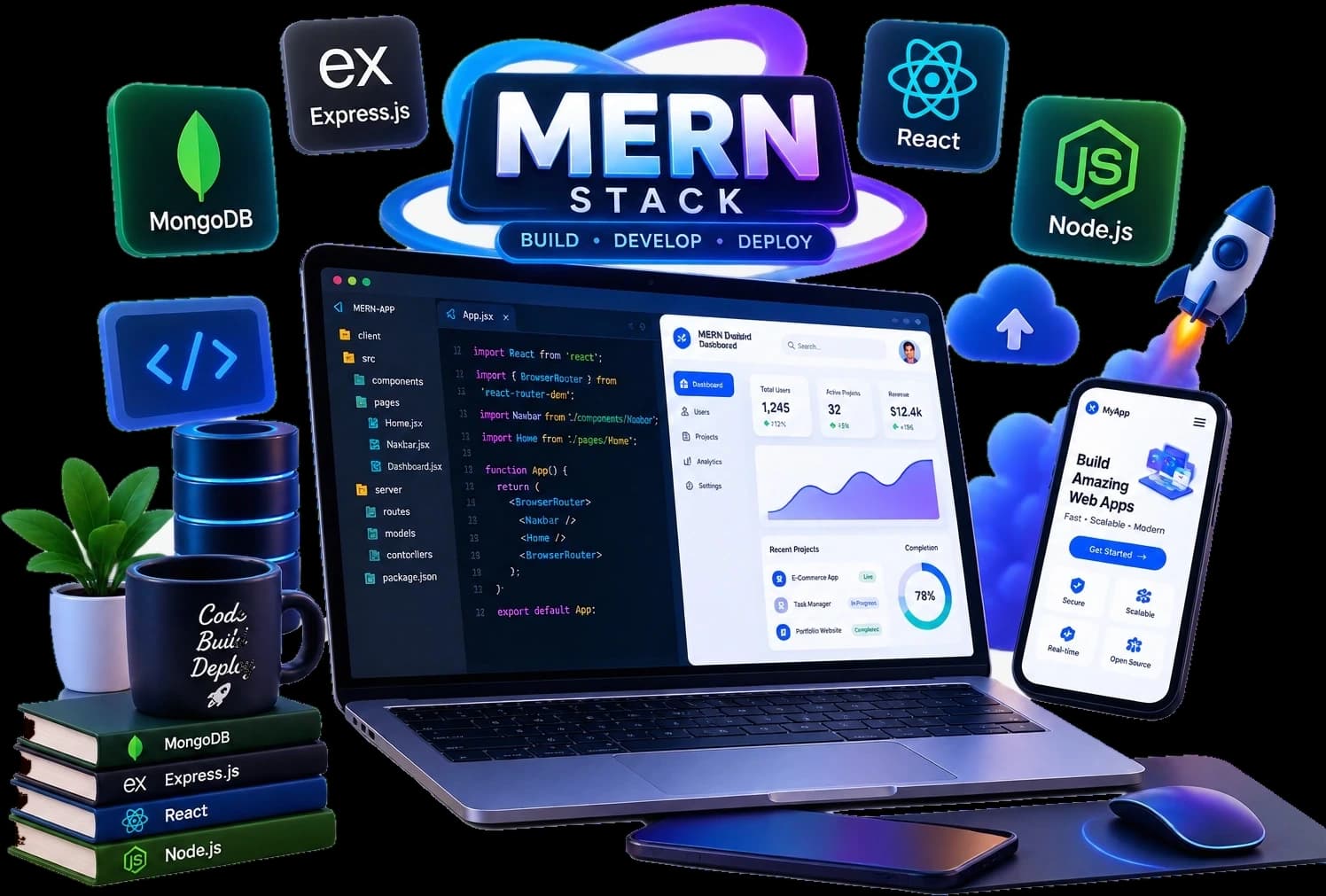
Course Overview
This is the three-month MERN programme: beginner to intermediate, written for someone starting straight after 12th who wants a deployed full-stack application quickly rather than the longest possible syllabus. Seventeen modules across three months, three or more mini projects, and one industry-level major project at the end. It is fast-paced by design — each month carries a full theme, and the pace is what lets you finish with something live inside a single term.
Month one is web development fundamentals and JavaScript basics: how the internet works, client–server architecture, frontend versus backend versus full stack, HTTP and HTTPS, domains and hosting; then HTML5 structure, semantic tags, forms, tables, media and accessibility; CSS3 selectors, box model, Flexbox, Grid, animations, responsive design and media queries; JavaScript fundamentals through variables, data types, operators, conditionals, loops, functions, arrays and objects; then advanced JavaScript with ES6+, arrow functions, scope, hoisting, DOM manipulation, event handling, form validation, async JavaScript, the Fetch API and local storage; and finally Git and GitHub. The month produces five small builds: a portfolio website, a calculator, a to-do list, a weather app and a responsive landing page.
Month two is React.js and MongoDB. React fundamentals with Vite, JSX, components, props and state; React development with event handling, conditional rendering, lists and keys, forms, hooks (useState and useEffect) and API integration; routing and styling with React Router DOM, protected routes, the Context API and Tailwind CSS; then the database side — MongoDB fundamentals, Atlas, collections and documents, CRUD and query operators, and Mongoose for connecting Node.js to MongoDB with schemas, models, CRUD and validation. The mini projects are a blog application, an employee dashboard and a student management system with a real database behind it.
Month three is the backend and the major project: Node.js fundamentals with npm, package.json, modules, the file system and HTTP module; Express with routing, middleware, REST APIs and MVC architecture; authentication with user registration, login, password hashing using bcrypt, JWT and protected routes; then full MERN integration — React plus Node plus Express plus MongoDB with CRUD, API integration and error handling; deployment of the frontend to Vercel and the backend to Render with MongoDB Atlas and environment variables; and career preparation covering a GitHub portfolio, resume building, LinkedIn guidance, interview tips and project presentation. The major project is one industry-level MERN application — a hospital management system, a learning management system, a job portal or an e-commerce website.
What You'll Learn
Every module ends in something you have built and a trainer has reviewed, so the list below is work you will have done rather than topics you will have heard about.
- 01
Five builds in the first month
A portfolio website, a calculator, a to-do list, a weather app and a responsive landing page — enough small finished work to know within four weeks whether this suits you.
- 02
React talking to a real database
Components, hooks, routing, protected routes and Tailwind on the front, MongoDB Atlas and Mongoose schemas behind — joined in month two rather than left as two separate subjects.
- 03
Authentication done properly
User registration and login with bcrypt password hashing, JWT and protected routes — the feature every junior interview asks you to explain.
- 04
A deployed industry-level project
A hospital management system, LMS, job portal or e-commerce site with the frontend on Vercel and the backend on Render against MongoDB Atlas, presented at the end.
Course Curriculum
The syllabus is a three-month roadmap of 17 modules, and every month ends in named mini projects rather than a set of notes. Month 1 is web fundamentals and JavaScript, month 2 is React.js and MongoDB, and month 3 is Node.js, Express, authentication, full MERN integration, deployment and the industry-level major project.
Month 1 — Web Development Fundamentals & JavaScript Basics
- 1
Module 01 · Web Fundamentals — introduction to web development, how the internet works, client–server architecture, frontend vs backend vs full stack, HTTP & HTTPS, domain & hosting
- 2
Module 02 · HTML5 — HTML structure, semantic tags, forms, tables, lists, media, accessibility
- 3
Module 03 · CSS3 — selectors, box model, Flexbox, Grid, animations, responsive design, media queries
- 4
Module 04 · JavaScript Fundamentals — variables, data types, operators, input & output, conditional statements, loops, functions, arrays, objects
- 5
Module 05 · JavaScript Advanced — ES6+, arrow functions, scope, hoisting, DOM manipulation, event handling, form validation, async JavaScript, Fetch API, local storage
- 6
Module 06 · Git & GitHub — Git installation, Git commands, repository management, branching, merge, GitHub workflow
- 7
Mini projects: portfolio website, calculator, to-do list, weather app, responsive landing page
Tools you will actually work in
Everything here is installed on the lab machines and used on live client work, not shown once in a slide and forgotten.
- CSJERJEJMORAJSVSMCMANPRE
Who can do this course
Students straight out of 12th
Any stream. Module 01 starts at how the internet works, and by the end of month one you have a portfolio website, a calculator, a to-do list and a weather app of your own.
Students with a summer or gap term
Three months fits a single vacation or the gap between school and college. You finish it with a deployed application rather than an unfinished playlist.
Degree students who want a head start
If you are entering a BCA or B.Tech, arriving already able to build and deploy a MERN app changes what your first two years look like — and what your college project can be.
Anyone testing whether coding suits them
Three months is a real commitment but a bounded one. If it clicks, the 6-month certificate programme continues from where this ends rather than repeating it.
Career restarters and switchers
A gap or an unrelated background counts for less than a deployed URL. The syllabus is identical whoever you are; only the batch timing changes.
Self-taught learners
If you already know some HTML and JavaScript but have never finished a full-stack build, this is the fastest supervised route to one — with a trainer reviewing your code each week.
Why this programme is worth your year
Beginner to intermediate MERN
From how the internet works to a complete MERN application — no prior coding assumed, and nothing skipped between the two ends.
3+ mini practical projects
A portfolio website, calculator, to-do list, weather app and responsive landing page in month one; a blog, an employee dashboard and a student management system in month two.
1 industry-level major project
A hospital management system, learning management system, job portal or e-commerce website — complete, portfolio-ready and defended at the end.
Git, GitHub and live deployment
Version control the way real teams use it, then the frontend on Vercel and the backend on Render with MongoDB Atlas and environment variables.
Source code access and doubt support
The source code for every project you build is yours to keep, and doubt sessions run whenever you are stuck rather than only in class.
Portfolio, resume and certificate
A personal portfolio website, a GitHub profile, resume guidance, LinkedIn guidance and a course completion certificate.
Three Months, One Deployed MERN Application
- 3+ mini projects and one industry-level major project — deployed live, with the source code yours to keep.
- Finish with a GitHub portfolio, a portfolio website and an ATS-friendly resume, ready for junior developer interviews.
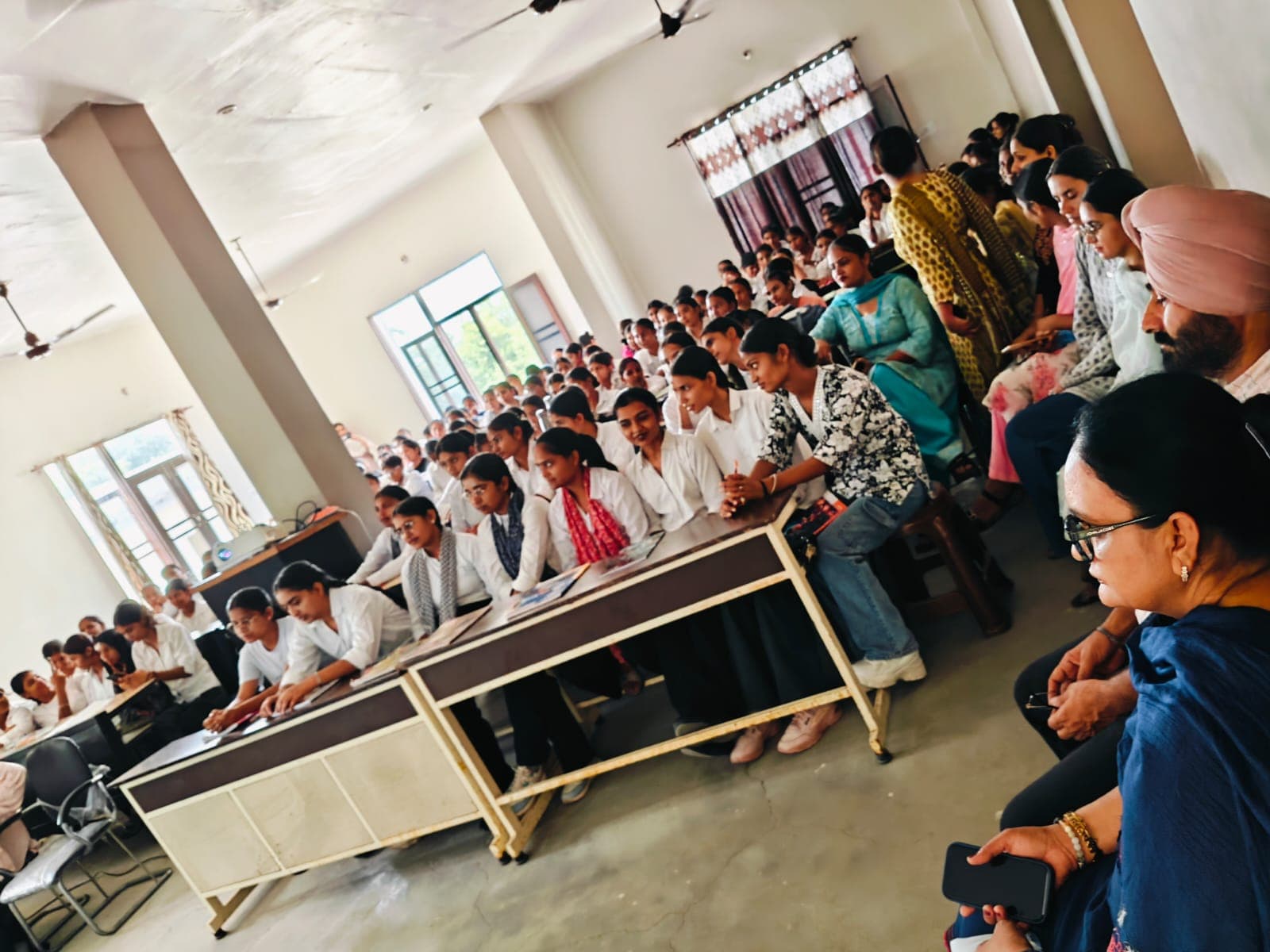
Get certified in MERN Stack Program
Complete the course with a portfolio of live projects and receive an industry-recognised certificate, plus a documented internship letter accepted by Punjab universities.
 Computer Education · JalandharCertificateof Project ExcellenceThis is to certify thatStudent Name
has designed, built and deployed a live capstone project in MERN Stack Program, reviewed and graded under industry mentorship.
Computer Education · JalandharCertificateof Course CompletionThis is to certify thatStudent Namehas successfully completed the professional training programme in MERN Stack Program with a grade of A+.
Two certificates on completion — the course certificate and a separate capstone project certificate.
Where this course takes you
The roles this opens, what they pay in Punjab and beyond, and who is hiring for them — the same figures our free Salary Estimator publishes, not a brochure number.
Build responsive, interactive websites with HTML5, CSS3 and JavaScript; develop modern frontend applications with React.js; create RESTful APIs with Node.js and Express.js; work with MongoDB and Mongoose for database management; build complete MERN applications with authentication and CRUD functionality; deploy full-stack applications to cloud platforms; manage projects with Git and GitHub; create a professional GitHub profile and an ATS-friendly resume; and hold the skills required to begin a career as a full-stack web developer.
MERN Stack Developer (Fresher), Full Stack Web Developer, Frontend Developer (React.js), React.js Developer, Web Application Developer and Software Developer Intern. Realistically, the fresher and intern titles are the usual first step from a three-month programme, and they are how most local developers start.
Take the three-month programme if you want a deployed MERN application inside one term, are testing whether development suits you, or have a fixed window such as a vacation. Take the six-month certificate programme if you want the fuller syllabus — deeper Node and Express, file handling with Multer, Cloudinary and Nodemailer, a whole month on an industry project and a whole month on deployment and placement preparation. The three-month track continues into it without repeating anything.
It is enough to be interviewable for junior and intern roles, because those interviews test whether you can build, explain and deploy an application — and you will have done all three. It is not a guarantee, and candidates who keep building after the course finish far ahead of those who stop at the certificate.
Yes. Source code access for every project you build is part of the programme, and everything lives in your own GitHub repositories — which is also what an employer opens first from a resume.
Small business sites, portfolio sites and simple dashboards are within reach as soon as month two, and the authentication and deployment work in month three covers what a paying client usually needs. A Jalandhar address costs you nothing on a remote brief.
Hands-on projects you will ship
Portfolio Website & Landing Page
Month one's opening builds: a personal portfolio site and a responsive landing page in semantic HTML5 and CSS3, versioned with Git and published from GitHub.
Calculator, To-Do List & Weather App
Three JavaScript builds covering the DOM, event handling and form validation, then async JavaScript and the Fetch API against a real weather service, with state kept in local storage.
Blog Application
A React build with components, hooks, conditional rendering, lists and keys, React Router DOM and Tailwind styling — your first application with more than one screen.
Employee Dashboard
Forms, API integration and protected routes with the Context API, backed by MongoDB Atlas collections and query operators.
Student Management System
A frontend joined to a real database through Mongoose schemas, models, validation and CRUD — the point where the two halves of the stack meet.
Industry-Level Major Project
One complete MERN application — hospital management, an LMS, a job portal or an e-commerce site — with Express REST APIs, bcrypt and JWT authentication, error handling, and deployment to Vercel and Render. This is the one interviewers ask about.
Learn it. Build it. Make it yours.
Every project moves through the same loop: understand the brief, build with guidance, then explain the decisions behind your work.
Understand
Break a real requirement into a clear plan and the right tools.
Portfolio Website & Landing PageBuild
Work hands-on with trainer feedback while the decisions are still easy to change.
Calculator, To-Do List & Weather AppPresent
Turn the finished work into a portfolio story you can defend in an interview.
Blog ApplicationWhy students choose techcadd
There are many places to learn MERN in Jalandhar and the brochure syllabus looks similar at all of them. What differs is who teaches, whether you ever deploy anything, and whether anyone picks up the phone after you have paid. techcadd has trained students across Punjab since 2007 on the same model: small batches, working practitioners as trainers, live projects as coursework.
Trainers who still ship code
Your trainer is not a full-time lecturer. They deliver client projects for techcadd's services arm, so the examples in class are current rather than a case study from five years ago.
Honest about what three months buys
We will tell you plainly whether the 3-month or the 6-month track fits your goal. A student sold the wrong length is a student who does not finish.
Every month ends in something built
Eight named mini projects across the first two months, then one industry-level major project. You are never more than a fortnight from a finished piece of work.
A live URL, not a localhost demo
Month three deploys the frontend to Vercel and the backend to Render with MongoDB Atlas — because a project an interviewer cannot open has not been finished.
Small batches and open doubt hours
Batches stay small enough that a trainer sees your screen daily, and doubt support continues outside class time until the concept lands.
Continues into the longer track
If you want more depth afterwards, the 6-month certificate programme carries on from here — deeper Node and Express, file handling, a full industry project month and a placement month.
What our students say
Real experiences from learners across Jalandhar and the districts around it.
“I did this in the gap before college. Turning up to my first year already able to deploy a MERN app changed how the whole degree has gone.”
ESEkam SinghAfter 12th Student · Jalandhar “Five small projects in month one is what kept me going. You are never waiting weeks to see something you built actually work.”
NKNidhi KapoorFrontend Developer · Phagwara “My interview was entirely about the job portal I built as the major project — the login flow, the JWT, why I structured the API that way.”
SCSahil ChauhanSoftware Developer Intern · Kapurthala “I did this in the gap before college. Turning up to my first year already able to deploy a MERN app changed how the whole degree has gone.”
ESEkam SinghAfter 12th Student · Jalandhar “Five small projects in month one is what kept me going. You are never waiting weeks to see something you built actually work.”
NKNidhi KapoorFrontend Developer · Phagwara “My interview was entirely about the job portal I built as the major project — the login flow, the JWT, why I structured the API that way.”
SCSahil ChauhanSoftware Developer Intern · Kapurthala
“Three months was the right length for me to find out I actually like this. I have since joined the six-month track and it picked up exactly where this stopped.”
AKAnureet KaurBCA Student · Nakodar “The doubt support outside class hours is what made the pace survivable. Somebody would sit with me until the bug made sense.”
VTVikram ThakurFreelancer · Hoshiarpur “Having the source code for everything means I still go back and read my own projects when I am stuck on something new.”
MRMeenakshi RanaAfter 12th Student · Jalandhar Cantt “Three months was the right length for me to find out I actually like this. I have since joined the six-month track and it picked up exactly where this stopped.”
AKAnureet KaurBCA Student · Nakodar “The doubt support outside class hours is what made the pace survivable. Somebody would sit with me until the bug made sense.”
VTVikram ThakurFreelancer · Hoshiarpur “Having the source code for everything means I still go back and read my own projects when I am stuck on something new.”
MRMeenakshi RanaAfter 12th Student · Jalandhar Cantt
Frequently asked questions
Find answers to the questions students ask before enrolling.
Three months, running as a fixed roadmap: web development fundamentals and JavaScript basics, then React.js and MongoDB, then Node.js, Express.js, authentication, MERN integration, deployment and the major project. Weekday, evening and weekend batches cover the same syllabus, and 1-on-1 training is available. Every class runs for 2 hours.
Yes. Module 01 begins with how the internet works, client–server architecture and HTTP, then HTML5 and CSS3. No prior programming, no science stream and no particular percentage is required — but the pace is brisk, so consistent attendance matters more here than on the six-month track.
Both start from zero and both end in a deployed application, but they are different syllabuses rather than one trimmed. Three months compresses JavaScript into a single month and reaches the major project in month three. Six months adds deeper Node and Express, file handling with Multer, Cloudinary and Nodemailer, a full month of industry project development with testing and code review, and a full month of deployment and placement preparation including technical question banks, aptitude and mock interviews.
Yes, and without repeating what you have done. Ask a counsellor before your three months end so you can join the running batch at the right point and be told the difference in fee.
Eight named mini projects across the first two months — a portfolio website, a calculator, a to-do list, a weather app, a responsive landing page, a blog application, an employee dashboard and a student management system — plus one industry-level major project in month three.
One complete, portfolio-ready MERN application built in month three: a hospital management system, a learning management system, a job portal or an e-commerce website. It carries authentication, CRUD, REST APIs and error handling, and it is deployed live and presented at the end.
Yes. Module 05 of month three deploys the frontend to Vercel and the backend to Render against MongoDB Atlas, with environment variables covered. A localhost demo is not a finished project.
In Jalandhar, shorter three-month programmes typically cost less than the six-month certificate tracks, which run in the ₹18,000 to ₹40,000 range. techcadd counsellors share the current fee sheet and EMI options on request, and a demo class is free.
HTML5, CSS3, JavaScript (ES6+), React.js, Node.js, Express.js, MongoDB, Mongoose, REST APIs and JSON; Tailwind CSS for UI; VS Code, Postman, MongoDB Compass, MongoDB Atlas, Git, GitHub and npm for development; and Vercel, Render and Netlify for deployment.
The final module covers a GitHub portfolio, resume building, LinkedIn profile guidance, interview tips and project presentation, and techcadd's placement cell runs drives with hiring partners across Jalandhar and Ludhiana. The six-month track carries a full month of interview preparation if you want more depth on that side.
No institute can honestly guarantee a job, and you should be cautious of any in Jalandhar that does. techcadd guarantees placement support: resume and portfolio guidance, mock interviews and repeated drives with hiring partners, continued after a rejection rather than abandoned.
Yes — a course completion certificate, alongside a GitHub portfolio, a personal portfolio website and a deployed major project, which is what an interviewer actually opens.
Yes. techcadd Jalandhar runs weekday, evening and weekend batches in parallel so college students and working people can both attend, and 1-on-1 training is available for a fully personal schedule. Every class runs for 2 hours; book a free demo class to see the lab and meet the trainer before enrolling.
Ask about MERN Stack Program
Send your question and a counsellor will call you back about batch timings, fees, EMI options, placement record, or whether this course fits your degree.
- info@techcadd.com
- Phone
- +91 98881 22254
- Address
- 2nd Floor, Crystal Plaza, SCS 78, Opposite PIMS Hospital, Jalandhar, Punjab 144001
- Counselling hours
- Monday – Saturday, 9:00 AM – 7:00 PM
Not sure if MERN Stack Program is the right fit?
One call with a counsellor is usually enough to find out. Book a free demo class and see the lab before you decide.