On this page
What Advanced Content Marketing Actually Means (And Why Most People Get Stuck at the Basics)
If you’ve been writing blogs, posting on social media, or managing content for a brand, you’ve probably hit a frustrating wall. You’re creating content consistently, but the traffic isn’t converting into leads, sales, or any real business outcome. That’s the exact point where most marketers stop and advanced content marketers begin.
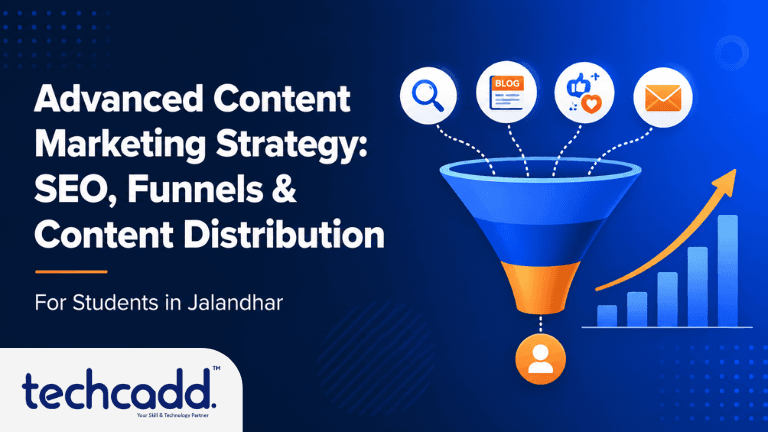
Here’s the truth nobody tells beginners: content marketing isn’t just about writing good content. It’s about building a system where SEO, funnels, and distribution work together like gears in a machine. Remove one gear, and the whole thing stalls.
Let’s break this down the way you’d actually use it in the real world.
SEO is your discovery engine. It’s not just stuffing keywords into a blog anymore. Search engines today understand intent, context, and user experience. If your content doesn’t genuinely answer what someone is searching for, no amount of keyword optimization will save it. Advanced SEO means thinking in terms of topic clusters, search intent mapping, and answering questions before your audience even finishes typing them.
Funnels are where content earns its keep. A lot of students learning digital marketing assume a funnel is just “awareness, then sale.” In reality, a funnel is a journey — and every stage needs a different kind of content. Someone discovering your brand for the first time needs something completely different from someone comparing you against three competitors right before buying.
Distribution is the multiplier most people ignore. You could write the best blog in your niche, but if it’s sitting on a website nobody visits, it doesn’t matter. Advanced marketers spend almost as much time distributing content as they do creating it — repurposing one idea across platforms, formats, and audiences.
If you’re a student in Jalandhar trying to break into digital marketing, understanding how these three pieces connect is what separates someone who “knows marketing theory” from someone who can actually run campaigns that perform.
Building the SEO Foundation That Actually Supports a Funnel
A lot of students ask, “Isn’t SEO just about ranking on Google?” Not really — not anymore. Ranking is the outcome, not the strategy. The real strategy is mapping content to what stage of the buyer’s journey a person is in.
Think of it this way: someone searching “what is content marketing” doesn’t want a sales pitch. They want clarity. But someone searching “best content marketing course with placement” is much closer to making a decision. If you treat both searches the same way, you lose both audiences.
This is where topic clusters come in. Instead of writing random blogs on random keywords, advanced marketers build a pillar page around a broad topic, then support it with multiple related blogs that link back and forth. Search engines read this as authority. Readers read it as genuinely helpful.
On-page SEO still matters, but it’s not everything. Your title tags, meta descriptions, and headings should be written for humans first, search engines second. If your content answers the question clearly and keeps people reading, search engines notice that too — through time on page, lower bounce rates, and return visits.
Where Funnels Enter the Picture
Once your SEO brings people in, the funnel decides what happens next. A simple way to think about it:
Top of funnel — blogs, guides, and explainer content that build trust
Middle of funnel — comparisons, case studies, and practical how-tos
Bottom of funnel — testimonials, demos, and direct offers
The mistake most beginners make is pushing a bottom-of-funnel offer on someone who just landed on their first blog post. That’s like proposing marriage on a first date — the timing is wrong, even if the offer itself is good.
For students in Jalandhar planning a career in this field, understanding this sequencing is often the difference between a portfolio that looks good on paper and one that actually shows you can think strategically.
Content Distribution: Getting Your Work in Front of the Right People
Here’s something most beginner courses skip entirely — creating great content is only half the job. The other half is making sure it actually reaches people.
Repurposing is your best friend. One well-researched blog can become a LinkedIn carousel, a short video script, an email newsletter section, and three or four social media posts. You’re not creating new ideas every time — you’re translating one solid idea into formats that fit different platforms and attention spans.
Owned, earned, and paid channels work differently. Your website and email list are channels you control completely — owned media. Getting mentioned by others, shared, or linked to is earned media, and it builds trust faster than anything you can say about yourself. Paid promotion, when used correctly, isn’t about replacing organic reach — it’s about accelerating content that’s already proving itself organically.
Timing and platform behavior matter more than people realize. A blog that performs well on Google might flop on Instagram, not because the content is bad, but because the format doesn’t match how people consume content on that platform. Advanced marketers learn to adapt the message without losing the core value.
Bringing It All Together
So what does an advanced content marketing strategy actually look like in practice? It’s SEO research feeding into topic clusters, those clusters built around funnel stages, and every piece of content distributed across multiple channels in formats suited to each one.
For students in Jalandhar aspiring to work in digital marketing — whether at an agency, a startup, or building something of your own — this is the skill set that actually gets used on the job. Not isolated tricks, but a connected system where each part supports the next.
If you’re just starting out, don’t try to master all three at once. Get comfortable with SEO fundamentals first, start thinking about funnel stages as you write, and treat distribution as a habit you build alongside content creation — not an afterthought you remember later.
Ready to build your content marketing skills? Join techcadd's Content Writing Course in Jalandhar and learn how to create engaging content, understand SEO basics, and develop practical writing skills that can help you take your first step towards a career in digital marketing. 🚀
Start learning today with techcadd and turn your words into opportunities!
Filed under
Keep reading
- What Is Content Marketing? A Beginner’s Guide with Real Examples (Jalandhar) New to content marketing? This beginner’s guide breaks down what it actually is, why it matters, and real examples to help Jalandhar students understand it simply and practically.
- How to Start Coding from Scratch? A Beginner's Guide in JalandharNew to coding and don't know where to begin? This beginner's guide breaks down the basics, best first languages, and practical steps to start your coding journey in Jalandhar — no prior experience needed.
- Best Coding Practices for Building Real-World Applications: A Student's Guide from techcadd, JalandharLearn the coding practices that actually matter when building real-world apps — from clean code habits to debugging smarter. A practical guide for students in Jalandhar starting their dev journey with techcadd
Comments
Loading…