On this page
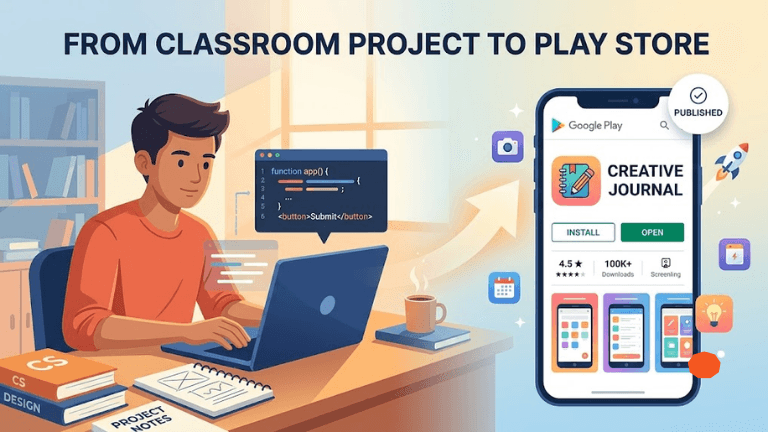
From Classroom Project to Play Store: An App Development Success Story
Every app on your phone started somewhere small. Maybe it was a sketch on the back of a notebook, or a half-working prototype someone was too nervous to show anyone. That's exactly how this story begins too — with a student in Jalandhar who had a basic assignment, a laptop that kept lagging, and absolutely no idea that the project would end up live on the Play Store.
The Assignment That Started It All
It began as a simple college requirement: build a mobile app, present it, get graded, move on. Nothing glamorous. The student picked something practical — a local service-booking app, the kind of idea that solves a problem you've personally faced. Booking a plumber or a tutor in Jalandhar usually means asking around on WhatsApp groups or relying on word of mouth. So the idea was simple: what if there was one app for that?
The first version was rough. Buttons didn't align. The database crashed more times than anyone wants to admit. But it worked well enough to demo in class, and the professor gave it a passing grade with a small note: "This could actually be useful if you built it out properly."
That one sentence stuck.
Why Most Students Stop Here
Here's the honest part — most classroom projects die right after submission. The grade comes in, the pressure's off, and the app gets forgotten in a folder somewhere. It's not laziness. It's that nobody really teaches students what comes after "it works on my laptop." Things like signing certificates, testing on different devices, handling real user data securely, or even figuring out what the Play Store actually requires before it accepts an app — that's a different skill set entirely, and it's rarely covered in a semester-long course.
This student could have stopped there too. But a small nagging thought remained: what if people actually used this?
Turning a Prototype Into Something Real
Going from "it runs in the classroom" to "it works on a stranger's phone in Model Town or Urban Estate" meant rebuilding a lot of the app from scratch. The original code had been written fast, just to meet a deadline — and code written under deadline pressure rarely survives contact with real users.
This is usually the point where students hit a wall. Not because they're not capable, but because nobody around them has actually shipped an app before. Questions start piling up: How do you handle app permissions properly? What happens if the app crashes for someone with an older phone? How do you even test something on Android versions you don't have access to?
This is where structured, practical training made the real difference — not generic theory, but the kind of guidance that comes from people who've actually built and published apps before. Learning how to debug properly, how to think about user experience instead of just functionality, and how to prepare an app for actual public use are things that come from mentorship, not just textbooks.
The Un-Glamorous Middle Part
Nobody talks about this part enough, but it's the most important one: the middle stretch where nothing feels exciting. Fixing the same bug five different ways. Redesigning a screen because users kept tapping the wrong button. Testing the app after every small change because one "harmless" update kept breaking the login screen.
There were moments of real doubt here — the kind every student building something for the first time goes through. Is this even good enough? Will anyone use this? Am I wasting time on something that won't matter?
That doubt is normal. Almost every developer, no matter how experienced, remembers a version of this exact feeling. The difference between the apps that get finished and the ones that get abandoned usually isn't talent — it's whether someone kept showing up to fix one more bug, one more day.
The Play Store Moment
There's a very specific kind of nervousness that comes with clicking "Publish" for the first time. It's not like submitting a college assignment, where a professor reviews it and moves on. Once an app goes live, real people — strangers, actually — can download it, use it, and judge it. That thought alone stopped this student for almost two days before finally hitting submit.
The review process took a few days. Then came the notification: the app was live. Not a mockup. Not a demo running on one laptop. An actual, working, downloadable app that anyone in Jalandhar — or anywhere else — could find and install.
The first ten downloads felt bigger than the final grade ever did. A few users even sent feedback, some good, some pointing out bugs nobody had caught during testing. And that turned out to be its own kind of education — the kind you only get once something is actually being used by real people instead of just being evaluated by one professor.
What This Story Actually Teaches Students
This isn't a story about overnight success or some rare stroke of luck. It's a story about a fairly ordinary classroom project that didn't get abandoned. That's really the whole lesson.
If you're a student in Jalandhar currently working on an app project — or even just thinking about learning app development — here's what actually matters:
You don't need a groundbreaking idea. A real, everyday problem is often enough.
The gap between "college project" and "published app" is mostly about learning the practical, unglamorous parts most courses skip.
Doubt during the process is normal, not a sign you're on the wrong path.
Guidance from people who've actually built and shipped apps makes a measurable difference in how fast — and how well — you learn.
If a classroom assignment turned into a live Play Store app once, there's no real reason it can't happen again. The tools, the platforms, and the opportunity are all still right here.
Filed under
Keep reading
- How Ethical Hacking Training Turned a Curious Mind Into a Cyber Professional in JalandharFrom curious beginner to confident cyber professional — discover how ethical hacking training in Jalandhar helped one student build real skills, land opportunities, and start a career in cybersecurity.
- The Jalandhar Teenager Who Found a Security Flaw in a Local Business WebsiteA Jalandhar teen spotted a security flaw in a local business website — a real story showing why ethical hacking and cybersecurity skills matter for students today.
- A Jalandhar Student's First Android App Now Has Real Users: Here's How It HappenedA Jalandhar student built their first Android app and got real users. Here's the honest journey, the mistakes, and what actually worked.
Comments
Loading…