On this page
- The E-commerce Game Has Changed, And Shopify Is Leading It
- What's Actually New in 2026?
- A few trends are standing out this year, and they're worth breaking down simply:
- Why This Matters for Students in Jalandhar
- Common Doubts Students Have (And Honest Answers)
- Where Should You Actually Start?
- The Bigger Picture
The E-commerce Game Has Changed, And Shopify Is Leading It
If you opened a Shopify store even two years ago and compare it to what store owners are doing today, you'd barely recognize the difference. Back then, running a successful store meant manually writing product descriptions, guessing what customers wanted, and spending hours on customer support tickets. Today, smart technology handles most of that heavy lifting, and honestly, it's changing what it even means to "run an online store."
For students in Jalandhar who are exploring careers in digital commerce, this shift matters a lot. It's no longer just about knowing how to add a product or set up a payment gateway. The real value now lies in understanding how AI tools, automation, and data-driven decisions work together inside platforms like Shopify.
What's Actually New in 2026?
A few trends are standing out this year, and they're worth breaking down simply:
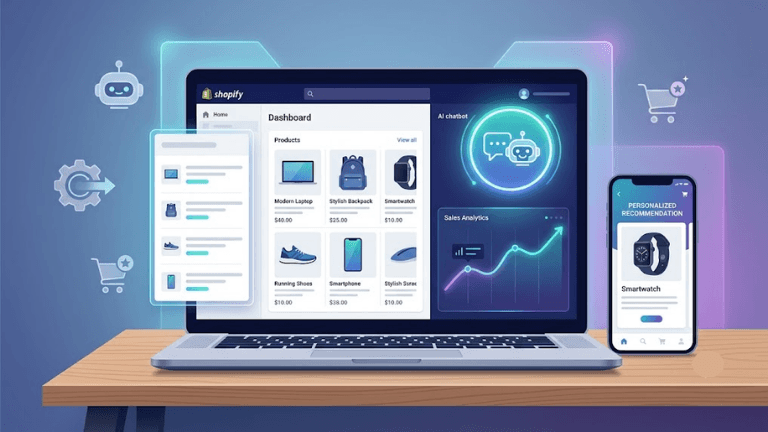
AI-powered personalization is now built directly into how stores function. Instead of every visitor seeing the same homepage, Shopify stores are using smart algorithms to show different products based on browsing behavior, past purchases, and even the time of day someone visits.
Voice and visual search are becoming common too. Customers are searching by uploading a photo of a product they liked, or simply asking a voice assistant to find something similar. Stores that haven't optimized for this are already falling behind.
Automated customer support through AI chatbots has also matured. These aren't the frustrating, robotic bots from a few years ago. They can now handle order tracking, returns, and even personalized recommendations without human intervention.
If you're a student wondering, "Is this something I can actually learn?", the answer is yes. You don't need a coding background to start understanding these tools. You just need the right guidance and a bit of curiosity.
Why This Matters for Students in Jalandhar
Here's something a lot of students don't realize until later: Jalandhar has a growing number of small businesses, boutique owners, and local brands that want to sell online but genuinely don't know where to start. This creates a real opportunity. If you understand how smart Shopify tools work, you're not just learning a skill for a resume, you're solving an actual problem people around you are facing.
Think about it this way. A local clothing brand in Jalandhar wants to launch online. They don't need someone who can just "build a website." They need someone who understands how to set up AI-based product recommendations, automate their inventory alerts, and use smart analytics to know which products are actually selling. That's a completely different skill set than what most people assume e-commerce work involves.
Common Doubts Students Have (And Honest Answers)
"Is this too technical for me if I'm from a non-tech background?"
Not at all. Most of these tools are designed to be used, not coded from scratch. If you can navigate an app on your phone comfortably, you can learn Shopify's smart features with proper training.
"Do I need to learn everything at once?"
No, and trying to do that usually backfires. Start with understanding how a Shopify store is structured, then move into automation tools, and only after that dive into AI-based personalization and analytics.
"Will this actually help me get a job or start something of my own?"
This is probably the most practical part. Businesses are actively looking for people who understand modern e-commerce tools, not just theoretical marketing concepts. Whether you want to freelance, work with an agency, or eventually run your own store, this knowledge translates directly into real opportunities.
Where Should You Actually Start?
If you're new to this, don't try to jump straight into advanced automation or AI dashboards. Start with the basics of how a Shopify store works: product listings, collections, payment setup, and basic store design. Once that feels comfortable, move on to understanding customer behavior through analytics. This is where a lot of beginners skip ahead too fast and end up confused later.
A common mistake students make is assuming that "smart technology" means complicated technology. In reality, most of these tools are built with simple dashboards and step-by-step setups. The real skill isn't memorizing every feature, it's understanding which tool solves which problem, and being comfortable enough to experiment without fear of "breaking something."
Another mistake is ignoring the local angle. If you're planning to work with businesses in Jalandhar, understanding regional buying habits, festival-based shopping trends, and local delivery expectations will set you apart from someone who only knows the technical side.
The Bigger Picture
E-commerce in 2026 isn't just about having an online store anymore. It's about having a smart one, one that personalizes the shopping experience, responds quickly to customer questions, and uses data to keep improving. For students in Jalandhar, this is a genuinely exciting time to step in. The demand for people who understand both the technical and practical sides of Shopify is only going to grow.
If you're someone who enjoys solving problems, understanding customer psychology, and working with tools that keep evolving, this space offers a lot of room to build a real career, not just a temporary skill.
Filed under
Keep reading
- From Zero to Live: Building a Business Website in One Day with WordPress | techcadd, JalandharWant your business online fast? Learn how techcadd in Jalandhar helps you plan, design, and launch a working WordPress website in just one day, no coding needed.
- Master the Top 5 Excel Formulas Every Office Worker Needs Daily | TechCADD Hands-On WorkshopExcerpt Stop wasting hours on manual data entry. Discover the 5 essential Excel formulas every professional relies on daily and learn how to apply them step-by-step with hands-on training at TechCADD.
- The New Digital Marketing Strategy for Jalandhar Businesses: SEO, Social Media & AIJalandhar businesses are shifting to smarter digital marketing—blending SEO, social media, and AI tools to reach customers faster and grow online in a competitive local market.
Comments
Loading…