On this page
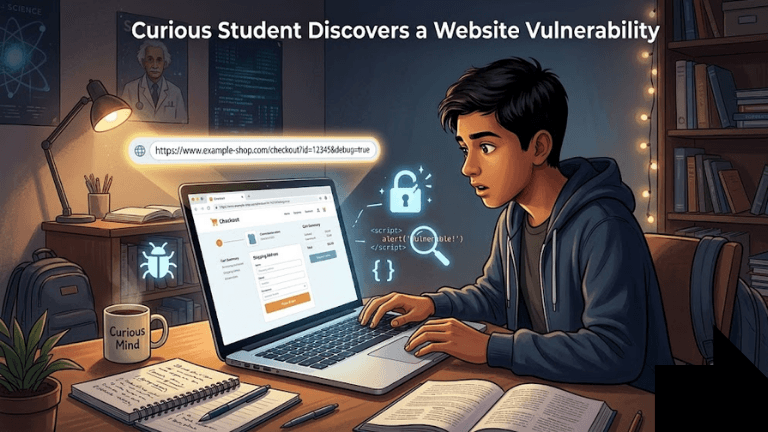
A Curious Teen, A Broken Login Page, and a Lesson for Every Student in Jalandhar
Last month, a story started doing the rounds in local tech circles here in Jalandhar — a 17-year-old boy, still in school, stumbled upon a security flaw on a small business website while just poking around out of curiosity. No fancy tools, no expensive course certificate hanging on his wall. Just a browser, some patience, and a habit of asking "wait, why does this work like that?"
He was trying to place an order on a local shop's website when he noticed something odd in the URL after checking out. Changing a single number in the address bar showed him someone else's order details. That's it. That was the flaw. Simple, almost embarrassingly so — and yet it exposed customer names, phone numbers, and order history to anyone who knew where to look.
Instead of exploiting it or posting screenshots online for clout, he did something a lot of professionals forget to do: he reported it responsibly to the business owner. No ransom, no drama. Just a message saying, "Hey, I think your site has a problem, and here's what I found."
This is the kind of moment that doesn't make national headlines, but it says a lot about where things are heading. Cybersecurity isn't some distant, mysterious field reserved for people in hoodies typing green text on black screens (thanks, movies). It's something a curious student in Jalandhar, with zero formal training, was able to stumble into on a random afternoon.
And that's exactly the point worth sitting with for a second — if a self-taught teenager can spot a real vulnerability just by paying attention, imagine what's possible when that same curiosity is paired with actual guidance, structure, and hands-on practice.
Why This Story Matters More Than It Seems
Here's the thing most people get wrong about cybersecurity — they think it's only about big companies, banks, or government systems getting hacked. But the reality is smaller and closer to home. Local businesses in Jalandhar, from clothing stores to coaching centers to small e-commerce setups, are building websites faster than they're securing them. And that gap is exactly where stories like this teenager's come from.
If you're a student reading this and thinking, "Okay, but I'm not a coding genius, is this even something I could do?" — that's a fair question, and the honest answer is yes. What that boy did wasn't advanced hacking. It was curiosity plus basic web knowledge plus the willingness to test something instead of just accepting how it looks on the surface. That's a mindset, not a superpower.
A lot of beginners assume cybersecurity requires years of programming experience before you can even start. In reality, understanding how websites communicate, how data moves between a browser and a server, and how small mistakes in that process create real risks — these are things you can start learning early, even in school or the first year of college.
What usually trips people up isn't the technical difficulty. It's not knowing where to begin, or trying to learn everything at once — network security, coding, ethical hacking tools — without a proper roadmap. That's when motivation fades and people quit within weeks.
The teenager's story also raises a quieter question that students in Jalandhar should be asking themselves: how many other websites around us have similar gaps, just waiting for someone with the right eye to notice them? Not to exploit — but to understand, report, and eventually build a career around fixing.
Turning Curiosity Into a Real Skill (And a Real Career)
So what happens after a moment like this? For most students, curiosity fades once the excitement wears off. But for the ones who take it seriously, this is usually where a real journey begins — moving from "I found something interesting" to "I want to actually understand this properly."
That's where structured learning makes all the difference. Self-teaching through random YouTube videos and scattered blog posts can only take you so far. At some point, you need someone to explain the fundamentals properly — how networks work, how vulnerabilities are actually classified, what ethical hacking really involves (and what it doesn't), and how to responsibly report issues instead of accidentally landing in legal trouble.
This is exactly the gap techcadd works with students on. Rather than throwing technical jargon at beginners, the focus stays on building from the ground up — starting with the basics of how websites and systems function, then moving into practical, hands-on cybersecurity skills that actually mean something in the real world. No unnecessary theory, no rushing students into advanced concepts before they're ready.
If you're a student in Jalandhar who read this story and felt that little spark — "I want to know how that works" — that spark is worth paying attention to. It's the same spark that started this teenager's story, and it's the same one that's led plenty of others into genuinely rewarding careers in cybersecurity, ethical hacking, and IT security.
You don't need to be a genius. You don't need a laptop full of hacking tools. You just need the right starting point, someone to guide the early steps, and enough consistency to keep going once things get a little challenging. That's really all this story is about — not a hacker, just a curious student who happened to look a little closer.
Filed under
Keep reading
- How Ethical Hacking Training Turned a Curious Mind Into a Cyber Professional in JalandharFrom curious beginner to confident cyber professional — discover how ethical hacking training in Jalandhar helped one student build real skills, land opportunities, and start a career in cybersecurity.
- From Confusion to Confidence: One Boy's Journey Into Generative AI at techcadd, Jalandhar A relatable story of a confused beginner who found clarity in Generative AI through techcadd's Jalandhar training — real struggles, real breakthroughs, and a path any student can follow.
- How a Jalandhar Student Used Generative AI to Launch Her Own Design BusinessA Jalandhar student turned her curiosity for generative AI into a real design business. Here's how she did it, what she learned, and how you can start too.
Comments
Loading…