Industrial Training in Full Stack Web Development in Jalandhar
Explore industrial training in full stack web development in Jalandhar at Techcadd. Learn frontend, backend, databases and APIs through practical projects.
Web development is a practical discipline where the ability to build, test and explain a working application matters as much as understanding programming concepts. Industrial Training in Full Stack Web Development in Jalandhar helps students connect their academic knowledge with the development practices used to create websites, portals and database-driven applications.
Techcadd Jalandhar offers a six-month Full Stack Development industrial training track that combines web development fundamentals, frontend programming, backend concepts, database integration, APIs and project work. The learning pathway is relevant to students who want to understand how complete applications are developed rather than concentrating on only one programming technology.
During training, learners can develop an understanding of how browsers communicate with servers, how frontend interfaces handle user interactions and how backend systems process application requests. Database operations, API integration, debugging and version control are introduced as parts of the wider development workflow.
Practical learning is particularly useful for B.Tech, BCA, MCA, B.Sc IT and diploma students who need to develop technical skills alongside their college studies. Students completing a university-required training semester should check the duration, attendance rules and documentation requirements with their academic department before enrolment.
The published six-month training pathway includes practical assignments, a project, training documentation and an internship letter. The exact technology specialisation, assessment process and documents applicable to a particular student should be confirmed with the Jalandhar centre.
Learners interested in JavaScript-based web applications can explore the MERN development pathway, which combines MongoDB, Express.js, React.js and Node.js. Students interested in Python-based backend development can also explore full-stack learning involving Python, Django and relational databases. The selected curriculum determines which tools and frameworks are covered in detail.
Techcadd Jalandhar also provides opportunities to discuss project requirements, training schedules and career preparation. Students can enquire about the current syllabus, available learning modes, fees and practical training expectations before choosing a batch.
The objective is to develop technical understanding supported by demonstrable work: a functioning application, organised source code, project documentation and the ability to explain development decisions. Students looking for industrial training in Jalandhar can use these outcomes to compare programmes and select a learning pathway that fits their academic requirements and career interests.
Understanding Full Stack Industrial Training
A development project normally involves several connected systems. The frontend presents information to users, backend services process requests and business rules, and databases store application data.
Industrial training introduces these areas through guided programming exercises and increasingly complex development tasks. Students can practise identifying requirements, writing code, testing functionality, debugging errors and documenting their work.
Unlike a short introductory workshop, a longer training period allows learners to work through development problems and understand how different application components interact.
Industrial training should not automatically be treated as employment. Students should confirm whether their college accepts supervised institute-based training for their required semester.
Six-Month Learning Roadmap
The published six-month industrial training framework follows a progression from technical fundamentals to a final project and career preparation.
Month 1: Establish programming and web development foundations, configure development tools and begin practical exercises.
Month 2: Develop core technical skills through supervised assignments, programming exercises and feedback.
Month 3: Practise intermediate development workflows, version control, debugging and a smaller project demonstration.
Month 4: Define the final project requirements, application structure, milestones and testing approach.
Month 5: Implement application features, connect components, resolve issues and document progress.
Month 6: Complete the capstone, review functionality, prepare documentation and present the project.
This describes the general six-month training framework. The exact allocation of frontend, backend and database modules must be confirmed against the current batch syllabus before enrolment.
Practical Web Development Training Environment
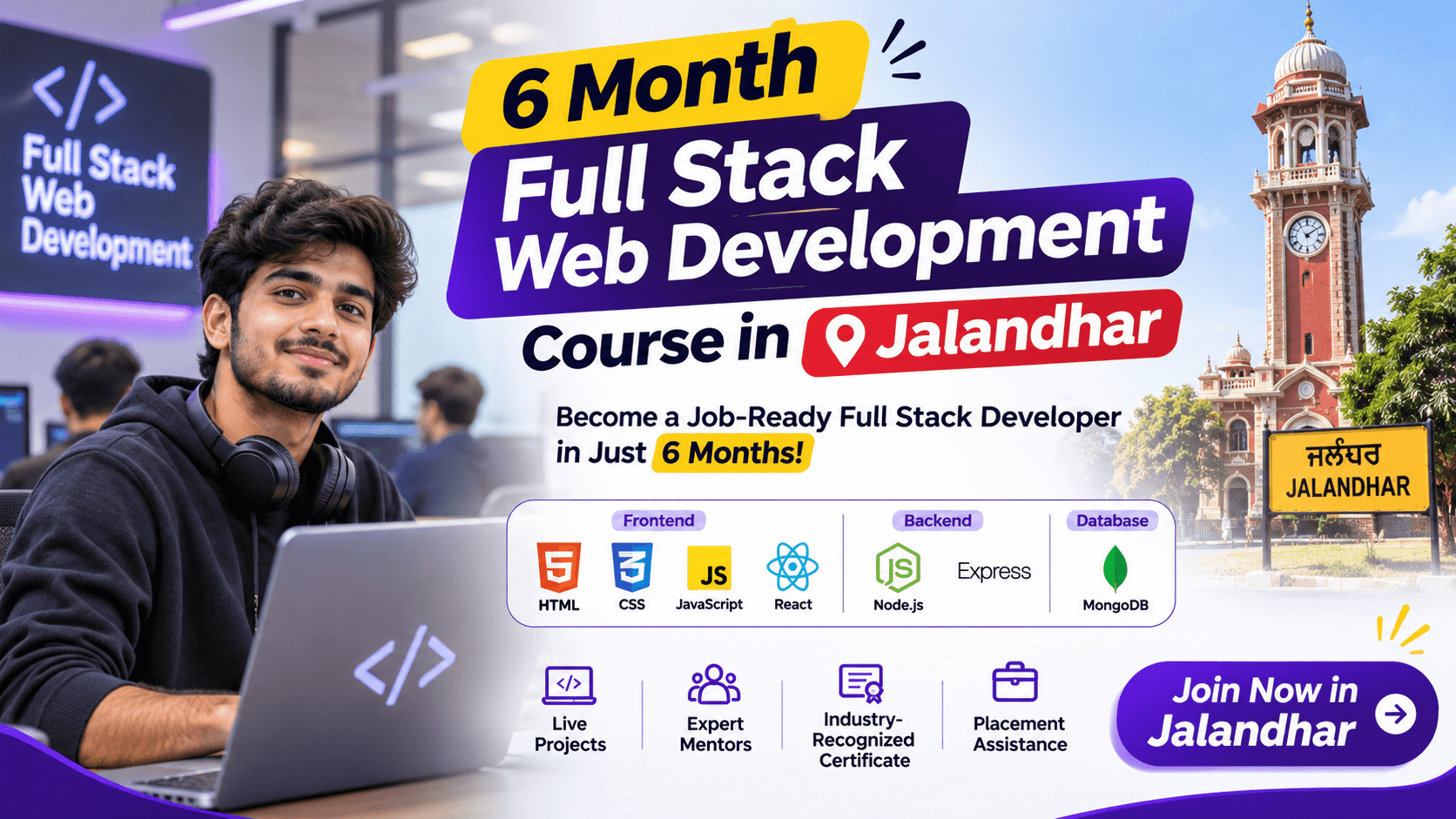
HTML, CSS and Responsive Website Development
The frontend foundation includes understanding how browsers interpret web pages and how developers organise structure and layout.
HTML concepts include semantic tags, form elements, tables and structured document layouts. CSS topics cover selectors, the box model, responsive layouts using flexbox and grid, and media queries for mobile, tablet and desktop displays.
Learners can practise converting design specifications into responsive web pages and ensuring layouts adapt across screen sizes.
Understanding HTML and CSS fundamentals helps students work more effectively when using frontend libraries later in the course.
JavaScript Programming and Interactive Interfaces
JavaScript introduces programming logic into web applications. Learners can work with variables, data types, functions, conditional statements and loops.
DOM manipulation, event handling, form validation and asynchronous operations using promises and fetch or async/await are introduced as practical building blocks for dynamic pages.
Students can write JavaScript to handle user actions, validate input before submission, update page content without a full reload and communicate with external services.
Proficiency in vanilla JavaScript makes it easier to understand modern component-based frameworks and backend JavaScript runtime environments.
Frontend Frameworks and Application Architecture
Modern applications often use component-based approaches to organise interactive interfaces.
In a JavaScript-centric pathway such as MERN, React.js is commonly used to build user interfaces through modular components, state management and props.
Learners can explore component lifecycles or hooks, client-side routing, form handling, error handling and passing data between application views.
Students should check the specific frontend framework included in their batch syllabus, as some tracks may focus on React while others cover alternative frontend tools.
Server-Side Programming and Application Logic
Backend programming handles requests, processes application data and applies the rules that allow websites and applications to function.
The training framework introduces server-side concepts such as routing, request handling, authentication, validation and structured responses.
Depending on the selected specialisation, learners may study Node.js and Express.js or Python and Django.
Students should confirm their preferred backend language before joining so the selected pathway matches their academic project and technical interests.
Database Management and CRUD Operations
Data-driven applications need a way to store, retrieve and manage information. Database learning introduces schema design, table or collection structures, queries and data relationships.
Depending on the technology track, students may work with relational databases such as MySQL or document databases such as MongoDB.
Practical exercises include writing queries to create, read, update and delete application records.
Connecting a backend application to a database allows students to understand how user submitted data is validated, stored and returned to the frontend.
REST APIs and Frontend-Backend Integration
APIs allow different parts of an application to exchange data through defined interfaces.
Students can learn how frontend code sends HTTP requests to backend endpoints and how backend routes return JSON data or error messages.
Concepts include HTTP verbs (GET, POST, PUT, DELETE), status codes, request headers, request bodies and basic authentication tokens.
Integration exercises help learners trace an action from a user clicking a button in the browser to the backend service handling the request and the database storing the result.
Full Stack Application Development Workflow
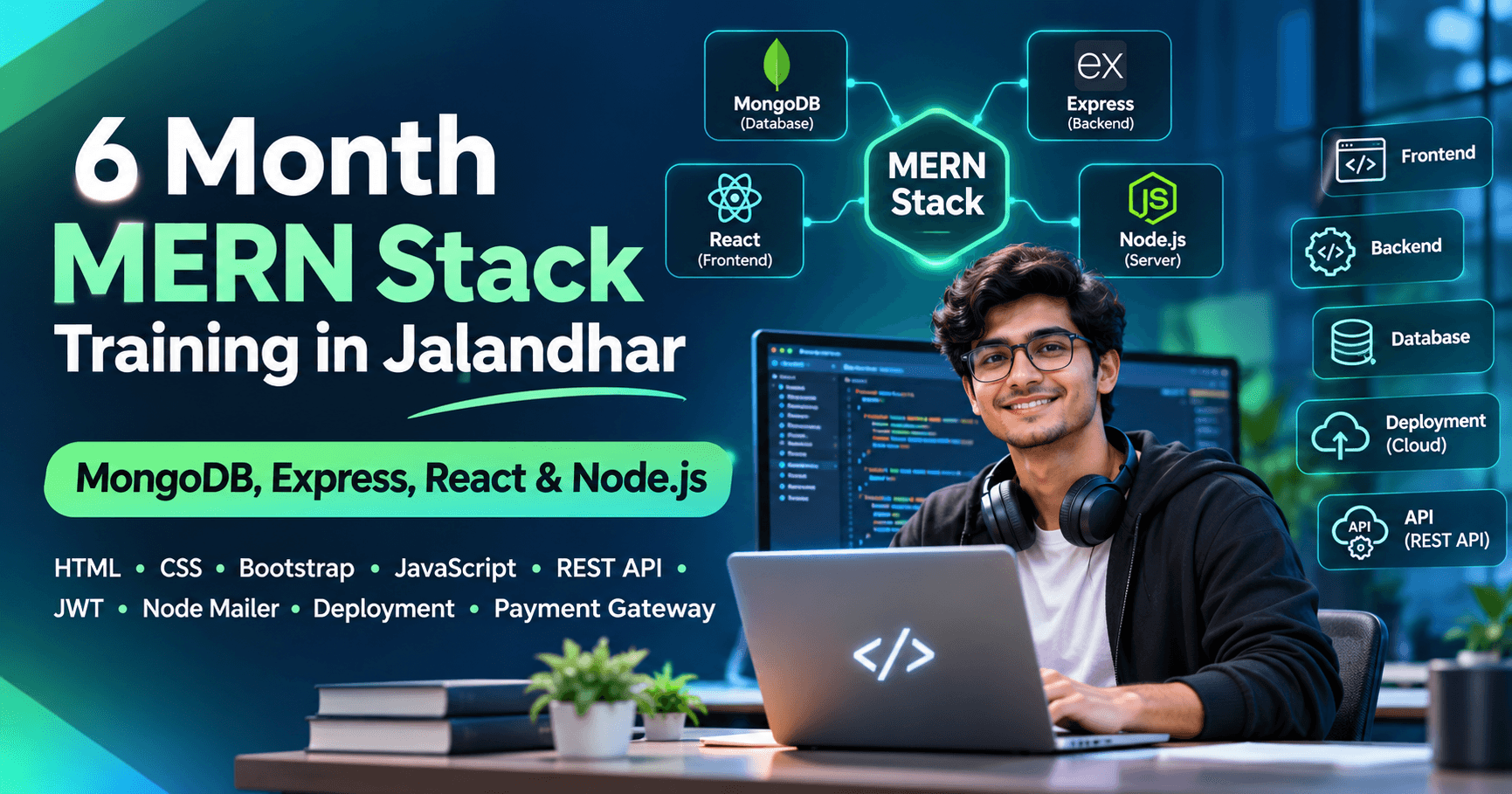
Live Projects and Capstone Development
Project work provides an opportunity to apply multiple programming concepts to one functioning application.
Depending on the selected track and approved project requirements, students may work on a student management system, product catalogue, inventory application, booking interface or an e-commerce application.
A complete project may involve responsive pages, user input, application logic, API integration and database operations.
Project work also involves debugging, testing, documenting functionality and explaining implementation decisions.
The final project topic, team structure and assessment requirements should be confirmed with the training mentor. A classroom simulation should not be presented as a commercial client project unless it was genuinely completed for a client.
Git, GitHub and Professional Development Practices
Version control helps developers track changes and organise source code during a project.
Students can practise initialising repositories, staging files, creating commits, creating branches and resolving simple merge conflicts.
Using GitHub or similar platforms introduces workflows for hosting code repositories, writing clear README documentation and showcasing project work.
Learning how to structure repository files, write descriptive commit messages and organise project assets is useful preparation for working in a team or sharing code with prospective employers.
College Training Reports and Completion Documents
Students completing an industrial training semester may need documentation for their college or university.
The published six-month Full Stack Development track includes a training report and internship letter, alongside completion certification subject to programme requirements.
Academic departments may also require attendance evidence, a project synopsis, source code, progress records, a final presentation or a viva.
Students should obtain their department's training guidelines before registering and confirm the exact documents, formats, attendance conditions and submission dates with Techcadd.
Acceptance of industrial training for academic credit is determined by the student's institution and should not be assumed automatically.
Training Eligibility for College Students
The Full Stack Development pathway can be relevant to learners from different educational backgrounds.
B.Tech CSE and IT students: Connect software engineering and programming concepts with practical application development.
BCA and B.Sc IT learners: Strengthen programming, web development and database knowledge.
MCA students: Explore broader application architecture, project planning and advanced development decisions.
Diploma students: Develop core programming skills through a structured practical pathway.
Graduates and career changers: Explore suitable options after confirming their starting level and eligibility.
Students enrolled in university-required training should verify the permitted duration and training format with their college.
Classroom, Online and Training Schedule Options
Techcadd's published Full Stack Development programme lists classroom, online and one-to-one learning formats.
The Jalandhar centre also advertises scheduling options intended to accommodate students and working professionals.
Availability depends on the programme, specialisation and batch.
Before enrolment, students should confirm the joining date, daily class hours, practical lab schedule, training attendance requirements, examination conflicts and any online components.
The selected format must also satisfy the requirements of the student's college or university.
Career Preparation and Portfolio Development
Completing a technical training programme can provide a foundation for exploring software and web development careers.
Depending on their programming knowledge and practical project experience, learners may consider entry-level opportunities related to frontend development, backend development, web development, software testing or junior full-stack development.
The published six-month pathway includes placement assistance and opportunities for portfolio and interview preparation.
Students can strengthen their applications by maintaining useful repositories, documenting projects and practising explanations of their own code.
Employment outcomes depend on individual ability, experience, interview performance and employer requirements. Placement assistance does not guarantee employment.
Training at Techcadd Jalandhar
The Jalandhar centre offers a local option for students seeking practical technology training and project-based learning.
Learners from nearby areas, including Phagwara, Kapurthala, Nakodar, Adampur, Kartarpur and Hoshiarpur, may consider the centre depending on travel time and batch availability.
The published centre location is 2nd Floor, Crystal Plaza, SCS 78, Opposite PIMS Hospital, Jalandhar, Punjab 144001.
Students can contact the Jalandhar team on +91 98881 22254 to enquire about training tracks, eligibility, the current syllabus and admission procedures.
Full Stack Development Learning Resources
Explore articles and resources about full-stack programming, JavaScript, React, Node.js, databases, live projects and industrial training for college students:
6 Month Full Stack Web Development Training in Jalandhar — Overview of full stack curriculum and practical batches.
6 Month MERN Stack Training in Jalandhar: MongoDB, Express, React & Node.js — Specialized MERN stack training details.
Why Join 6 Month Industrial Training in Jalandhar? — Benefits of industrial training for engineering and diploma students.
How Techcadd Jalandhar Makes 6 Month Industrial Training Job-Ready — Practical training methodology and portfolio preparation.
6 Months Training in Jalandhar with Certificate — Details on training certification and university documentation.
Explore Your Full Stack Industrial Training Options
Develop frontend, backend and database skills through a structured industrial training pathway. Contact Techcadd Jalandhar to discuss the current six-month syllabus, available specialisations, project requirements and batch schedule.
Get Training DetailsHave a questionabout this?
Leave your number and a counsellor will call you back — about batch timings, fees, EMI options, placement record, or which track fits your degree.
- Free career counselling, no registration fee
- Weekday, evening, weekend or 1-on-1 batches
- Internship letter and placement support
Ready to get started?
Start building yourcareer today.
Talk to a counsellor today. One call is usually enough to know which track fits your degree, your schedule and the job you want.
- Free career counselling
- No registration fee
- Placement support included