Web Development Training in Jalandhar | techcadd
Learn web development in Jalandhar at techcadd. Master HTML, CSS, JavaScript, PHP, MySQL, responsive website design through practical training and projects.
On this page
- Learn Web Development from Basic to Advanced
- Course Overview
- Front-End Web Development Training
- Responsive Website Design
- Back-End Web Development Training
- MySQL Database Training
- Practical Project-Based Learning
- Why Choose techcadd for Web Development Training?
- Who Can Join Web Development Training?
- Career Opportunities After Web Development Training
- Build Your Web Development Portfolio
- Future Scope of Web Development
- Enroll in Web Development Training in Jalandhar
A strong online presence has become essential for businesses, organizations, educational institutes, and individuals. Websites are no longer used only to share information; they are now important tools for communication, branding, online selling, customer support, and business growth. The demand for skilled web developers is increasing as more companies move their services and operations to digital platforms. techcadd offers Web Development Training in Jalandhar for students, beginners, graduates, freelancers, and working professionals who want to learn how to create modern, responsive, and functional websites.
Web development is the process of designing, developing, testing, and maintaining websites and web applications. It includes different technologies such as HTML, CSS, JavaScript, Bootstrap, PHP, MySQL, and other development tools. Through practical training, learners can understand how websites work, how web pages are structured, how user interfaces are designed, and how dynamic websites connect with databases.
Learn Web Development from Basic to Advanced
The Web Development Training in Jalandhar at techcadd is designed with a step-by-step learning approach. Beginners can start with the fundamentals of website development, while learners with basic knowledge can improve their existing skills through advanced concepts and practical projects. The course focuses on both front-end and back-end development so that students can understand the complete website development process.
The training begins with the structure of web pages and gradually moves toward styling, responsive layouts, interactive features, server-side programming, and database connectivity. Students are encouraged to practice every topic by creating real website pages and small applications.
Course Overview
The course provides knowledge of important web development languages, frameworks, software, and tools used in the industry. Students learn how to plan a website, create its layout, add content, improve its appearance, introduce interactive features, and connect it with a database.
Important topics covered during the training include:
Introduction to web development
How websites and web applications work
HTML tags, elements, attributes, and forms
HTML5 semantic elements
CSS styling and selectors
Colors, fonts, borders, margins, and padding
Website layouts using Flexbox and Grid
Responsive website design
Media queries and mobile-friendly layouts
JavaScript basics and programming logic
Variables, operators, functions, and conditions
Arrays, loops, and objects
JavaScript events and form validation
DOM manipulation
Bootstrap framework
Website navigation and page linking
Images, videos, tables, and multimedia
PHP fundamentals
Forms and form processing
PHP variables, conditions, loops, and functions
Sessions and cookies
MySQL database concepts
Database creation and management
SQL queries and database connectivity
CRUD operations
Website testing and debugging
Git and GitHub basics
Website hosting and deployment
Practical website development projects
Front-End Web Development Training
Front-end development focuses on the part of a website that users see and interact with. It includes the website layout, navigation menus, buttons, images, forms, typography, colors, and responsive design. techcadd’s web development training helps students understand how to create attractive and user-friendly web pages.
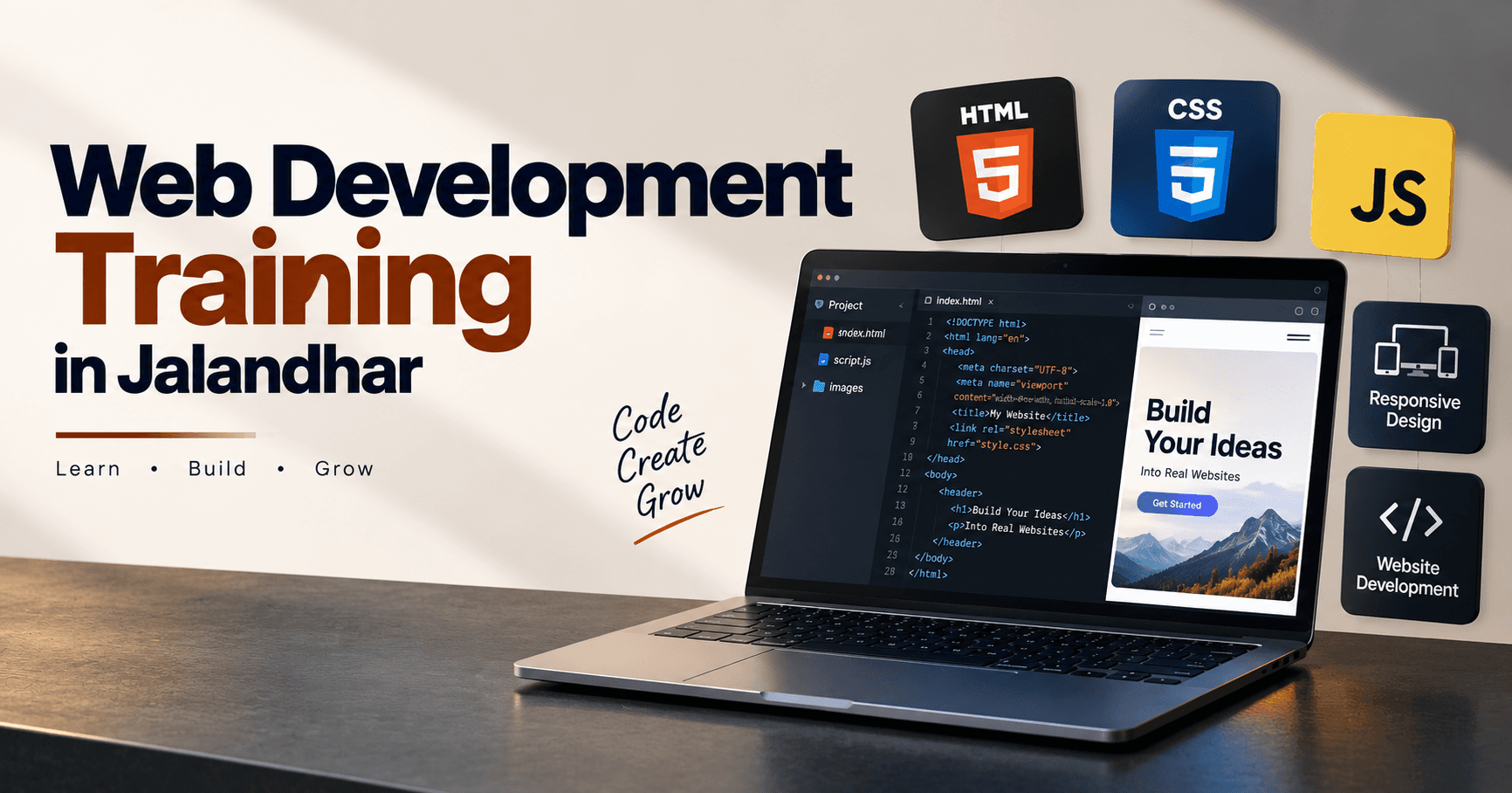
HTML is used to create the basic structure of a website. Students learn how to create headings, paragraphs, links, images, lists, tables, forms, and different sections of a web page. They also learn about semantic HTML elements that help organize website content properly.
CSS is used to design and style web pages. Learners practice working with fonts, colors, backgrounds, borders, spacing, alignment, positioning, and layout systems. They also learn how to create responsive designs that adjust according to desktop, tablet, and mobile screen sizes.
JavaScript is introduced to make websites interactive. Students learn how to create dynamic menus, image sliders, form validation, buttons, pop-ups, calculators, and other interactive features. These skills help learners build websites that provide a better user experience.
Responsive Website Design
Most users access websites through mobile phones, tablets, laptops, and desktop computers. Therefore, responsive design is an important part of modern web development. A responsive website automatically adjusts its layout and content according to the screen size.
During the course, students learn how to create mobile-friendly websites using flexible layouts, media queries, responsive images, and Bootstrap components. They practice designing pages that remain easy to use on different devices. Responsive design skills are useful for developing business websites, blogs, portfolios, online stores, educational websites, and web applications.
Back-End Web Development Training
Back-end development manages the server-side functions of a website. It handles form submissions, user accounts, database operations, login systems, records, and other processes that are not directly visible to website visitors.
Students at techcadd learn the basics of PHP for creating dynamic websites. They understand how PHP works with HTML forms, how data is processed on the server, and how websites can display information dynamically. The training also introduces sessions, cookies, form handling, validation, and basic security practices.
PHP is useful for developing different types of websites and web applications. It can be used to create registration forms, login pages, contact forms, admin panels, content management systems, and database-driven websites.
MySQL Database Training
Many modern websites require a database to store and manage information. Examples include customer details, product records, student information, user accounts, orders, and contact form submissions. MySQL is commonly used with PHP for developing dynamic websites.
The Web Development Training in Jalandhar includes basic database concepts and SQL queries. Students learn how to create databases and tables, insert records, update information, delete records, and retrieve data. They also learn how to connect a PHP website with a MySQL database.
Database-related topics may include:
Creating databases and tables
Understanding rows and columns
Primary keys and data types
INSERT, SELECT, UPDATE, and DELETE queries
Searching and filtering records
Form data storage
Database connectivity
Displaying database records on web pages
Basic database management
This practical knowledge helps students develop websites that can store and manage real information.
Practical Project-Based Learning
Practical projects are an important part of web development training because they help students apply programming concepts in real situations. At techcadd, learners can work on different website projects based on their skill level. These projects help students improve coding ability, problem-solving skills, creativity, and confidence.
Possible training projects include:
Personal portfolio website
Business website
Educational institute website
Restaurant website
Blog website
Registration and login system
Student management system
Product catalogue website
Online fashion store
Basic e-commerce website
Contact management system
Dynamic news or content website
While working on projects, students learn how to organize files, create multiple web pages, connect forms, manage website navigation, and test website functionality. Project-based learning also helps learners prepare a portfolio for internships and job applications.
Why Choose techcadd for Web Development Training?
techcadd provides practical and career-focused training for learners who want to build a strong foundation in website development. The course is structured to make technical concepts easier to understand through demonstrations, assignments, coding practice, and projects.
Benefits of joining techcadd include:
Beginner-friendly course structure
Practical classroom training
Step-by-step explanation of coding concepts
Training in front-end and back-end development
Hands-on website development assignments
Guidance from experienced trainers
Practice with industry-relevant tools
Project-based learning
Coding error correction and debugging support
Portfolio development guidance
Career guidance for web development roles
Students can practice regularly, ask questions, and improve their coding skills under trainer guidance. The practical learning environment helps learners understand how different technologies work together to create complete websites.
Who Can Join Web Development Training?
The course is suitable for students and professionals from different educational backgrounds. It can be helpful for:
Students after 10th or 12th
College students
BCA and BSc students
BTech and computer science learners
Graduates from any stream
Beginners interested in coding
Freelancers
Digital marketing learners
Graphic designers
Business owners
Working professionals
Students preparing for internships
Basic computer knowledge is helpful, but beginners can also start the course with proper guidance and regular practice.
Career Opportunities After Web Development Training
Web development skills can open opportunities in software companies, IT organizations, digital agencies, educational institutes, e-commerce businesses, and freelance markets. After completing the training and developing a good portfolio, students can apply for entry-level roles or internships.
Possible career profiles include:
Junior Web Developer
Front-End Developer
Back-End Developer
PHP Developer
Website Designer
Web Application Developer
WordPress Website Developer
UI Developer
Junior Software Developer
Freelance Web Developer
Website Maintenance Executive
Students can also work independently by creating websites for local businesses, shops, educational institutes, professionals, and startups. With experience, they can learn advanced frameworks, APIs, content management systems, e-commerce development, and full-stack development.
Build Your Web Development Portfolio
A portfolio helps employers and clients understand a learner’s practical abilities. During the course, students can create and organize their best projects in a professional portfolio. The portfolio may include website screenshots, project descriptions, technologies used, features, and links to live demonstrations when available.
A good web development portfolio can include a responsive business website, a personal portfolio, a dynamic PHP project, a database-driven application, and a basic online store. Creating different types of projects demonstrates that the learner understands layout design, coding, functionality, and database management.
Future Scope of Web Development
The future scope of web development is broad because websites and web applications are used in almost every industry. Businesses require websites for marketing, customer communication, online bookings, product sales, and service management. Educational institutes, hospitals, banks, media companies, and government services also depend on web-based platforms.
Learners can expand their skills by studying advanced JavaScript, React, Node.js, Laravel, WordPress, APIs, cloud hosting, cybersecurity, UI/UX design, and e-commerce development. Combining web development with digital marketing, SEO, graphic designing, or database management can provide additional career opportunities.
Enroll in Web Development Training in Jalandhar
If you want to learn how to design, develop, and manage websites, techcadd offers Web Development Training in Jalandhar with practical learning, coding assignments, and project-based training. The course helps beginners understand web technologies and prepares learners to create responsive, dynamic, and user-friendly websites.
Join techcadd to strengthen your programming skills, develop real website projects, build a professional portfolio, and prepare for opportunities in web development, software services, freelancing, and the digital industry.
Web Development Training in Jalandhar
Learn HTML, CSS, JavaScript, responsive design, and website development through practical training at Techcadd Jalandhar.
Have a questionabout this?
Leave your number and a counsellor will call you back — about batch timings, fees, EMI options, placement record, or which track fits your degree.
- Free career counselling, no registration fee
- Weekday, evening, weekend or 1-on-1 batches
- Internship letter and placement support
Ready to get started?
Start building yourcareer today.
Talk to a counsellor today. One call is usually enough to know which track fits your degree, your schedule and the job you want.
- Free career counselling
- No registration fee
- Placement support included