After 12th 6-Month Cyber Security Certificate Program in Jalandhar
Six months from your first Linux install to an industry-level AI security platform — ethical hacking and web security, SOC and SIEM operations, cloud security and DevSecOps, digital forensics and incident response, with AI automation throughout.
Cyber Security Certificate Program Course in Jalandhar
A 6-month AI-Powered Cybersecurity certificate programme for school leavers at techcadd Jalandhar (4.9★, 556+ reviews): networking and system administration, ethical hacking and web security, Active Directory, SOC and SIEM with Wazuh, Splunk and the ELK Stack, cloud security and DevSecOps, digital forensics, malware analysis and incident response, plus Python and AI security automation. 15+ labs, 8+ mini projects and one industry AI security capstone.
Key Highlights :
- Duration: 6 Months
- Mode: Classroom & 1-on-1
- Eligibility: 12th Pass
- Includes: Placement Support

Course Overview
techcadd's 6-Month AI-Powered Cybersecurity certificate programme in Jalandhar is written for someone starting straight after 12th, with month one assuming no science stream, no Linux and no prior coding. It sits between the three-month programme and the nine-month diploma, adding a full month of digital forensics, malware analysis and incident response, and a full month of cloud security and DevSecOps, on top of what the shorter track covers. Classes run in classroom or 1-on-1 mode, two hours a day, over six months, ending in placement support.
Month one covers cybersecurity foundations and networking — the CIA triad, types of cyber attack, Windows and Linux administration, the OSI and TCP/IP models, subnetting, routing, DNS, DHCP, NAT and VPN, virtualisation with Kali Linux and Windows Server, Git and GitHub, and AI tools such as ChatGPT, Gemini and GitHub Copilot for cybersecurity work. Month two moves into ethical hacking and web security — OSINT, Nmap, Wireshark, Nikto, Gobuster and Nuclei, the OWASP Top 10, and Burp Suite Professional. Month three is advanced ethical hacking and the SOC: Metasploit, Active Directory and Group Policy, SIEM with Wazuh, Splunk and the ELK Stack, and threat hunting against MITRE ATT&CK. Month four covers cloud security and automation across AWS and Azure, Docker and Kubernetes security, DevSecOps, and Python security automation with the OpenAI and Gemini APIs.
Month five is digital forensics, malware analysis and incident response — evidence collection and chain of custody, memory and disk analysis, static and dynamic malware analysis, and the full incident response cycle from detection through lessons learned. Month six is the industry capstone and placement preparation: one AI-powered security platform, documented and deployed with security hardening, alongside resume, LinkedIn, GitHub and mock-interview preparation.
All offensive exercises run on your own virtual lab, on deliberately vulnerable applications such as DVWA and OWASP Juice Shop, and on TryHackMe, Hack The Box, the PortSwigger Web Security Academy and OverTheWire — systems you are permitted to test, with a trainer supervising throughout. Each month ends with named mini projects, from a home cybersecurity lab and a Wazuh deployment to an AI security assistant and the final industry capstone.
The programme is written against roles such as SOC Analyst L1/L2, Cybersecurity Analyst, VAPT Engineer, Threat Hunter, Incident Response Analyst, Malware Analyst, Digital Forensics Analyst, Cloud Security Engineer and DevSecOps Engineer, plus newer AI Security Engineer and AI SOC Analyst titles. A fresher who finishes with documented labs and a deployed capstone typically starts around ₹18,000–₹30,000 a month in the Jalandhar market.
What You'll Learn
Every module ends in something you have built and a trainer has reviewed, so the list below is work you will have done rather than topics you will have heard about.
- 01
A SOC you can operate
Wazuh deployed by you, plus Splunk and the ELK Stack with real log collection, mapped to MITRE ATT&CK — and a threat hunting report written from what you found.
- 02
Forensics and incident response
Evidence collection with chain of custody, memory and disk analysis, malware sandboxed and profiled, and the full detection-to-lessons-learned cycle. The month that most short courses do not have.
- 03
Cloud secured and automated
AWS IAM, S3, CloudTrail and security groups, Azure Defender and Security Center, Docker and Kubernetes hardening, with CI/CD security, SAST, DAST and secret management.
- 04
An industry AI security capstone
One platform built on the OpenAI or Gemini API, documented with architecture and a user manual, pushed to GitHub and deployed to the cloud or in Docker with security hardening.
Course Curriculum
The syllabus is a six-month calendar of six modules per month, and each of the first five months ends in named mini projects. Months 1–2 build the foundations and the offensive side, month 3 is advanced hacking and the SOC, month 4 is cloud security and automation, month 5 is digital forensics, malware analysis and incident response, and month 6 is the industry capstone and placement preparation.
Month 1 — Cybersecurity Foundations & Networking
- 1
Cybersecurity Fundamentals — introduction to cybersecurity, CIA triad, types of cyber attacks, cybersecurity domains, threat landscape, cybersecurity careers
- 2
Computer Fundamentals — hardware, operating systems, Windows administration, Linux administration, file systems, user management
- 3
Networking Fundamentals — OSI model, TCP/IP model, IP addressing, subnetting, routing, switching, DNS, DHCP, NAT, VPN
- 4
Virtualization — VMware, VirtualBox, Kali Linux installation, Windows Server installation
- 5
Git & GitHub — Git basics, GitHub workflow, version control
- 6
AI for Cybersecurity — ChatGPT, Gemini, GitHub Copilot, prompt engineering, AI research techniques
- 7
Mini projects: home cybersecurity lab, secure Linux installation, network documentation, password policy implementation
Tools you will actually work in
Everything here is installed on the lab machines and used on live client work, not shown once in a slide and forgotten.
- WSCPNmSQGONINUHYJTANWASPESSYMAAWSAZPOGPTGGCRAUTRHTPAOVVS
Who can do this course
Students straight out of 12th
Any stream. Month one begins at the CIA triad and computer hardware and ends with your own cybersecurity lab on VMware or VirtualBox — the environment every later exercise runs in.
Students aiming at a SOC floor
Month three is a full month of SOC work — Wazuh, Splunk, the ELK Stack, MITRE ATT&CK, detection engineering — and month five adds the incident response cycle. That combination is what an L1 analyst is actually hired to do.
Students doing a degree alongside
Six months of evenings or weekends runs comfortably beside a BCA, B.Sc IT or first-year B.Tech, and finishes with a documented capstone well before campus placements begin.
Anyone drawn to forensics or malware
Month five is the reason to choose this over the three-month track: evidence collection, chain of custody, memory and disk analysis, static and dynamic malware analysis and sandboxing are not covered in any shorter programme.
IT support staff and career switchers
Weekend batches exist for people already working. If you handle desktops or networks today, month one will feel familiar and the cloud and DevSecOps work in month four is the fastest route to a better title.
Self-taught learners
If TryHackMe rooms left you able to follow a walkthrough but not to write the report afterwards, what changes here is a trainer reading your work each week and eight mini projects with deadlines attached.
Six Months, Both Sides of the Fence, and an AI Security Platform You Built
- 15+ hands-on labs, 8+ mini projects and one industry-level AI security capstone — on legal targets, under supervision.
- SOC Analyst and security roles in Punjab start around ₹18,000 – ₹30,000 a month for a fresher with documented work.
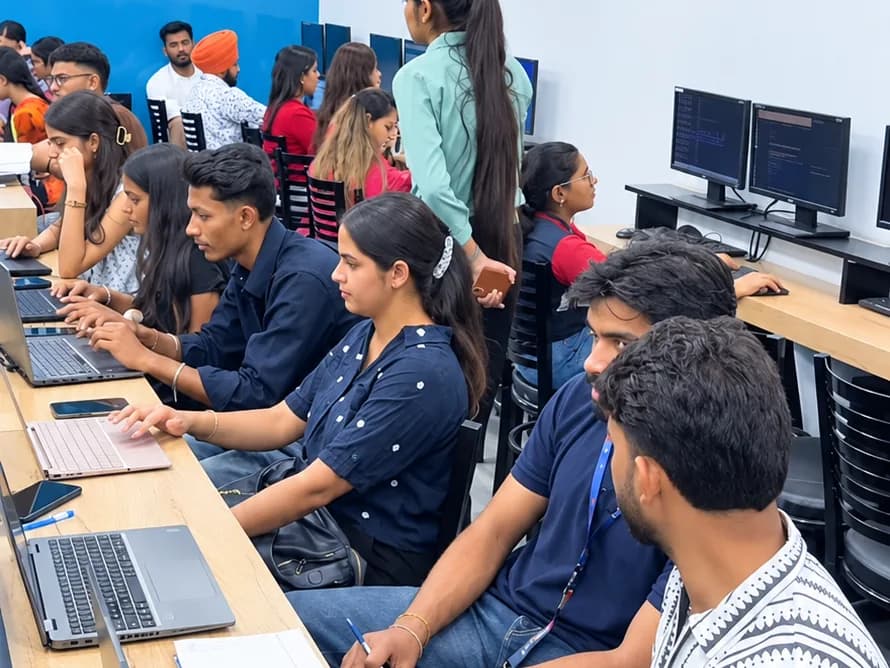
Get certified in Cyber Security Certificate Program
Complete the course with a portfolio of live projects and receive an industry-recognised certificate, plus a documented internship letter accepted by Punjab universities.
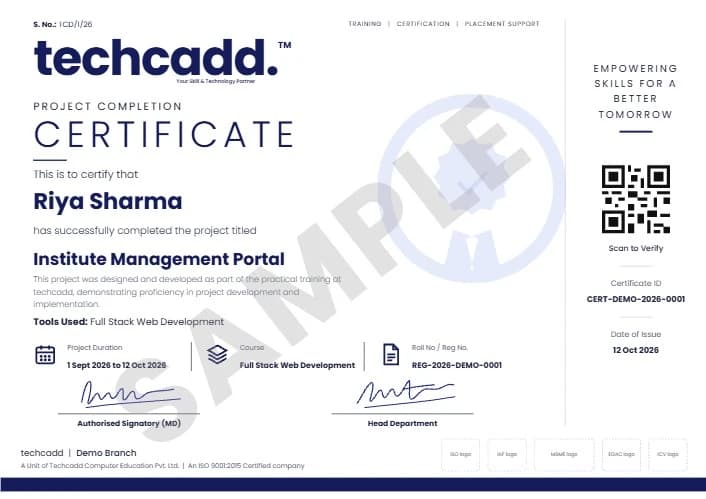
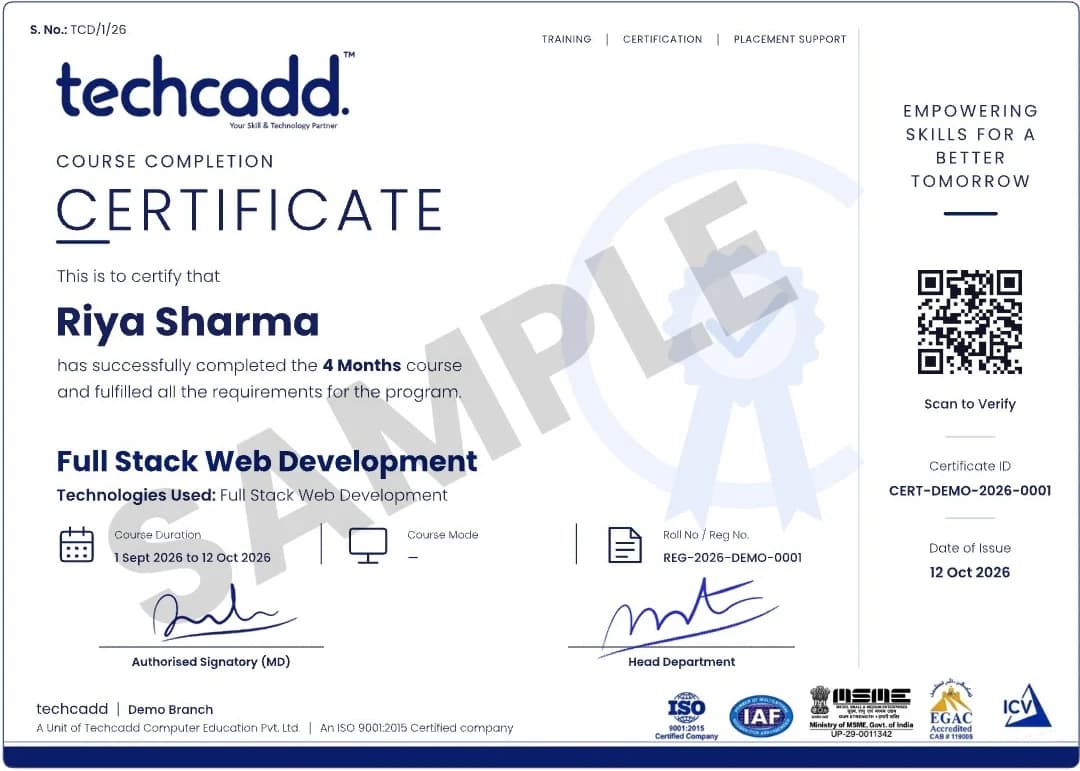
Two certificates on completion — the course certificate and a separate capstone project certificate.
Where this course takes you
The roles this opens, what they pay in Punjab and beyond, and who is hiring for them — the same figures our free Salary Estimator publishes, not a brochure number.
Build and manage a cybersecurity lab; perform reconnaissance, vulnerability assessment and web application testing with Nmap, Wireshark, Nuclei and Burp Suite Professional; deploy and operate a SIEM in Wazuh, Splunk and the ELK Stack with log collection and analysis; hunt threats using MITRE ATT&CK, IOCs and detection engineering; secure AWS and Azure environments and apply DevSecOps practice with SAST, DAST and secret management; conduct digital forensics and malware analysis and run an incident response cycle; automate security work in Python and build AI security tooling on the OpenAI and Gemini APIs; and deliver a documented, deployed industry AI security capstone.
SOC Analyst L1/L2, Cybersecurity Analyst, Penetration Tester, Ethical Hacker, VAPT Engineer, Security Engineer, Threat Hunter, Incident Response Analyst, Malware Analyst, Digital Forensics Analyst, Cloud Security Engineer, DevSecOps Engineer, Security Consultant, Red Team Operator, Blue Team Analyst, Purple Team Analyst, GRC Analyst, and the newer AI Security Engineer, AI SOC Analyst and AI Security Automation Engineer titles. Straight after 12th, SOC Analyst L1 is the usual first step.
A fresher with documented labs and a deployed capstone typically starts around ₹18,000 – ₹30,000 a month in the Jalandhar market. A year or two on a real alert queue usually doubles that, and specialists in forensics, cloud security or AI security automation move well beyond it — those are the roles employers currently struggle hardest to fill.
All three start from zero. Three months covers foundations, ethical hacking, web security, SOC and SIEM basics, cloud fundamentals and an AI capstone. Six months — this one — adds Active Directory and Group Policy, the ELK Stack and detection engineering, a full month of cloud security and DevSecOps, and a full month of digital forensics, malware analysis, incident response and threat intelligence with STIX and TAXII. Nine months adds two full months on the capstone instead of one, plus a complete month of DSA-style technical preparation, SOC analyst drills, aptitude and mock interviews.
Because an alert is only the beginning. Employers hiring an analyst want to know you can collect evidence without contaminating it, preserve chain of custody, profile a suspicious binary in a sandbox and take an incident from detection through containment to a lessons-learned write-up. Month five is a whole month on exactly that, and it is the clearest difference between this programme and a short course.
Yes. Vulnerability assessment and penetration test reports are billable work anywhere, and a Jalandhar address costs you nothing on a remote brief. Month two teaches the professional reporting standard those engagements are judged on, and the cloud and automation work in month four is what lets one person maintain several client environments.
Hands-on projects you will ship
Home Cybersecurity Lab
Month one's build: Kali Linux and Windows Server virtualised on VMware or VirtualBox, with a secure Linux installation, documented network and an implemented password policy.
DVWA & Juice Shop Assessments
Two deliberately vulnerable applications worked end to end in Burp Suite Professional — SQL injection, XSS, CSRF, file upload and authentication bypass against the OWASP Top 10.
Professional Vulnerability Report
A network scanned with Nmap and Nuclei, traffic read in Wireshark, findings written to a professional standard — with AI report generation speeding the write-up, not replacing your judgement.
Wazuh Deployment & Threat Hunting Report
A SIEM you deployed yourself with real log collection, an AI log analyser over it, and a threat hunting report built on MITRE ATT&CK, IOCs and detection engineering.
AI Security Assistant & Cloud Assessment
Python automation on the OpenAI and Gemini APIs producing a security assistant and an automated vulnerability scanner, plus a cloud security assessment across AWS and Azure.
Industry AI Security Capstone
One platform in month six — an AI SOC platform, threat hunting platform, vulnerability scanner, security automation platform or security chatbot — documented with architecture and a user manual, pushed to GitHub and deployed with security hardening. This is the one interviewers ask about.
Learn it. Build it. Make it yours.
Every project moves through the same loop: understand the brief, build with guidance, then explain the decisions behind your work.
Understand
Break a real requirement into a clear plan and the right tools.
Home Cybersecurity LabBuild
Work hands-on with trainer feedback while the decisions are still easy to change.
DVWA & Juice Shop AssessmentsPresent
Turn the finished work into a portfolio story you can defend in an interview.
Professional Vulnerability ReportWhy students choose techcadd
There are many places to learn security in Jalandhar and the brochure syllabus looks similar at all of them. What differs is who teaches, whether you ever touch the real tools, whether the AI topics are more than a demo video, and whether anyone picks up the phone after you have paid. techcadd has trained students across Punjab since 2016 on the same model: small batches, working practitioners as trainers, supervised lab work as coursework.
Trainers who still do the work
Your trainer is not a full-time lecturer. They handle security work for techcadd's services arm, so the examples in class are current rather than a case study from five years ago.
A lab you actually build
Month one ends with your own virtualised lab running Kali Linux and Windows Server. Every exercise after that happens in it, on DVWA and Juice Shop, or on TryHackMe, Hack The Box, PortSwigger Academy and OverTheWire — never against systems you have no permission to touch.
Red team, blue team, purple team
Offensive technique first, then detection, response and forensics — and the purple team practice of using each to improve the other, which is how mature security teams actually run.
A whole month on forensics and IR
Evidence handling, memory and disk analysis, malware sandboxing and the incident response cycle. No three-month course carries this, and it is what a serious employer asks about.
AI on your own API keys
Month four builds against the real OpenAI and Gemini APIs — an AI security assistant, a security chatbot, an automated vulnerability scanner — rather than watching a recording of one.
Placement support that persists
ATS resume, GitHub and LinkedIn work, subject-wise interview questions across networking, Linux, security, hacking, SOC, SIEM, cloud and AI, then technical, HR and practical mock rounds and repeated drives with hiring partners.
What our students say
Real experiences from learners across Jalandhar and the districts around it.
“Deploying Wazuh myself in month three is what got me hired. Everyone else in the interview had read about SIEM; I had actually stood one up and hunted in it.”
ASAmanjot SinghSOC Analyst L1 · Jalandhar “I came from commerce with no computer background. Month one starting at hardware and the OSI model rather than at tools is why I never fell behind.”
KSKritika SharmaAfter 12th Student · Phagwara “Month five is the one that changed my CV. Chain of custody and malware sandboxing are things almost no fresher in Punjab can talk about.”
RBRohit BajwaIncident Response Trainee · Ludhiana “Deploying Wazuh myself in month three is what got me hired. Everyone else in the interview had read about SIEM; I had actually stood one up and hunted in it.”
ASAmanjot SinghSOC Analyst L1 · Jalandhar “I came from commerce with no computer background. Month one starting at hardware and the OSI model rather than at tools is why I never fell behind.”
KSKritika SharmaAfter 12th Student · Phagwara “Month five is the one that changed my CV. Chain of custody and malware sandboxing are things almost no fresher in Punjab can talk about.”
RBRohit BajwaIncident Response Trainee · Ludhiana
“The AWS and Azure month is what I use daily now. IAM, CloudTrail and security groups came up in every single interview I sat.”
AKAnmol Preet KaurCloud Security Associate · Kapurthala “Eight mini projects means eight things to talk about. I never had to pad my resume with coursework nobody asked to see.”
SKSameer KhanBCA Student · Nakodar “They insisted every exercise ran in my own lab or on Juice Shop and TryHackMe. That discipline is something I still carry into client work.”
DCDivya ChopraJunior Cybersecurity Analyst · Hoshiarpur “The AWS and Azure month is what I use daily now. IAM, CloudTrail and security groups came up in every single interview I sat.”
AKAnmol Preet KaurCloud Security Associate · Kapurthala “Eight mini projects means eight things to talk about. I never had to pad my resume with coursework nobody asked to see.”
SKSameer KhanBCA Student · Nakodar “They insisted every exercise ran in my own lab or on Juice Shop and TryHackMe. That discipline is something I still carry into client work.”
DCDivya ChopraJunior Cybersecurity Analyst · Hoshiarpur
Frequently asked questions
Find answers to the questions students ask before enrolling.
Six months, running as a fixed calendar of six modules per month: cybersecurity foundations and networking; ethical hacking and web security; advanced ethical hacking and SOC; cloud security and security automation; digital forensics, malware analysis and incident response; then the industry capstone and placement preparation. Weekday, evening and weekend batches cover the same syllabus, and 1-on-1 training is available. Every class runs for 2 hours.
Yes. Month one begins with cybersecurity fundamentals, hardware and operating systems, then Linux, Windows and networking. No prior programming, no science stream and no particular percentage is required — Python arrives in month four, once you know what you are automating.
Everything is done on systems you are permitted to test: your own virtual lab built in month one, deliberately vulnerable applications such as DVWA and OWASP Juice Shop, and the TryHackMe, Hack The Box, PortSwigger Web Security Academy and OverTheWire platforms. Scanning or attacking systems you do not own or have written permission to test is a criminal offence, and the course teaches the authorisation, scoping and reporting practices that keep professional work on the right side of that line.
Three months covers foundations, ethical hacking, web security, SOC and SIEM basics, cloud fundamentals and an AI capstone. This six-month certificate adds Active Directory and Group Policy, the ELK Stack, detection engineering, a full month of cloud security and DevSecOps, and a full month of digital forensics, malware analysis, incident response and threat intelligence. The nine-month diploma adds two months on the capstone instead of one, plus a complete month of technical interview preparation, SOC analyst drills, aptitude and mock interviews.
15+ hands-on labs and 8+ mini projects: a home cybersecurity lab, a secure Linux installation, network documentation, a password policy, a DVWA assessment, a Juice Shop assessment, a professional vulnerability report, a Wazuh deployment, an AI log analyser, a threat hunting report, an AI security assistant, an automated vulnerability scanner and a cloud security assessment — plus one industry-level AI security capstone.
One industry-level AI-powered security solution built in month six — an AI SOC platform, AI threat hunting platform, AI vulnerability scanner, AI security automation platform or AI security chatbot — delivered with architecture documentation, technical documentation, a user manual and a GitHub repository, then deployed to the cloud or in Docker with security hardening.
No. Python basics are taught in month four specifically for security automation — automation scripts, log parsing and API automation — and applied immediately to the OpenAI and Gemini API work in the same month. There is no model training and no data-science prerequisite.
Kali Linux, Ubuntu and Windows Server; Cisco Packet Tracer, Wireshark and Nmap; Burp Suite, Metasploit, SQLMap, Gobuster, Nikto, Nuclei, Hydra, John the Ripper, Aircrack-ng and OWASP ZAP; Wazuh, Splunk, the ELK Stack, Sysmon and MITRE ATT&CK; AWS, Azure, Docker and Kubernetes; Python, Bash and PowerShell; ChatGPT, GitHub Copilot, the OpenAI and Gemini APIs, Ollama, LangChain, CrewAI and AutoGen; and TryHackMe, Hack The Box, PortSwigger Academy and OverTheWire, with GitHub and VS Code throughout.
Fees depend on the course length and subject. techcadd counsellors share the current fee sheet and EMI options for all three lengths on request, and a demo class is free.
Month six covers an ATS resume, LinkedIn optimisation, a GitHub profile and portfolio development, then subject-wise interview questions across networking, Linux, cybersecurity, ethical hacking, SOC, SIEM, cloud security and AI security, followed by technical, HR and practical mock rounds.
No institute can honestly guarantee a job, and you should be cautious of any in Jalandhar that does. techcadd guarantees placement support: the preparation month above, career mentorship throughout, and repeated drives with hiring partners across Jalandhar and Ludhiana, continued after a rejection rather than abandoned.
Yes — a course completion certificate, plus a documented internship letter based on live work. Alongside them you leave with 15+ documented labs, a GitHub portfolio and a deployed AI security capstone, which is what an interviewer actually opens.
Yes. techcadd Jalandhar runs weekday, evening and weekend batches in parallel so college students and working people can both attend, and 1-on-1 training is available for a fully personal schedule. Every class runs for 2 hours; book a free demo class to see the lab and meet the trainer before enrolling.
Ask about Cyber Security Certificate Program
Send your question and a counsellor will call you back about batch timings, fees, EMI options, placement record, or whether this course fits your degree.
- info@techcadd.com
- Phone
- +91 98881 22254
- Address
- 2nd Floor, Crystal Plaza, SCS 78, Opposite PIMS Hospital, Jalandhar, Punjab 144001
- Counselling hours
- Monday – Saturday, 9:00 AM – 7:00 PM
Not sure if Cyber Security Certificate Program is the right fit?
One call with a counsellor is usually enough to find out. Book a free demo class and see the lab before you decide.