Java Certificate Program in Jalandhar
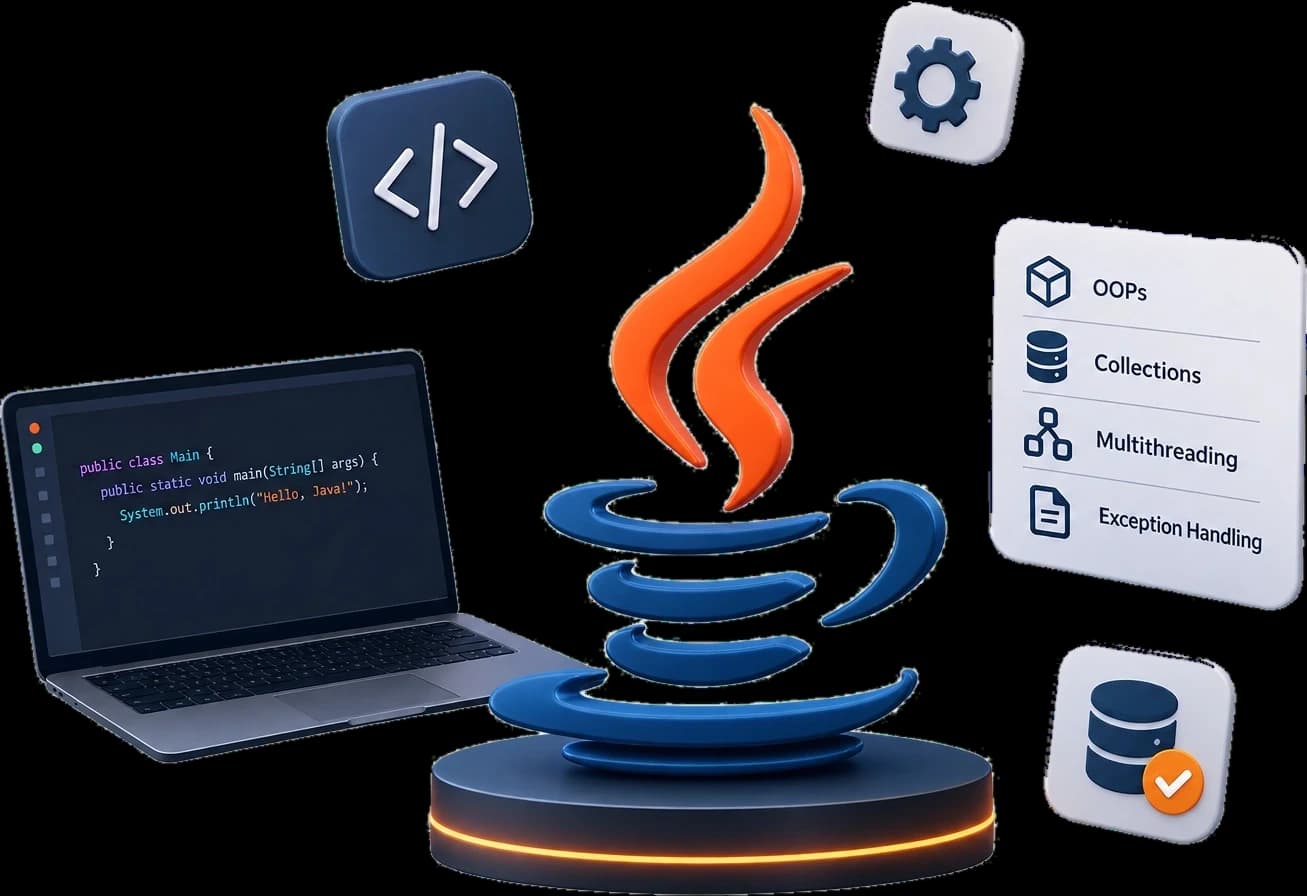
An advanced 2-month 100% practical-based Java programme designed to build strong programming and backend development skills through hands-on coding, real-world projects and trainer guidance at techcadd Jalandhar. Learn core Java, object-oriented programming, databases, APIs and modern development practices to prepare for Java Developer and backend development opportunities.
- Live client projects
- Practitioner trainers
- Placement support
- Certificate + internship
- Duration
- 2 Months
- Mode
- Classroom, Weekend & 1-on-1
- Level
- Basic → Intermediate → Advanced
- Includes
- 11 Modules, 5+ Projects, Certificate
- Students trained
- 25,000+Students trainedsince 2016
- Google rating
- 4.9★Google rating556+ reviews
- Practical training
- 100%Practical traininglive client work
Course overview
techcadd's Java Certificate Program in Jalandhar is a structured 2-month programme for graduates, working professionals and final-year students who want to develop practical Java programming and backend development skills. The 100% practical-based Java course progresses from fundamentals to advanced concepts, covering the JVM, JDK, JRE, bytecode, memory management, control statements, arrays, strings, I/O and core programming concepts. You then build a strong foundation in object-oriented Java, including classes, inheritance, polymorphism, encapsulation, abstraction, interfaces and packages, followed by exception handling, multithreading and the Java Collection Framework. Practical development includes projects such as a Student Marks & Result Management System, Banking Management System and Employee or Inventory Management System, giving you experience applying Java to real development scenarios. The programme also includes AI-assisted Java development, Git and GitHub, database concepts and a final project that you scope and build yourself. Sessions focus on hands-on coding, implementation, debugging and trainer-reviewed project work rather than slide-based learning. The training prepares learners for opportunities such as Java Developer, Backend Developer and Software Engineer roles.
One core language,many enterprise careers
Java is a general-purpose programming language built for large, long-running software. Banks, insurance companies, IT service firms, government portals and Android phones all run on Java or on the Java Virtual Machine (JVM). What changes from one career to the next is not the language, but the frameworks and tools added on top of it.
Think of core Java like learning to drive properly before choosing a vehicle. Once you can really drive, moving to a car, a truck or a bus is a matter of learning the controls, not learning to drive again. This course teaches core Java thoroughly: the JVM, object-oriented programming, exceptions, multithreading and collections. Each career below adds its own framework on top, and the cards show honestly how much of each one this course covers.
- Job-ready focus1 field
- The course trains you for entry-level work in this field.
- Strong foundation3 fields
- You learn the base skills here; one specialised course makes you job-ready.
- Introduced1 field
- You will use it in the course, but it is not a specialisation.
- Not covered1 field
- Not part of this course; available as a separate techcadd course.
What this course makes you job-ready for
Job-ready focusCore Java Application Development
Writing well-structured Java programs: classes and objects, packages, file handling, error handling and data stored in collections. This is the part of Java every Java job, interview and framework is built on.
A billing or inventory program for a Jalandhar sports-goods exporter that stores items, calculates totals and saves records to a file without crashing on bad input.
- Java tools used
- Java (JDK)IntelliJ IDEAJava Collection FrameworkGitGitHub
- Job roles
- Junior Java DeveloperTrainee Software EngineerJava Programmer
Weeks 1–7 (JVM, control statements, arrays and strings, OOP, packages, exceptions, multithreading, collections). Projects: Student Management, Banking Management, Employee / Inventory and Library Management Systems.
What this course lays the foundation for
Strong foundationEnterprise Backend Development
The server-side software behind banking apps, insurance portals and company systems: checking logins, processing transactions and sending data to websites and mobile apps. Most of this work in India is done in Java with the Spring Boot framework.
When you transfer money in a bank app, a Java backend checks your balance, records the transaction safely even if thousands of people pay at the same moment, and confirms it to your phone.
- Java tools used
- Spring BootJDBCHibernateMySQLREST APIsMaven
- Job roles
- Java Backend DeveloperSpring Boot DeveloperAPI Developer
You build the base every backend needs: OOP design, exception handling, multithreading and synchronization (Week 6) and collections (Week 7). A Java-based REST API is one final-project option. Spring Boot, databases and JDBC are not taught in this course.
Android App Development
Building apps for Android phones. Android was originally built around Java, and many existing apps are still written in it, but new Android development is now done mainly in Kotlin.
A booking app for a Jalandhar clinic that lets patients pick a time slot and get a reminder on their phone.
- Java tools used
- KotlinAndroid StudioJetpack ComposeFirebase
- Job roles
- Android DeveloperMobile App Developer
Java OOP, interfaces, exceptions and threads carry straight over to Android, and Kotlin runs on the same JVM. Android Studio, screens and app publishing are not taught here; they are taught in techcadd's Kotlin Android course.
Placement Coding Rounds & Problem Solving
The written and online coding tests used in campus placements and IT service-company hiring, where you solve problems with arrays, strings, sorting and data structures in a language of your choice. Java is one of the most common choices.
A placement test asking you to find duplicate entries in a list of roll numbers, or to sort employee records by salary, in 30 minutes.
- Java tools used
- JavaJava Collection Frameworkonline coding platforms
- Job roles
- Trainee Software EngineerGraduate Engineer Trainee (IT)Associate Software Engineer
Arrays, searching and sorting (Week 3), OOP (Weeks 4–5) and ArrayList, HashMap, Comparable and Comparator (Week 7) cover what most interview questions on Java ask. Dedicated data structures and algorithms (DSA) practice is beyond this course.
What this course introduces
IntroducedSoftware Testing & Test Automation
Checking that software works before users find the bugs, increasingly by writing Java programs that test other programs automatically.
A test script that logs in to a company portal, submits a form and checks the result after every update.
- Java tools used
- JUnitSeleniumTestNG
- Job roles
- QA EngineerAutomation Test EngineerSoftware Test Engineer
Testing and debugging are part of Week 8, alongside reviewing AI-generated code. Testing frameworks such as JUnit and Selenium are not covered as a specialisation.
Not part of this course
Not coveredFull-Stack Web Development
Building a complete website or web app: the visual front-end people click on (HTML, CSS, JavaScript) plus the backend logic and database behind it.
An admissions portal for a Punjab college with a form students fill in and an admin dashboard that lists every application.
- Java tools used
- HTMLCSSJavaScriptAngularReactSpring Boot
- Job roles
- Full-Stack DeveloperWeb Developer
Not part of this course. Core Java prepares you for the backend half; the front-end and a complete web stack are taught in techcadd's Web Development, MEAN Stack and MERN Stack courses.
Clearing up common confusions
“Core Java” or “Advanced Java”?
Institutes and job listings use these words loosely. Core Java is the language itself: OOP, exceptions, threads and collections, which is what this course teaches in depth. “Advanced Java” usually means building web applications with JDBC, Servlets and frameworks such as Spring Boot. Those sit on top of core Java and are not part of this 2-month programme.
Do I need Java to build Android apps?
Not any more. Google has preferred Kotlin for Android since 2019. Knowing Java still helps, because Kotlin uses the same libraries and much existing Android code is in Java, so Java students usually find Kotlin quick to pick up.
Is Java the same as JavaScript?
No. The names are similar for historical reasons only. Java is used for backends, enterprise systems and Android; JavaScript runs websites in the browser (and servers with Node.js). This course teaches Java, not JavaScript.
Java is also used in…
Big data and data engineering (Hadoop, Kafka and Spark all run on the JVM), desktop applications (JavaFX and Swing), trading and fintech systems, smart cards and embedded devices, and game servers. None of these are part of this course, but the core Java you learn here is the language they are written in.
At a glance: what this course covers
| Field | Coverage in this course | Where you learn it | Next step at techcadd |
|---|---|---|---|
| Core Java Application Development | Job-ready focus | Weeks 1–7, all five projects | Ready to apply |
| Enterprise Backend (Spring Boot) | Strong foundation | Weeks 4–7, REST API project option | Learn Spring Boot on the job or alongside |
| Android App Development | Strong foundation | Weeks 4–6 | Kotlin Android course |
| Placement Coding Rounds | Strong foundation | Weeks 3, 7 | Keep practising DSA problems |
| Testing & Test Automation | Introduced | Week 8 | — |
| Front-end & Full-Stack Web | Not covered | — | Web Development, MEAN or MERN Stack |
Which Java pathsuits you?
You do not have to pick a career before you join. Every Java path starts with the same core Java, and most students find their direction while building the weekly projects. If you already have an idea, this quick guide helps:
| If you… | You will probably enjoy | Typical first job |
|---|---|---|
| Like logic, structure and building systems that handle real records | Core Java Application Development | Junior Java Developer, Trainee Software Engineer |
| Are preparing for campus placements or IT service-company drives | Placement Coding Rounds | Trainee / Associate Software Engineer |
| Want to build the systems behind banking and business apps | Enterprise Backend Development | Java Backend Developer (after adding Spring Boot) |
| Want to build apps for Android phones | Android App Development | Android Developer (after the Kotlin course) |
| Want to build complete websites, front to back | Full-Stack Web Development | Full-Stack Developer (after a web course) |
| Like finding faults and checking that things work properly | Software Testing | QA / Test Engineer |
| Are not sure yet | Start with this course | Decide with your trainer once you have built a few projects |
Industry-Ready Training in Java
- 100% practical, project-based learning
- AI tools integrated into every module
- Live client projects under trainer supervision
- Internship letter and placement support
- Small batches with daily doubt clearing
What you will
actually build
Eight weeks, eleven modules, one continuous build. Basic to intermediate to advanced: every week ends in a working program or a project, from Java fundamentals through the Collection Framework and AI-assisted development to a final project you scope yourself.
Introduction to Java Programming
- What Java is, and the JDK, JRE, JVM and JIT
- Installation, environment setup and your first program
- Compilation, bytecode and .class files
- JVM architecture and memory areas — Heap, Stack, Method Area, PC Register
- Java naming conventions
Useful for: Every Java career. Interviewers regularly ask how the JVM, JDK and memory areas work.
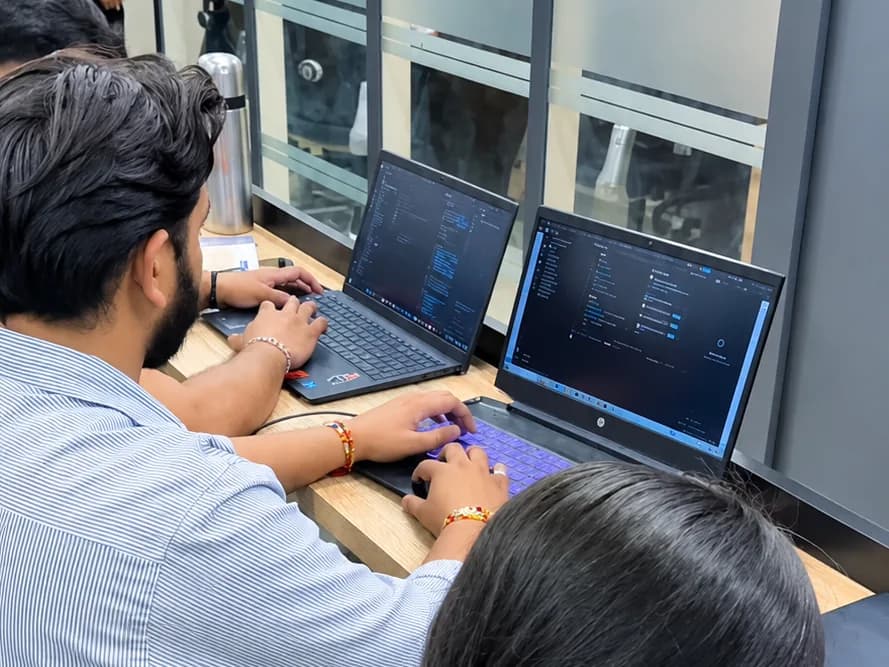
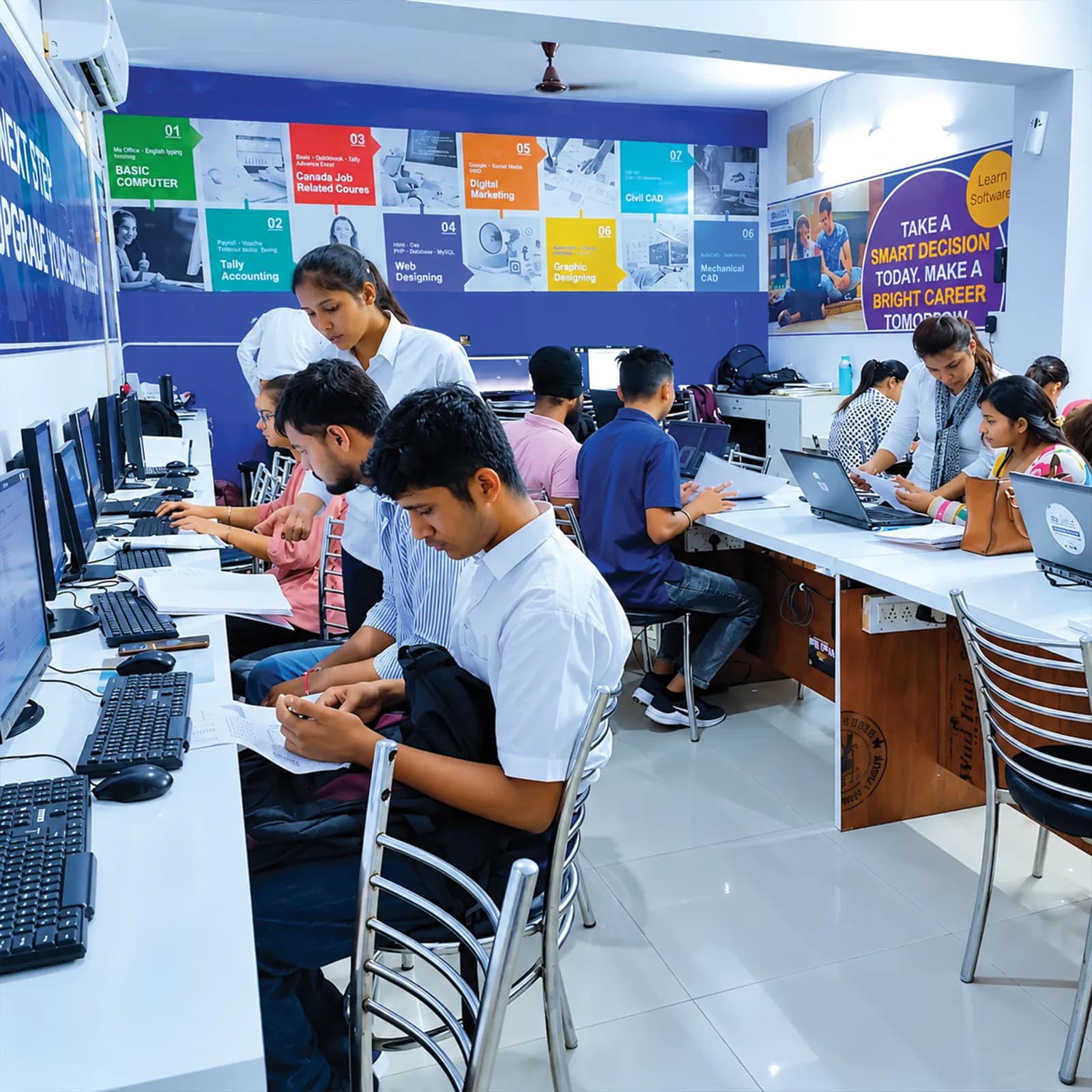
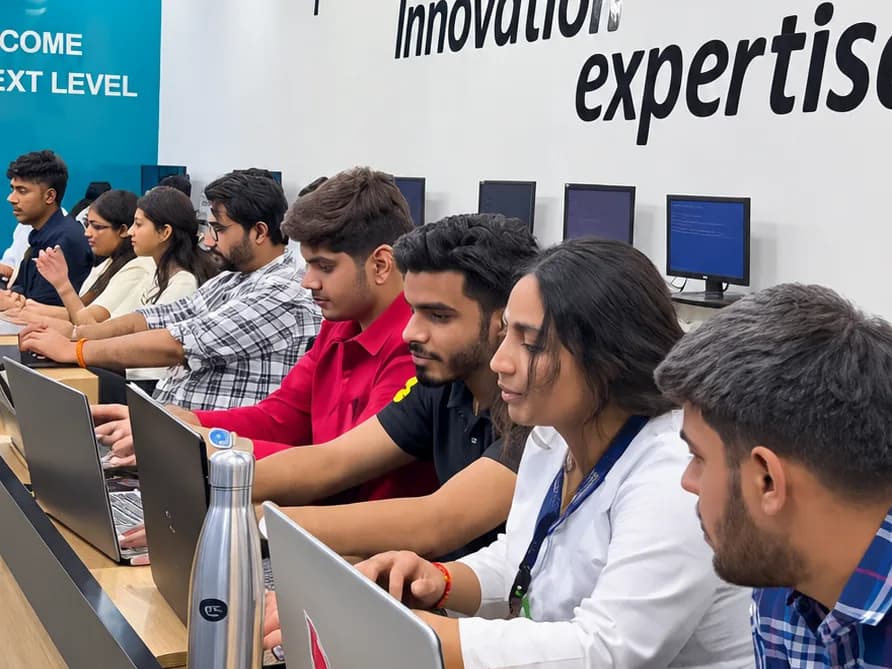
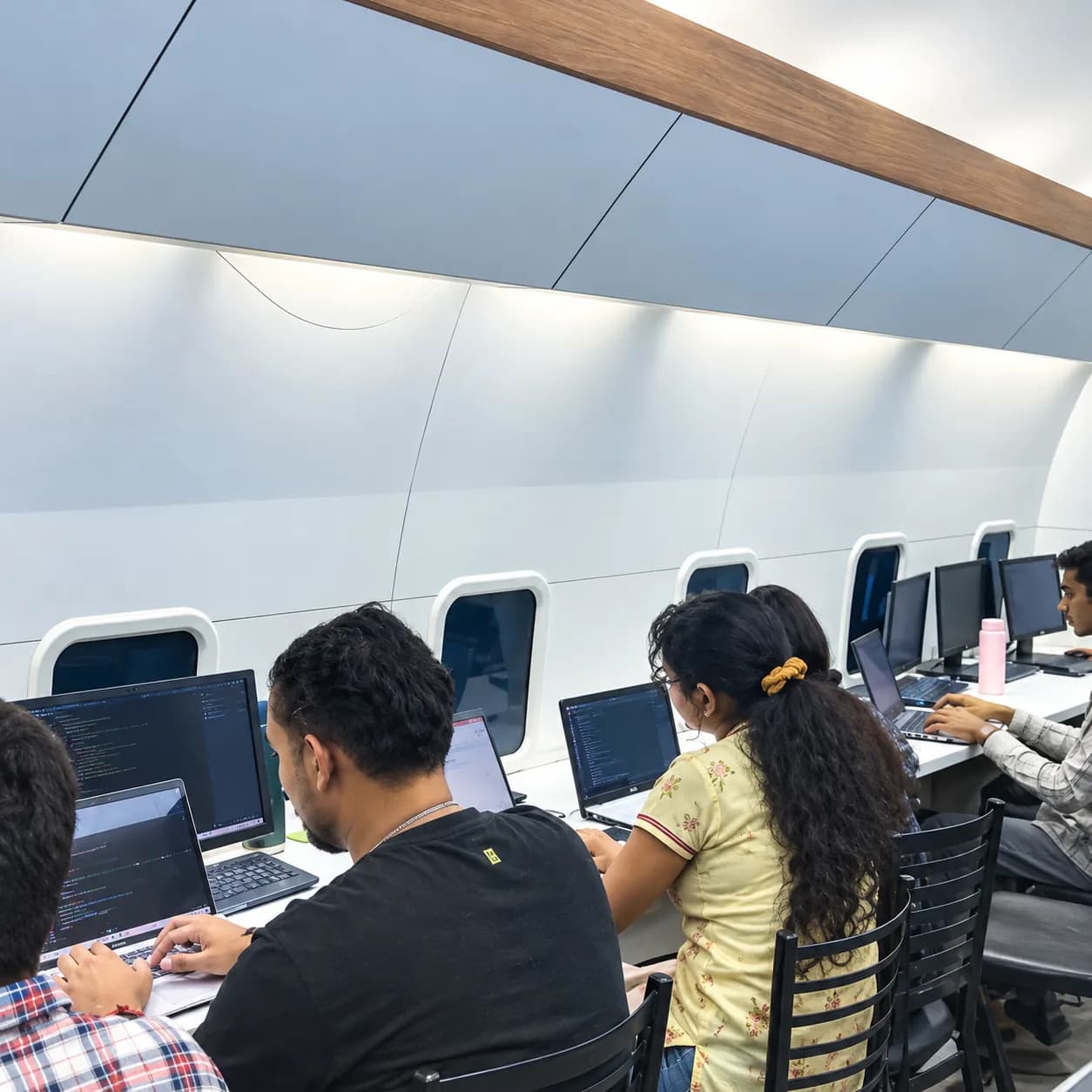
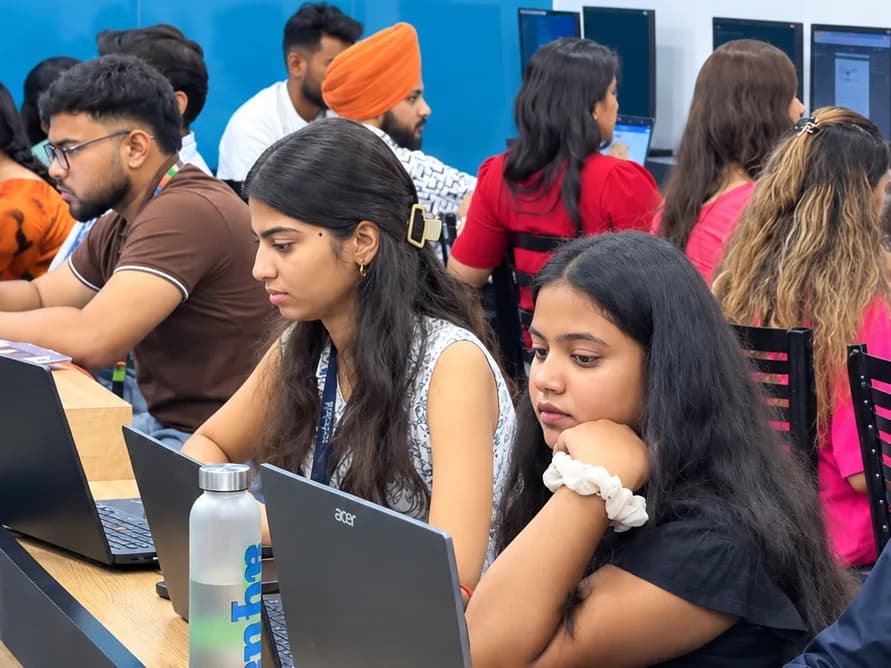
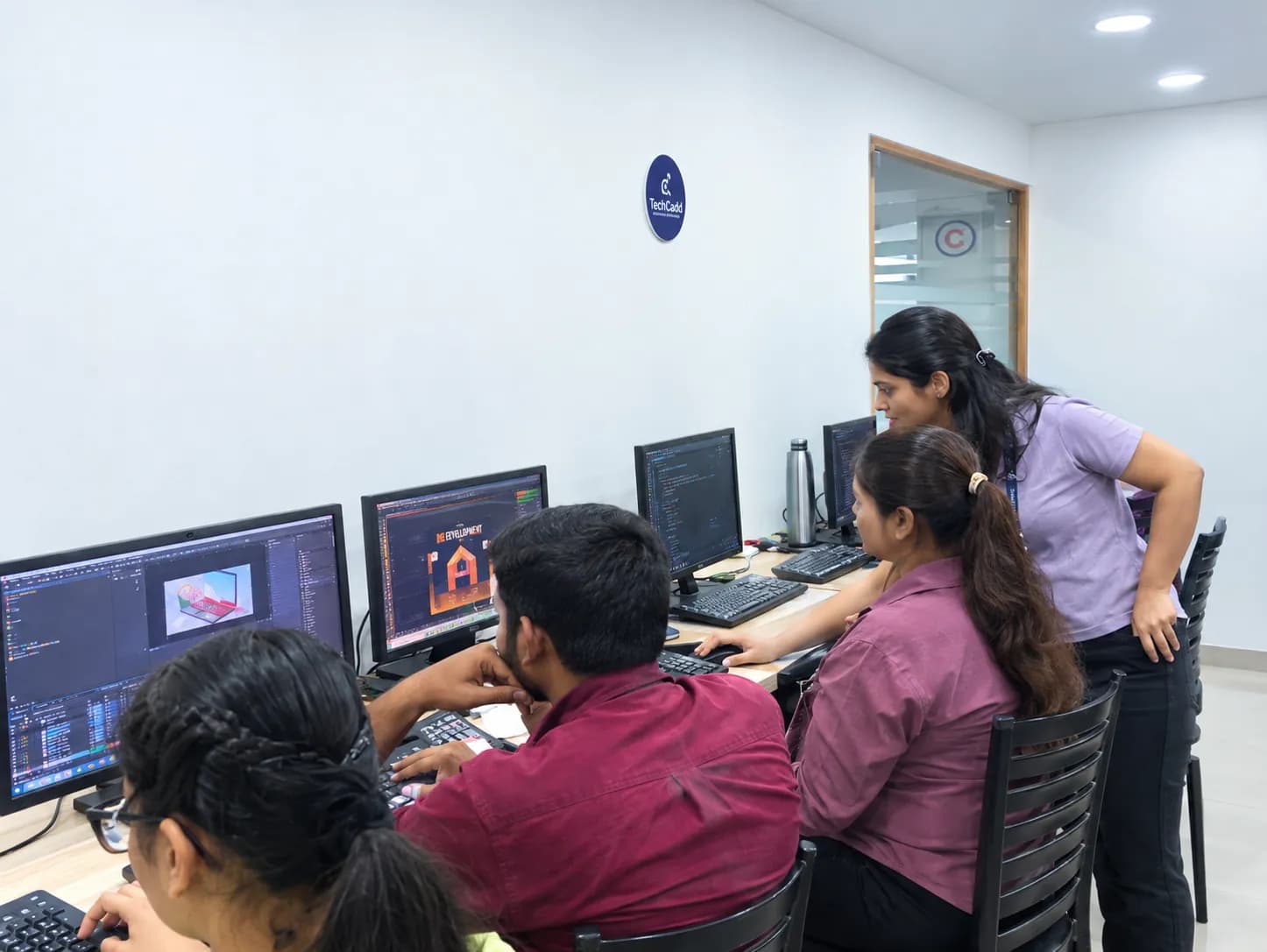
Java Is Powering the Next Generation of Industry Leaders
- A graded project every week from week 3, supervised by a trainer, not slides, not simulations.
- Java Developer roles in Punjab start around ₹18,000 – ₹32,000 a month for a fresher with a working portfolio.
Reviewed by mentors. Built for interviews.Who can dothis course
The Java programme is built for people at six different starting points, and the batch is deliberately mixed. What matters far more than your background is turning up consistently and finishing what each module asks you to build.
Students after 12th
Join from any stream. You start from fundamentals with no assumed knowledge, and most students run the programme alongside a degree at a Jalandhar college using the weekday or weekend batch.
Graduates and final-year students
If you are finishing a BA, BBA, B.Com, BCA or B.Tech, this is the shortest route from degree to salary. Enter placement season with project work in hand instead of a blank CV.
Working professionals
The weekend batch exists for people already earning. Career switchers typically become interview-ready for Java Developer roles within the 2-month programme without leaving their current job.
Business owners and freelancers
Owners take this programme to stop outsourcing work they cannot judge. Freelancers take it to bill clients beyond Punjab, since location does not limit remote work in this field.
Career restarters
A gap on the CV counts for less than work you can point at. The programme starts at zero and finishes with a portfolio and a documented internship letter, which is what an interviewer asks about after a break.
Self-taught learners
If free videos left you with notes but nothing built, what changes here is a trainer who reviews what you produced this week and a deadline attached to every module.
One course.A mesh of real tools.
Everything below is installed on the lab machines and used on live client work, not shown once in a slide and forgotten.
 Git & GitHub
- Java (JDK)
- The Java language and the kit used to compile and run your programs
- IntelliJ IDEA
- The code editor where you write, run and debug Java
- Git & GitHub
- Saves every version of your code and hosts your portfolio for employers to see
- Java Collections
- Ready-made lists, sets and maps for storing and sorting data
- AI coding assistants
- Help you write, explain, debug and review code faster
Get Certified in
Java
Complete the course with a portfolio of live projects and receive an industry-recognised certificate, plus a documented internship letter accepted by Punjab universities.
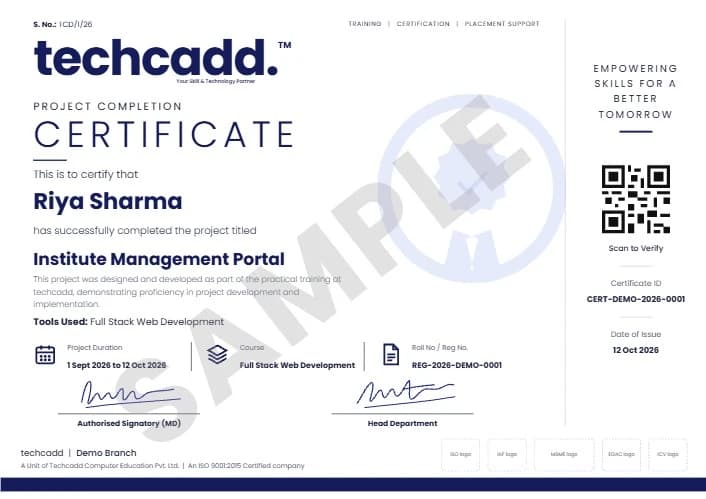
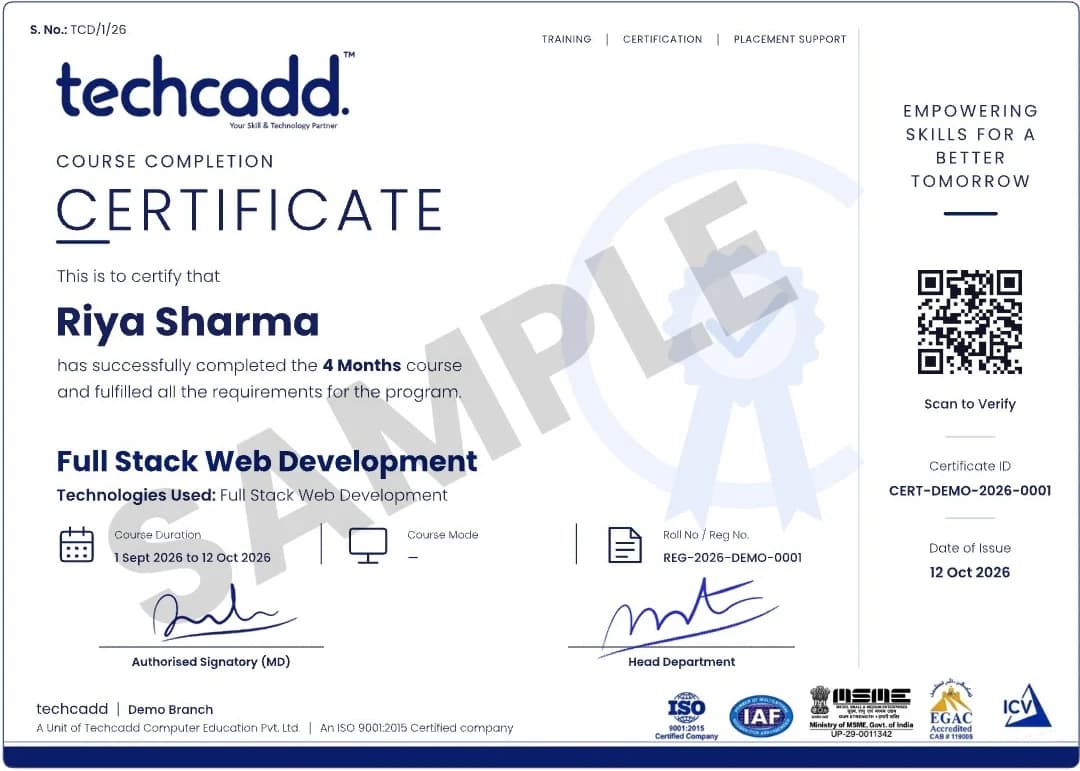
Two certificates on completion — the course certificate and a separate capstone project certificate.
Where this coursetakes you
The roles this opens, what they pay in Punjab and beyond, and who is hiring for them — the same figures our free Salary Estimator publishes, not a brochure number.
Java Developer
Develops enterprise applications using Spring Boot and microservices.
- Starting package
- ₹2.4–4.5LPA
- After 2 years
- ₹5–9LPA
Indicative ranges for Java Developer roles, compiled from public job-market listings and drawn on the same scale in every market. Actual offers vary by employer, skillset and interview performance — Punjab pay typically reaches 2× the fresher ceiling within two years of delivery experience.
Open the salary estimatorWhere Java Developer graduates get hired
- IT services (TCS, Infosys, Wipro, HCL campus drives)
- Banking and insurance backend teams
- Enterprise product companies
- Government and PSU project contractors
Which Java job roles can I apply for, and when?
Java is the default language in enterprise and IT service companies, so it opens trainee roles straight away and leads into more specialised roles with one more course. The roles fall into two groups:
- Junior Java Developer
- Trainee / Associate Software Engineer
- Java Programmer
- Campus placement roles at IT service companies
- Junior QA / Test Engineer (with Java basics)
- Android Developer (with Kotlin course)
- Full-Stack Developer (with Web Development or MEAN Stack course)
- Flutter / Mobile App Developer (with Flutter course)
- DevOps / Cloud Engineer (with Linux and DevOps Engineering courses)
- Java Backend / Spring Boot Developer (with Spring Boot learned on the job)
What job roles open up after Java?
Graduates move into Java Developer, Backend Engineer, Android Developer, Software Engineer and similar roles. Java remains the default in enterprise and service companies, which is what most campus recruiters in Punjab are hiring for.
What can I earn, and how fast does it grow?
A fresher with a working portfolio starts around ₹18,000 – ₹32,000 a month in the Jalandhar market. With two years of delivery experience that typically doubles, and specialists who keep learning move well beyond it.
Can I freelance or work remotely with this skill?
Yes. A Jalandhar address costs you nothing on a remote brief. Students bill clients in Delhi, Dubai and Canada. The course covers client handling, proposals and reporting so you can price and defend your work, not just do it.
Which industries hire for this in Punjab?
Beyond IT companies, the export houses, sports goods and hand tool manufacturers, immigration consultancies, hospitals, schools and real estate firms across Jalandhar all now hire for these skills directly.
Can I continue to higher studies or a specialisation later?
The certificate and portfolio stand on their own, and they stack. Most students move on to an adjacent techcadd programme. The tools overlap, so the second programme is faster than the first.
Your Java careerroadmap
This 2-month course is Step 1 for every Java career. For trainee and junior roles it is enough to start applying; for others you add one focused course or framework. Here is how each path looks:
| Goal | Step 1 | Step 2 | Where you arrive |
|---|---|---|---|
| Junior Java Developer | Java Certificate Program | Ready to apply | Junior Java Developer / Trainee Software Engineer |
| Campus placement in IT | Java Certificate Program | Ready to apply (keep practising coding problems) | Associate / Trainee Software Engineer |
| Java Backend Developer | Java Certificate Program | Ready to apply (add Spring Boot on the job) | Java / Spring Boot Developer |
| Android Developer | Java Certificate Program | Kotlin Android App Development | Android Developer |
| Full-Stack Developer | Java Certificate Program | Full-Stack Web Developer | |
| Cross-platform App Developer | Java Certificate Program | Flutter App Development | Flutter / Mobile App Developer |
| Cloud / DevOps Engineer | Java Certificate Program | Linux → DevOps Engineering or AWS Cloud | DevOps / Cloud Engineer |
Hands-on projectsyou will ship
Student Management System
A records application built on core Java and OOP — add, update, search and report on student data with a clean class structure underneath.
Field: Core Java Application Development
Banking Management System
Accounts, balances and transactions modelled with interfaces, inheritance and access control — the week 5 project extended into a full application.
Field: Core Java, Enterprise / Banking Software
Employee / Inventory Management System
A collections-driven application using ArrayList, HashMap and Comparator to store, sort and search real records — built in week 7.
Field: Core Java, Data Handling with Collections
Library Management System
Catalogue, issue and return books with proper OOP design and exception handling for the edge cases a real library system hits.
Field: Core Java Application Development
Java-Based REST API Project
A final-project option for students who want to go beyond desktop applications — a working API with request/response handling.
Field: Backend Development, APIs
Learn it. Build it. Make it yours.
Every project moves through the same loop: understand the brief, build with guidance, then explain the decisions behind your work.
Understand
Break a real requirement into a clear plan and the right tools.
Student Management SystemBuild
Work hands-on with trainer feedback while the decisions are still easy to change.
Banking Management SystemPresent
Turn the finished work into a portfolio story you can defend in an interview.
Employee / Inventory Management SystemWhy students choosetechcadd
There are many places to learn this in Jalandhar and the brochure syllabus looks similar at all of them. What differs is who teaches, whether you ever touch real work, and whether anyone picks up the phone after you have paid. techcadd has trained students across Punjab since 2016 on the same model: small batches, working practitioners as trainers, client projects as the backbone of the programme.
Trainers who still do the work
Your trainer is not a full-time lecturer. They deliver client projects for techcadd's services arm, so examples in class are current rather than a case study from five years ago.
Live projects, real consequences
You work on genuine client requirements under supervision. This is where a portfolio comes from, and it is the first thing an interviewer asks to see.
Small batches and open lab hours
Batches stay small enough that a trainer sees your screen daily. Lab time runs outside class hours and doubt sessions continue until the concept lands.
Internship letter and certificate
Every student finishes with an industry-recognised certificate and a documented internship on real work, accepted for university industrial training requirements.
A placement cell that persists
Mock interviews, CV reviews and drives with hiring partners across Jalandhar and Ludhiana, repeated after a rejection, not abandoned.
Since 2016, 25,000+ students
A decade of hiring relationships in Punjab is why a call from our placement cell gets answered and why local employers know what our certificate means.
How techcaddcompares
Java is taught everywhere, which is exactly why the differences matter. These are the eight things worth asking before you pay any institute, including this one.
| Feature | techcadd | Other institutes |
|---|---|---|
| Curriculum | Industry-aligned, updated regularly | Often outdated or generic |
| Learning style | 100% hands-on, project-based | Mostly theory-heavy |
| Trainers | Industry-experienced mentors who still deliver client work | Mixed experience levels |
| Real projects | Multiple real-world projects plus a capstone | Limited or simulated projects |
| Code review | Every assignment is read line by line by a mentor, so bad habits are corrected in week two, not year two | Assignments marked pass or fail |
| Placement support | Dedicated career and interview preparation | Often limited or absent |
| Batch flexibility | Weekday, evening, weekend and 1-on-1 options | Fixed schedules |
| Doubt support | Ongoing mentor and community support | Limited post-class support |
| Certification | Industry-recognised certificate plus a documented internship letter | Varies |
The right-hand column describes what is commonly offered in the market, not any particular institute. Ask any institute you are considering — this one included — to show you the work its students actually produced.
What our studentsin Jalandhar say
- Google
techcadd's placement cell kept calling me for drives until I was placed. That persistence mattered more than the certificate for Java.
Neha BansalPlaced Fresher · Jalandhar GoogleI was switching careers and worried I would be behind. Half the Java batch were doing the same thing, and nobody made me feel slow.
Arshdeep SinghTrainee Engineer · Adampur GoogleI joined the Java batch with almost no background and finished with a project I could actually show. The trainers correct your work daily rather than just moving to the next slide.
Pooja RaniGraduate · Kartarpur Googletechcadd's placement cell kept calling me for drives until I was placed. That persistence mattered more than the certificate for Java.
Neha BansalPlaced Fresher · Jalandhar GoogleI was switching careers and worried I would be behind. Half the Java batch were doing the same thing, and nobody made me feel slow.
Arshdeep SinghTrainee Engineer · Adampur GoogleI joined the Java batch with almost no background and finished with a project I could actually show. The trainers correct your work daily rather than just moving to the next slide.
Pooja RaniGraduate · Kartarpur
- Google
What made Java click for me was the lab time. You can sit after class and someone will still explain it until you get it.
Karan MehtaB.Tech Student · Jalandhar GoogleThe Java course got me interview-ready faster than I expected. My interviewer asked to see my project and that was the whole conversation.
Sandeep KaurPlaced Fresher · Phillaur GoogleI travelled in for the weekend Java batch and it was worth every trip. Small batch, real work, no time wasted on theory nobody uses.
Harpreet KaurSoftware Trainee · Jalandhar GoogleWhat made Java click for me was the lab time. You can sit after class and someone will still explain it until you get it.
Karan MehtaB.Tech Student · Jalandhar GoogleThe Java course got me interview-ready faster than I expected. My interviewer asked to see my project and that was the whole conversation.
Sandeep KaurPlaced Fresher · Phillaur GoogleI travelled in for the weekend Java batch and it was worth every trip. Small batch, real work, no time wasted on theory nobody uses.
Harpreet KaurSoftware Trainee · Jalandhar
Frequently Asked Questions
techcadd runs this Java programme over 2 months, 8 weeks and 11 modules. Weekday, evening and weekend batches cover the same syllabus, and 1-on-1 training is available if you would rather set your own pace. Every class runs for 2 hours, whichever format you choose.
Fees depend on the course length and subject. techcadd counsellors share the exact fee and EMI options on request, and a demo class is free.
Students after 12th, graduates and final-year students, working professionals switching careers, and business owners all join this programme. You start from fundamentals, so a technical background helps but is not required.
Graduates typically move into roles such as Java Developer, Backend Engineer, Android Developer or Software Engineer. Java remains the default in enterprise and service companies, which is what most campus recruiters in Punjab are hiring for.
A fresher with a working portfolio typically starts around ₹18,000 – ₹32,000 per month in the Jalandhar market, rising substantially within two years of experience. Freelancers handling multiple clients often earn more, since remote work is not limited by location.
No training provider can honestly guarantee a job, and you should be cautious of anyone in Jalandhar who claims one. techcadd guarantees placement support: CV reviews, mock interviews, portfolio preparation and repeated drives with hiring partners across Jalandhar and Ludhiana.
You will work hands-on with core Java (JDK), IntelliJ IDEA, the Java Collection Framework, Git and GitHub, and AI coding assistants used on real builds. All practice happens in the lab on licensed software, not on demo screenshots.
Yes. Every student receives an industry-recognised certificate on completion plus a documented internship letter based on the practical project work built through the programme. The internship satisfies the industrial training requirement at most Punjab universities.
Every week ends with something you built — a Student Marks system, a Banking Management System, a transaction application, an Employee/Inventory system — and the programme closes with a final project you scope yourself, supervised by a trainer and reviewed line by line.
Yes. techcadd Jalandhar runs weekday, evening and weekend batches in parallel so working professionals and college students can both attend, and 1-on-1 training is available for a fully personal schedule. Every class (batch or 1-on-1) runs for 2 hours; book a free demo class to see the lab and meet the trainer before enrolling.
Java is used in enterprise backend development, Android apps, IT service-company projects, software testing, big data and fintech systems. This course prepares you directly for core Java developer and trainee software engineer roles, and gives you the foundation for backend (Spring Boot), Android and testing work, which you can specialise in with one more course or framework.
No. Despite the similar name, they are different languages. Java is used for backends, enterprise software and Android; JavaScript runs inside web browsers and builds website front-ends. This course teaches Java. If you want JavaScript, look at techcadd's Web Development, MERN Stack or MEAN Stack courses.
No. This is a core Java programme: the JVM, OOP, packages, exceptions, multithreading and the Collection Framework, with a Java-based REST API as one final-project option. Spring Boot, JDBC and Servlets (often called “Advanced Java”) build directly on these topics, and most students pick them up on the job or alongside their first role once core Java is solid.
Not on its own. The course gives you the Java and OOP base that Android is built on, but it does not teach Android Studio, app screens or Play Store publishing. Android is now Kotlin-first, so the usual next step is techcadd's Kotlin Android App Development course, which Java students move through faster.
It depends on where you want to work. Java suits campus placements, IT service companies, enterprise backends and Android. Python suits automation, data analytics, data science and AI. Both teach the same programming thinking, so the second language is much quicker to learn whichever you start with. A counsellor can help you decide in one demo class.
Yes, for the right goal. Banks, insurance firms and IT service companies run huge Java systems that need to be maintained and extended, and that is where much of the hiring for freshers sits. AI work mostly uses Python, so if AI is your goal, the Python course is the better first step. Week 8 of this course also teaches you to use AI coding assistants in your Java work.
Every module,stage by stage
A single 2-month, 8-week, 11-module programme: basic to intermediate to advanced, closing with a final project you scope yourself.
Weeks 1–8 — Fundamentals to Final Project
11 modules
Java fundamentals and the JVM through control statements, arrays/strings/I/O, object-oriented programming, advanced OOP and packages, exception handling and multithreading, the Collection Framework, and AI-assisted development closing in a final project.
| Module | Stage 1 |
|---|---|
| 01Week 1: Introduction to Java ProgrammingJDK, JRE, JVM and JIT, installation and setup, bytecode, JVM architecture and memory areas. | Included |
| 02Week 2: Java Fundamentals & Control StatementsVariables, data types, operators, Scanner input, conditionals and loops — practised on calculator and pattern programs. | Included |
| 03Week 3: Arrays, Strings & I/OArrays, searching and sorting, I/O streams, String/StringBuilder/StringBuffer — closing in a Student Marks & Result Management System. | Included |
| 04Week 4: Object-Oriented ProgrammingClasses, constructors, inheritance, method overloading/overriding and polymorphism, built into reusable Java classes. | Included |
| 05Week 5: Advanced OOP & PackagesEncapsulation, abstraction, interfaces, multiple inheritance and packages — applied in a Banking Management System. | Included |
| 06Week 6: Exception Handling & Multithreadingtry/catch/finally, custom exceptions, thread lifecycle and synchronization — a File-Based Banking/Transaction Application. | Included |
| 07Week 7: Java Collection FrameworkArrayList, LinkedList, HashSet/TreeSet, HashMap/TreeMap, Iterators, Comparable/Comparator and Generics — an Employee/Inventory Management System. | Included |
| 08Week 8: AI-Assisted Java Development + Final ProjectAI pair-programming, refactoring and code review, Git/GitHub, testing and debugging, and your own final project. | Included |
All eight weeks and eleven modules sit inside the one 2-month programme. The final project is your own build — a Library, Employee, Inventory, Banking or Student Management System, or a Java-based REST API project.
Not sure which Java path is right for you?
Tell a counsellor what you enjoy and where you want to work, and we will show you whether core Java is enough for your first job or which one course to add after it. Book a free demo class and see the lab before you decide.
Ask aboutJava
Send your question and a counsellor will call you back about batch timings, fees, EMI options, placement record, or whether this course fits your degree.
- Free counselling and demo class
- Weekday, evening, weekend or 1-on-1, all 2-hour classes
- Internship letter and placement support